
10 hidden advantages of hiring a building contractor in Dubai. Premium materials, skilled artisans, regulatory expertise & long-term value.
We have delivered residential villas in Jumeirah, restaurant fit-outs in Al Khawaneej, and structural shells across multiple Dubai communities. Across every one of those projects, the advantages that mattered most to our clients were not the ones they expected when they signed the contract.
Most people hire a building contracting company for the obvious reasons — someone to coordinate trades, handle scheduling, keep the budget on track. Those things matter. But they are table stakes. The advantages that actually determine whether a project finishes on time, within budget, and at the quality level the owner envisioned are far less visible. They live inside supplier relationships, regulatory knowledge, construction sequencing decisions, and the contractor's ability to solve problems that have not happened yet.
This article breaks down ten of those advantages based on what we have seen across our own project delivery. Two of our completed builds — a prestigious residential development in Jumeirah and a commercial restaurant build-out for Meat Moot in Al Khawaneej — illustrate how these advantages play out on real construction sites, not in theory.
1. Procurement Channels That Do Not Exist for Individual Buyers
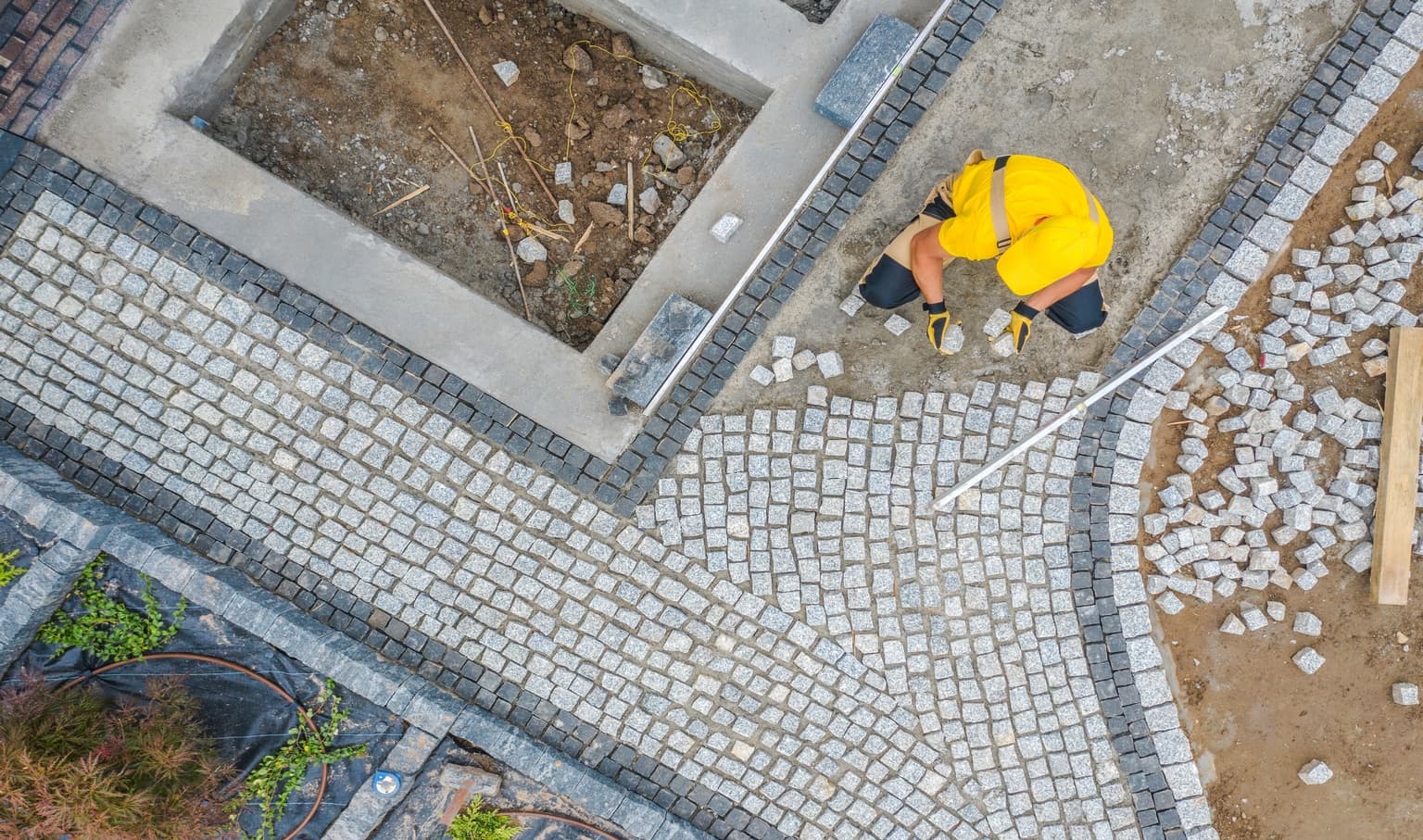
Dubai imports construction materials from over 40 countries. Italian porcelain, Spanish natural stone, German sanitary ware, Indian granite, American structural steel, Japanese smart glass — the supply chain is global, fragmented, and tiered. Tier-one pricing and priority allocation go to contractors who place repeat orders with importers. Retail pricing, longer lead times, and limited stock availability is what individual buyers face.
This is not a minor cost difference. On a residential project with a total budget of AED 3 to 5 million, material costs represent 45 to 60 percent of the spend. A contractor purchasing Italian large-format porcelain through a direct importer relationship pays 18 to 25 percent less than the same tile purchased at a retail showroom in Al Quoz. Multiply that delta across flooring, cladding, sanitary ware, lighting fixtures, structural steel, and concrete supply — the savings compound into six figures on mid-sized projects.
Beyond cost, procurement relationships affect availability. When a specific marble slab or engineered timber profile is discontinued or back-ordered, a contractor with standing relationships at the quarry or mill level can secure remaining stock before it reaches the open market. We maintain pre-qualified vendor lists across 14 material categories — suppliers vetted not just on pricing but on delivery reliability, batch consistency, warranty terms, and the ability to hold specification tolerances across large surface areas.
For homeowners evaluating contractors, procurement depth is one of the clearest signals of operational maturity. Our strategic guide to selecting Dubai's premier contractors covers how to evaluate this and other capability markers during the selection process.
We saw this play out clearly on our Jumeirah villa project — a 10,800 sq ft custom residence completed in 2024. The design called for exterior cladding with UV-stability ratings that would hold colour under 4,000+ hours of annual direct sun exposure. Standard retail-grade cladding degrades visually within 3 to 5 years under these conditions. Through our direct relationship with a European facade materials manufacturer, we sourced a UV-stabilised composite panel system with a 15-year colour retention warranty — a product that was not listed in any UAE retail catalogue at the time of procurement. The client received a facade that will look the same in 2035 as it did at handover.
2. Climate and Cultural Knowledge Built Into Every Specification Decision
Concrete curing behaviour at 48°C ambient temperature is not the same as at 22°C. Steel expansion coefficients change project detailing when daytime-to-nighttime temperature swings exceed 25 degrees. Waterproofing membranes specified for temperate European climates fail within 18 months when exposed to Gulf-level UV radiation and thermal cycling.
A contractor operating in Dubai for years does not need to look these things up. This knowledge is embedded in daily specification decisions — which concrete admixtures to use during summer pours, what expansion joint spacing works for exposed steel structures, which waterproofing systems are approved by Dubai Municipality and actually perform in this climate rather than just carrying a generic international certification.
Cultural requirements affect design execution in equally specific ways. Villa projects in established communities like Jumeirah, Emirates Hills, and Al Barari must comply with community-specific design guidelines covering facade materials, boundary wall heights, colour palettes, and setback distances. Residential layouts often need to accommodate majlis spaces, separate guest and family entrances, prayer rooms oriented toward Qibla, and service quarters with independent access. A contractor unfamiliar with these requirements creates coordination problems that surface during authority review — and authority rejections add 4 to 8 weeks to a project timeline.
We integrate sustainability measures appropriate to this region through our energy-efficient construction and sustainable building methods, including Al Sa'fat-compliant glazing specifications, district cooling connection coordination, and thermal insulation values calibrated to Dubai's specific cooling load profiles rather than generic international standards.
This played a direct role on our Jumeirah villa. The client's architect had specified a contemporary minimalist facade that conflicted with the community's established architectural character guidelines. Rather than discovering this at the DDA submission stage — which would have meant redesign, resubmission, and a minimum 6-week delay — our team flagged the conflict during pre-construction review. We worked with the architect to adjust the facade composition so it maintained the design intent while satisfying community requirements. The permit was approved on first submission.

3. Problem Resolution That Happens Before the Client Knows There Is a Problem
On a 12-month construction programme, we typically encounter 15 to 25 issues that require immediate resolution — soil conditions that differ from the geotechnical report, delayed authority approvals, material shipments held at port, subcontractor resource conflicts, design clashes between structural and MEP drawings, and specification changes requested by the client mid-build.
The difference between a contractor who manages these issues and one who escalates every problem to the client is operational depth. We maintain structural engineering capability in-house, which means a foundation redesign triggered by unexpected soil conditions can be resolved within days rather than the 3 to 4 weeks it takes when an external structural consultant must be re-engaged. We hold standing agreements with alternative material suppliers, so a delayed container does not stop production — we switch to an equivalent approved product and backfill the original specification when stock arrives.
This is why understanding soil investigation and ground condition analysis before construction reduces but never fully eliminates site-level surprises. The contractor's ability to absorb and resolve residual uncertainty is what keeps the programme moving.
A concrete example from our own portfolio: during the Meat Moot restaurant construction in Al Khawaneej, the commercial kitchen exhaust duct routing conflicted with the building's existing structural beams — a clash that was not visible on the landlord-provided as-built drawings. Stopping work to engage an external MEP redesign would have cost 3 to 4 weeks on a programme where the client had already set a restaurant opening date with marketing commitments behind it. Our site team identified an alternative duct routing within 48 hours, coordinated the revision with the MEP consultant, obtained civil defence re-approval for the modified fire suppression zone layout, and kept the programme on track. The restaurant opened on the originally planned date.
4. A Single Accountable Point of Contact for Every Decision
On a typical mid-sized project, the client interacts with an architect, a structural engineer, an MEP consultant, an interior designer, a landscape designer, a lighting consultant, and anywhere from 15 to 30 trade subcontractors. Without a main contractor UAE acting as the single point of coordination, every design conflict, material approval, site access request, and schedule change requires the client to personally mediate between multiple parties who have no contractual relationship with each other.
This is not a theoretical problem. It is the primary reason owner-managed projects in Dubai routinely exceed their budgets by 30 to 50 percent and their timelines by 6 to 12 months. The coordination burden is simply too large for someone who is not running a construction operation full-time.
Under our delivery model, the client deals with one project manager. That project manager owns the schedule, the budget, the quality control programme, and the subcontractor coordination. They run weekly site meetings, issue progress reports in whatever format the client prefers, and make day-to-day site decisions within pre-agreed parameters so the client is not pulled into operational minutiae. The client's role becomes strategic — approving finishes, reviewing milestone progress, making design decisions — rather than operational.
Our construction managers Dubai are assigned based on project type and complexity, so a residential villa gets a project manager with residential delivery experience, and a commercial fit-out gets someone who has navigated commercial authority approvals and tenant coordination before.
5. Technology That Solves Actual Construction Problems
BIM clash detection is not a sales slide. It is the process that prevented a 300mm chilled water supply line from colliding with a post-tensioned slab tendon on one of our recent high-rise podium projects. That single clash, had it been discovered during construction rather than during the modelling phase, would have required partial slab demolition and re-pouring — a fix costing AED 180,000 and adding 5 weeks to the programme.
We run full BIM coordination on every project where the structural and MEP complexity warrants it. On simpler projects — single-story retail fit-outs, straightforward villa shells — a 3D coordination model is sufficient without full LOD 400 BIM. The technology deployment matches the project, not the other way around.
Beyond BIM, we use real-time scheduling platforms that flag critical-path delays the moment they occur. If a concrete pour is delayed by 2 days due to a testing lab hold, the system recalculates downstream activity dates automatically and identifies which trades need to be rescheduled. This prevents the cascading delays that destroy project timelines when schedule management is done manually on spreadsheets.
Drone-based progress monitoring gives clients visual documentation of their project at every stage. It also gives our quantity surveyors accurate volumetric data for earthworks and concrete placement verification — reducing measurement disputes with subcontractors.
The technical benefits of structured pre-construction planning covers how we apply these tools during the design phase to catch problems before they become expensive site issues.
6. Direct Access to Specialist Tradespeople and Artisan Workshops
Dubai's construction labour force includes exceptional craftspeople — stone masons from Rajasthan who execute geometric jali screens by hand, metalworkers from the Philippines who fabricate bespoke decorative steelwork, European-trained painters who achieve venetian plaster finishes that mass-market applicators cannot replicate.
These artisans do not advertise. They work through contractor relationships built over years of project collaboration. When a project requires a hand-finished marble inlay in a villa entrance lobby, or a custom perforated metal screen for a restaurant facade, we source these capabilities from workshops we have worked with repeatedly and whose quality standards we have verified first-hand.
This artisan network is one of the reasons our Jumeirah villa achieved the level of interior finish that defined the project. Custom architectural joinery, precision stone installations with sub-millimetre tolerance requirements, and bespoke lighting integration across 10,800 sq ft of living space required tradespeople whose skills go well beyond standard fit-out capability.
For clients exploring successful villa and residential renovation projects, the depth of a contractor's artisan network directly determines the finish quality achievable on detail-intensive work — staircases, feature walls, bathroom vanities, and ceiling treatments.
7. Post-Handover Support That Protects Long-Term Property Value
Under standard UAE construction contracts following SCA (Society of Consulting Architects) conditions, the defect liability period runs for 12 months from practical completion. During this period, the contractor is contractually obligated to return and rectify any defect arising from workmanship or material issues — at no cost to the client.
This is a contractual baseline. What separates a responsible contractor from one that disappears after handover is what happens beyond the DLP. We provide maintenance guidance documentation at handover covering MEP system servicing schedules, facade cleaning specifications, and warranty activation procedures for major equipment. When clients need modifications or expansions 2 or 3 years after completion, they come back to a team that already knows the building — its structural grid, its MEP routing, its material specifications — rather than starting from zero with a new contractor who needs weeks just to understand what was built.
This continuity also matters when the market shifts. During periods of accelerated real estate activity in Dubai, properties with documented construction quality and maintained contractor relationships hold higher resale credibility than those built through informal arrangements with no post-completion accountability.
8. Regulatory Navigation That Prevents Month-Long Delays
Dubai's construction approval process involves multiple authorities with overlapping but distinct jurisdictions. A villa project in Jumeirah requires DDA (Dubai Development Authority) building permits. A commercial project in JAFZA requires Trakhees approvals. A restaurant requires Dubai Municipality food safety clearances, Civil Defence fire and life safety certification, and DEWA service connection approvals — each with its own documentation requirements, inspection protocols, and processing timelines.
An experienced contractor sequences these approvals into the construction programme so that inspections align with construction milestones rather than creating idle time. We know that a Civil Defence inspection for a commercial kitchen hood suppression system must happen before ceiling closure — so we schedule the suppression system installation, testing, and inspection request to coincide with the ceiling grid preparation, not after it. This sequencing eliminates the 2 to 3 week gaps that occur when permits are applied for reactively.
We managed exactly this on the Meat Moot Al Khawaneej project, which required simultaneous compliance with commercial building codes, food safety regulations, fire suppression requirements, and brand-specific design standards. The 2,800 sq ft restaurant included a specialised commercial kitchen with dedicated ventilation, grease trap infrastructure, fire suppression zoning, and equipment layouts that each required separate regulatory sign-offs.
Our team submitted the Civil Defence documentation package during the MEP rough-in phase rather than waiting for the fit-out stage — a sequencing decision that saved approximately 4 weeks compared to the reactive approach most contractors take on restaurant projects. The DEWA meter application was filed during the structural phase so the service connection was ready when the MEP systems were commissioned. Every regulatory milestone was mapped to the construction programme from day one, and the project reached operational status without a single approval-related delay.
9. Subcontractor and Vendor Networks That Compress Timelines and Reduce Costs
A contractor's subcontractor network is not just a list of phone numbers. It is a system of tested relationships where performance history, pricing benchmarks, and resource availability are known quantities.
When we issue a subcontract for MEP installation on a villa project, we are engaging a firm whose work we have inspected on 5, 10, or 15 previous projects. We know their foreman capabilities, their material sourcing practices, their typical productivity rates, and their defect rectification responsiveness. This eliminates the vetting risk that individual owners face when selecting subcontractors from classified advertisements or online directories.
These relationships also create pricing advantages. A plumbing subcontractor who receives consistent project flow from a contractor will sharpen their pricing to maintain the relationship. A testing laboratory that processes our concrete cube tests weekly will prioritise our 7-day and 28-day results over one-off clients. An equipment rental company with a standing agreement provides crane mobilisation within 48 hours rather than the 10 to 14 day lead time a new client would face.
The cumulative effect is measurable. Across a 12-month programme, network-driven efficiencies in pricing, lead times, and resource availability typically save 8 to 12 percent compared to a project where every subcontractor and supplier relationship starts from scratch. This is one of the core reasons why the lowest quoted price from an unknown contractor often results in the highest final cost — because the cheapest bid usually comes from the firm with the weakest network.
10. Structured Risk Transfer and Investment Protection
Construction carries financial, legal, safety, and reputational risk. Material price escalation mid-project, subcontractor insolvency, on-site accidents, design errors that surface during construction, regulatory changes between permit issuance and completion — each of these events can derail a project if risk management is informal or absent.
A professional contractor manages these risks through contractual mechanisms (fixed-price or guaranteed maximum price contracts, performance bonds, retention holdbacks of 5 to 10 percent), insurance coverage (contractor's all-risk policies, professional indemnity, third-party liability), and operational controls (daily site safety inspections, material testing protocols, progress-linked payment schedules that prevent over-payment against incomplete work).
For investors financing construction through bank facilities, this structured risk framework is not optional — it is a prerequisite. Banks require evidence of contractor licensing, insurance coverage, and contractual protections before releasing construction-stage drawdowns. Properties built through informal labour arrangements without proper contractor engagement face difficulties obtaining completion certificates, title deed registration, and mortgage financing.
This is also where detailed cost planning and specification optimisation during design reduces downstream risk. Identifying cost-saving opportunities before construction begins — substituting equivalent materials at lower cost, rationalising structural grid layouts to reduce concrete volume, optimising MEP routing to reduce pipe and cable runs — means the project budget has built-in margin rather than starting at 100 percent utilisation with nowhere to absorb surprises.
What These Advantages Look Like When They Work Together
Each of these ten advantages delivers value independently, but their real impact is compounded when they operate simultaneously on a single project.
On the Jumeirah villa, procurement relationships secured climate-appropriate facade materials (Advantage 1). Cultural and community knowledge prevented a permit rejection (Advantage 2). Artisan networks delivered interior finish quality that defined the home's character (Advantage 6). Single-point accountability through a dedicated project manager kept a complex 10,800 sq ft build coordinated across 20+ trades (Advantage 4).
On the Meat Moot Al Khawaneej restaurant, adaptive problem-solving resolved an MEP clash without programme impact (Advantage 3). Regulatory sequencing eliminated approval-related idle time on a project with a fixed opening date (Advantage 8). Subcontractor networks delivered specialised commercial kitchen construction within compressed timelines (Advantage 9). The restaurant opened on schedule, within budget, and with every regulatory clearance in place.
Neither project would have achieved these outcomes through owner-managed coordination or an inexperienced contractor learning on the job.
Start Your Next Project With the Right Contractor
We operate as a licensed full-service building contractor across Dubai, Abu Dhabi, and Sharjah — delivering residential villas, commercial fit-outs, structural shells, and turn-key developments. The advantages described in this article are not marketing claims. They are operational realities documented across our completed project portfolio.
Discover what we can deliver on your next residential or commercial project.
Frequently Asked Questions
Why hire a building contracting company rather than managing trades directly?
Direct trade management requires the client to coordinate 15 to 30 independent parties with no contractual relationship to each other. Schedule conflicts, quality inconsistencies, and communication breakdowns are almost inevitable. A professional contractor consolidates this coordination under a single contract with defined accountability for time, cost, and quality outcomes.
How do building contractors handle Dubai Municipality permits and approvals?
Experienced contractors manage the full approval lifecycle — building permit applications, structural inspection holds, MEP testing and commissioning sign-offs, Civil Defence fire safety certifications, DEWA service connections, and final occupancy certificates. Permit sequencing is integrated into the construction programme so inspections align with construction milestones rather than creating downtime.
Can a contractor source materials I cannot access independently?
Yes. Contractors with established importer relationships access tier-one pricing, priority stock allocation, and product lines that are not available through retail channels. On material-intensive projects, this procurement advantage alone can offset 15 to 20 percent of the contractor's management fee through lower unit costs.
What happens if something goes wrong during construction?
A capable contractor resolves the majority of construction issues without client involvement — rerouting MEP clashes, substituting delayed materials, rescheduling trades around authority inspection holds. The client is informed of material issues and involved in decisions that affect scope, cost, or design intent. Problems that would stop an owner-managed project for weeks are resolved within days. We cover practical strategies for this in detail in our guide on minimising and managing programme disruptions on active sites.
Do contractors provide warranties after the project is finished?
Standard UAE construction contracts include a 12-month defect liability period. During this period, the contractor rectifies any defects arising from workmanship or materials at their own cost. Many contractors, including our firm, provide maintenance guidance and remain available for future modifications beyond the formal DLP.
How does hiring a licensed contractor affect property resale value?
Properties built by licensed contractors with documented construction quality, proper authority completion certificates, and warranty coverage carry stronger market credibility. Buyers and mortgage lenders both evaluate construction provenance when assessing property value. In an active market, this documentation directly affects transaction speed and achievable sale price.
What is the difference between a main contractor and a construction manager?
A main contractor holds a single lump-sum or GMP contract and takes full delivery responsibility, managing all subcontractors and suppliers directly. A construction manager acts as the client's agent, coordinating the project while the client holds direct contracts with individual trade contractors. The right model depends on the client's risk appetite, involvement preference, and project complexity.
Can one firm handle both design and construction?
Yes. An integrated design and construction delivery model unifies architectural design, engineering, and construction under one contract. This eliminates the coordination gaps between separate design and construction teams, enables cost certainty earlier in the process, and typically compresses overall delivery timelines by 15 to 20 percent compared to traditional design-bid-build procurement.
How do I evaluate whether a contractor is genuinely capable?
Look at completed projects of similar type and scale to yours. Ask for client references and contact them. Verify the contractor's trade license, insurance coverage, and authority registration. Assess their procurement relationships, subcontractor network depth, and in-house technical capability. Review their defect liability track record. The specifics of what to evaluate are covered in our strategic guide to selecting Dubai's premier contractors.