
Tempted by the lowest quote? Discover why cheap contractors in Dubai almost always result in rework, legal disputes, and far higher costs.
You've shortlisted three contractors for your Dubai villa renovation or commercial fit-out. The quotes are in. One comes in significantly lower than the rest — and it's tempting. Very tempting. Before you sign that contract, though, there's something every property owner, developer, and project manager in Dubai needs to understand: in the UAE construction market, the lowest price tag is almost never the lowest cost.
This isn't speculation. It's a pattern that repeats itself across Dubai's residential towers, commercial fit-outs, and villa renovations every single year — and the people paying the price are the clients who chose the cheapest contractor.
Here's why.
What "Cheap" Really Means in Dubai's Construction Market
When a contractor in Dubai submits a quote that's 25–40% lower than the market average, it raises an immediate question: where is that cost being cut?
The answer is almost always one of three places:
Materials. Substandard building materials are the most common way low-cost contractors shave margins. From cheap cladding that warps under Dubai's extreme heat to plumbing fittings that corrode within two years, material shortcuts are invisible at handover — but catastrophic within months.
Labour. Quality construction labour in the UAE has a cost. Certified MEP engineers, experienced fit-out specialists, and licensed structural workers command market rates. Contractors who underprice aggressively are typically using unskilled or undertrained workers, which leads to poor workmanship, safety risks, and rework.
Compliance and permits. Dubai Municipality, Trakhees, and various free zone authorities have rigorous building codes. Cutting corners on compliance might save money in the short term, but the fines, forced demolitions, and stop-work orders that follow are orders of magnitude more expensive than doing it right the first time.
The Real Cost of Hiring the Wrong Contractor in Dubai
Let's talk numbers, because this is where the illusion of savings completely falls apart.
Imagine you hire a contractor for an AED 800,000 villa renovation. They came in at AED 550,000 — you're saving AED 250,000. Sounds great. But six months after completion, cracks appear in the render. The tiling is lifting. The electrical system doesn't pass the Dubai Electricity and Water Authority (DEWA) inspection. The waterproofing on the roof terrace has failed, causing water ingress into the rooms below.
Now you're looking at:
- AED 90,000 in remedial waterproofing and render repair
- AED 60,000 to redo the tiling in the kitchen and bathrooms
- AED 45,000 to bring the electrical system up to DEWA standards
- AED 35,000+ in legal fees trying to recover money from a contractor who has since dissolved their company or gone unresponsive
That's AED 230,000 in additional costs — on top of the AED 550,000 you already paid. Your "savings" have evaporated entirely, and you've still got a property that's been through two rounds of construction disruption.
This is not a hypothetical scenario. It is the lived reality of hundreds of Dubai property owners every year.
Why Dubai's Market Is Particularly Vulnerable to This Problem
Dubai is a fast-moving, high-volume construction market. New developments, fit-outs, and renovations happen at a scale and speed that few cities in the world match. That pace creates opportunity — but it also creates risk.
The UAE has a relatively low barrier to entry for construction companies to register. This means the market has a significant number of operators who are either inexperienced, undercapitalised, or simply cutting corners to win bids. Without careful due diligence, it's difficult for clients to distinguish between a financially sound, experienced contracting firm and one that will collapse midway through your project.
Dubai's climate also places exceptional demands on construction. Temperatures exceeding 45°C in summer, high humidity levels, and intense UV exposure mean that substandard materials and workmanship deteriorate far faster here than they would in more temperate climates. What might hold together for five years in Europe fails in eighteen months in the UAE.

Red Flags to Watch for When Choosing a Contractor in Dubai
No verifiable project portfolio. Any reputable contractor in Dubai should be able to show you completed projects — with addresses, before-and-after documentation, and ideally references from past clients. Vague portfolios with stock images are a warning sign.
Unusually fast timelines. If a contractor promises to complete a complex fit-out or renovation in half the time it would realistically take, they're either planning to rush the work or they don't fully understand the scope. Either outcome is bad for you.
No mention of permits. Every significant construction and renovation project in Dubai requires permits from the relevant authority — Dubai Municipality, Trakhees, or the respective free zone regulator. A contractor who doesn't mention permits in their proposal is a contractor who isn't planning to pull them.
Vague or one-page contracts. A professional construction contract in Dubai should be detailed — scope of work, material specifications, payment milestones, defect liability periods, and dispute resolution clauses. A contractor who offers you a single-page agreement wants flexibility. That flexibility is not in your favour.
No defect liability period. Reputable contractors stand behind their work. A standard defect liability period in Dubai construction contracts is one year, with MEP (mechanical, electrical, and plumbing) systems often carrying longer warranties. A contractor who won't commit to one is telling you something.
Pressure to pay large upfront deposits. A contractor asking for 50–70% upfront before any work begins is either undercapitalised or intending to use your money to fund another project. Standard payment structures in the UAE are milestone-based for good reason.
What You Should Actually Be Comparing When Evaluating Contractors
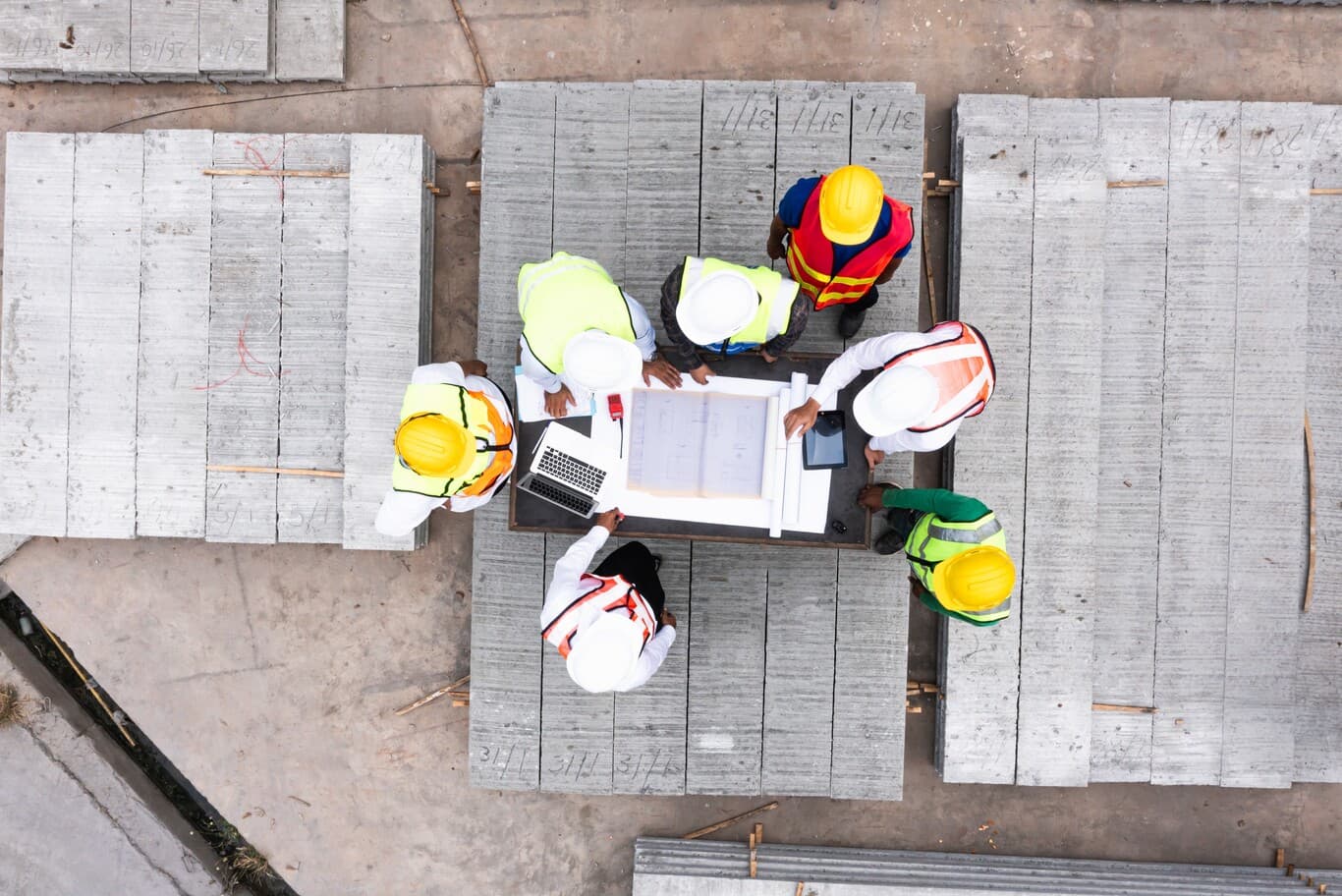
Price should be the last item you evaluate — not the first. Understanding what actually separates a reliable contracting company in Dubai from an unreliable one will save you more money than any discount ever could. Here's what to assess before you get to numbers:
Licensing and registration. Verify that the contractor is registered with Dubai Municipality or the relevant authority for your project location. Check that their trade licence is valid and covers the scope of work you need.
Insurance. A professional contractor in Dubai carries contractors' all-risk (CAR) insurance and public liability coverage. Ask for certificates. If they can't produce them, walk away.
Project management capability. Who will be on site daily? Who is the point of contact for decisions? Is there a dedicated project manager, or will you be chasing a salesperson for updates? These questions reveal the operational maturity of the company.
Subcontractor relationships. Large portions of most construction projects are subcontracted — MEP work, specialist fit-out, landscaping. Ask who they use, whether those relationships are long-term, and whether the subcontractors are also properly licensed.
Financial stability. A contractor who is financially stretched will cut corners on your project to fund their cash flow problems. Ask how many active projects they're running and whether they have trade credit relationships with major suppliers.
The Long-Term Math Always Favours Quality
Here's the principle that every experienced developer and property owner in Dubai eventually internalises: paying market rate for a qualified, experienced contractor is an investment. Paying below-market rate for an underqualified one is a gamble — and the house almost always wins. Adopting smart construction and design strategies from the outset is what separates projects that stay on budget from those that spiral into remediation costs.
Quality construction in Dubai adds measurable value. A well-executed fit-out attracts stronger tenants at better rents. A properly built villa renovation holds its value on resale. A commercial space built to code doesn't get flagged during a Municipality inspection, costing you lease revenue while remedial work is done.
Quality construction also protects you legally. In the UAE, property disputes related to contractor negligence and defective work are among the most common civil cases heard in the Dubai Courts and DIFC Courts. The legal process is costly, time-consuming, and uncertain. Choosing a reputable contractor in the first place is the most effective risk management strategy available.
Questions to Ask Any Contractor Before Signing
Before you commit to any contractor for your Dubai project, ask — and if you're issuing a formal tender, make sure you've covered the non-negotiable standards every contractor RFP in Dubai should include:
- Are you registered with Dubai Municipality / Trakhees / the relevant authority?
- Can you show me your current valid trade licence and insurance certificates?
- What is your defect liability period, and what does it cover?
- Who will be the on-site project manager for this job?
- Can you provide references from three completed projects of similar scope?
- What is your payment schedule, and is it milestone-based?
- How do you handle variations and scope changes during construction?
A contractor who answers these questions confidently, clearly, and with documentation to back them up is a contractor worth considering. One who deflects, hedges, or can't produce the paperwork is telling you everything you need to know.
The Bottom Line
Dubai's construction market offers genuine choice — but that choice comes with responsibility. The due diligence you do before signing a contract is the most valuable time you will spend on any building project. No amount of post-completion remediation, legal action, or insurance claims will fully compensate for the disruption, cost, and stress of working with the wrong contractor.
The cheapest quote is almost never the cheapest outcome. The most expensive mistake most Dubai property owners make is discovering that too late.
Continue Reading
Understanding total project cost requires looking beyond the initial quote. For comprehensive guidance on contractor evaluation, read our complete guide to finding Dubai's top-rated contracting companies in 2026.
Before committing to any contractor, verify they meet the essential criteria for Dubai construction RFPs.
Beyond contractor selection: The cheapest quote often signals inadequate planning. Discover why investing in pre-construction services protects your budget.
Work With Capital Associated Building Contracting LLC
Working with a reputable contracting company in Dubai protects your investment from hidden costs and rework. Our pre-construction services Dubai identify risks before they become expensive problems.
Get a free consultation to understand the true cost of your project.