
Construction risk management in Dubai: identify project risks, allocate them in the contract, and control them through handover.
Most construction losses in Dubai are visible months before they land. The soil report arrives late and the piling contractor is already mobilised. A variation is instructed verbally and built before it is priced. A delay event passes without a notice, and the entitlement that would have covered it expires quietly on day twenty-nine. None of these is an accident of fate. Each is a risk that existed on paper, went unowned, and matured.
Risk management is the discipline of naming those events early, deciding who carries each one, and building the contract, the programme and the site routine so that the answer is already in place when the event arrives. This guide sets out how risk is identified, allocated and controlled on Dubai projects, drawing on how our teams have run risk on high-rise structures, luxury villas at Dubai Hills and Tilal Al Ghaf, and phased hospitality fit-outs delivered inside operating buildings. If you are appointing a building contracting company in Dubai, the quality of its risk process tells you more about your outcome than its price does.
The seven risk categories that shape Dubai projects
Risk registers become useful when they are organised by the mechanism that causes loss, since that is what determines the control.
Ground and site risk. Dubai's coastal geology brings high water tables, sabkha layers, gypsum-bearing soils and variable rock head levels. Ground conditions decide the foundation design, the dewatering strategy and often the programme's first four months. The role of geotechnical studies in construction explains why this investigation earns its cost several times over.
Design and interface risk. Incomplete design at tender turns into variations during construction. Interface gaps between the architect, the structural engineer and the MEP consultant surface as clashes on site, usually in ceiling voids and riser shafts.
Regulatory and approval risk. Permits, NOCs, inspections and completion certificates form a chain with dependencies in both directions. Dubai Municipality publishes its FAQ on building permit procedures and regulations, and reading it against your own programme reveals which approvals sit on the critical path.
Contractual and claims risk. Notice periods, variation procedures, extension-of-time mechanisms and liquidated damages define what happens when the other risks materialise. This is the category that converts an operational problem into a financial one.
Supply chain and procurement risk. Long-lead items — facade systems, lifts, chillers, bespoke joinery, imported stone — carry delivery windows that the programme has to respect rather than assume. Currency movement, shipping disruption and factory capacity all land here.
Health, safety and workforce risk. Site safety carries a human cost first and a commercial cost second. The summer midday work ban between 15 June and 15 September removes productive hours from the middle of the day, and any programme covering those months that ignores it is already optimistic.
Financial and payment risk. Cash flow timing, retention, advance payment recovery and the solvency of parties up and down the chain. For off-plan developments, Dubai's escrow regime under Law No. 8 of 2007 ties fund release to verified construction progress, which makes programme performance a financing question as well as a delivery one. The Dubai Land Department sets out how the account and its milestone releases operate.
Allocating risk: the principle that keeps projects out of dispute
Sound allocation puts each risk with the party best able to control it and to absorb it if it occurs. A contractor can control workmanship, sequencing, subcontractor performance and site productivity. An employer controls the brief, the design team, the timing of decisions and the payment cycle. Ground conditions, force majeure and regulatory change sit outside both parties' control, which is why standard forms share them through defined mechanisms rather than dumping them on one side.
FIDIC forms remain the reference point across the region, and FIDIC's own commentary on contract practice in the Middle East notes the local practice of capping delay damages at ten percent of contract value. Particular Conditions in the UAE routinely amend those baselines: shortening the 28-day notice period, raising or removing the damages cap, and transferring unforeseen ground conditions to the contractor. Each amendment moves risk, and a risk moved without a corresponding price adjustment simply becomes a claim in waiting.
Three questions clarify a draft contract quickly. Which party bears unforeseen ground conditions. What the notice period is for a claim, and what happens when it passes. Whether delay damages are capped, and at what level. The answers tell you where the project's contractual pressure will concentrate.
The delivery model shapes allocation before the contract is drafted, since design risk sits differently under a traditional split from how it sits under a single-point arrangement. Our comparison of a construction manager against a general contractor works through that difference for Dubai employers.
Building a risk register that people actually use
A register earns its place by driving weekly decisions. The registers that work share a common anatomy:
- A described event, in cause-and-effect form. "Facade package delivery slips beyond week 34, delaying weathertightness and all internal finishes" carries more information than "facade delay".
- A named owner. One person, with authority to act. Shared ownership produces unowned risk.
- Probability and impact, scored consistently. Impact expressed in programme days and dirhams keeps the ranking honest.
- A mitigation with a date. The action that reduces likelihood, with a deadline and the owner attached.
- A fallback. What happens if the mitigation fails — the alternative supplier, the resequenced trade, the fabrication that starts early.
- A trigger. The observable signal that converts the risk into a live issue, so the fallback fires on evidence rather than on instinct.
- A movement log. Whether the score rose or fell since the last review, which is the single most informative column on the page.
Registers are opened during pre-construction, when changes remain inexpensive. The commercial logic behind that timing is set out in how pre-construction planning saves time and money.

Controlling risk during construction
Identification is straightforward. Control is where projects separate.
Contemporaneous records. Daily labour and plant returns, progress photographs dated and located, delivery records, inspection requests and their responses, weather logs, and minuted instructions. This archive is what converts an entitlement into a recovery when a claim is assessed months later.
Notice discipline. Under FIDIC-based contracts, entitlement depends on timely notice, and UAE and DIFC courts have applied those time bars strictly. Notices are issued the moment an event becomes apparent, as a routine administrative act rather than an escalation.
Programme integrity. A live, resourced, logically linked programme with a genuine critical path is the instrument that measures delay. Where the baseline is decorative, delay analysis becomes argument. Our guidance on avoiding and managing construction delays covers the practices that keep a programme defensible.
Subcontractor governance. Prequalification, back-to-back terms, guaranteed capacity for long-lead trades and weekly performance review. Most main-contractor exposure sits in the supply chain, which is why we treat subcontractor management on large Dubai projects as a distinct discipline.
Cost control with forecasting. Committed cost, cost to complete and earned value reviewed monthly, so a trend is visible while it can still be corrected. The methods sit in our guide to construction budget control in Dubai.
Insurance that matches the risk profile. Contractor's all risks, third-party liability, workmen's compensation and professional indemnity where design responsibility is carried. Coverage is reviewed against the actual risk register, and the point at which risk in the works transfers to the employer at taking over is confirmed in writing.
Risk after handover: the ten-year obligation
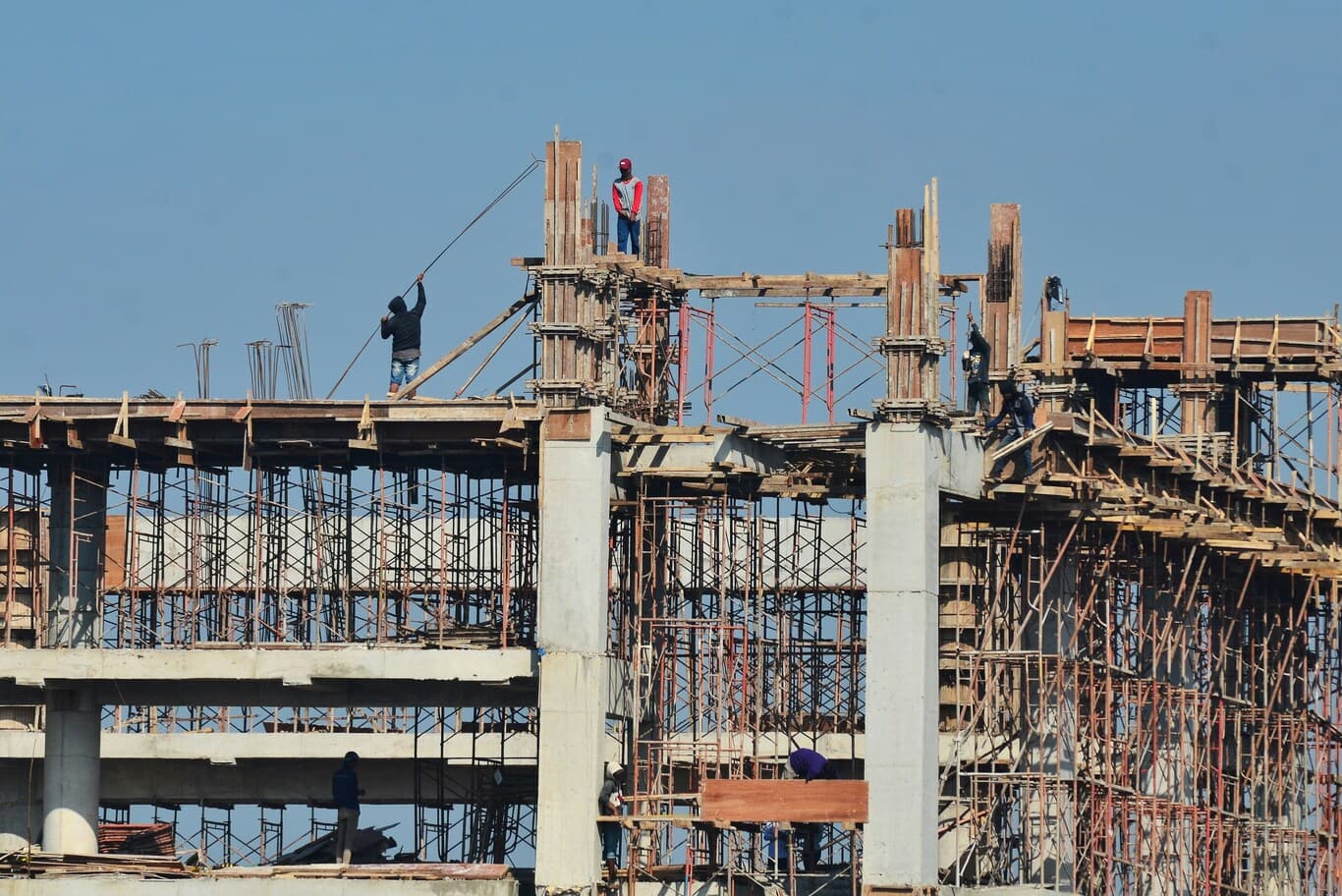
Dubai projects carry a defects liability period, typically twelve months, during which the contractor returns to correct workmanship issues. Behind it sits decennial liability under the UAE Civil Code, holding contractors and designers jointly responsible for structural defects and total or partial collapse for ten years from handover. That obligation cannot be contracted out of.
Practically, this makes the quality of the close-out pack part of risk management. As-built drawings that reflect what was installed, commissioning data, material certificates, warranties and O&M manuals form the record you will need if a question arises in year seven. The sequence for assembling it is covered in our snagging, defects and handover checklist, and the wider phase structure in understanding the lifecycle of a construction project.

How to test a contractor's risk capability
Ask to see a risk register from a live project, redacted as needed. Look for movement in the scores, named owners and dated mitigations rather than a static list written at tender. Ask how notices are issued and who signs them. Ask what the longest lead item on your project is and when it has to be ordered. Ask which risks the contractor believes belong with you, and why — a contractor who claims to absorb everything has either mispriced the job or plans to recover it through claims.
Then ask about a project that went wrong and what changed afterwards. Risk maturity shows up in that answer more clearly than in any methodology statement.
Managing risk on your Dubai project
Capital Associated builds a risk register during pre-construction on every project we deliver, assigns ownership before mobilisation, and reviews it weekly through to handover. Whether you are preparing a tender, reviewing a draft contract, or working on a project where the programme has begun to slip, our team can review your risk position and set out the contractual and programme steps available to you.
Send us your project. Fill in the project enquiry form with your project type, location, approximate built-up area and target start date, and attach your programme, contract form or current issues list if you have them. One of our project directors will come back to you with an initial risk read on your specific scheme — the exposures we would flag, the approvals and long-lead items that will govern your dates, and what a realistic delivery programme looks like. Projects that reach us before tender award are the ones we can protect the most, so early conversations are welcome even where the design is still developing.
Our project delivery approach sets out how we run the register from mobilisation to handover.