
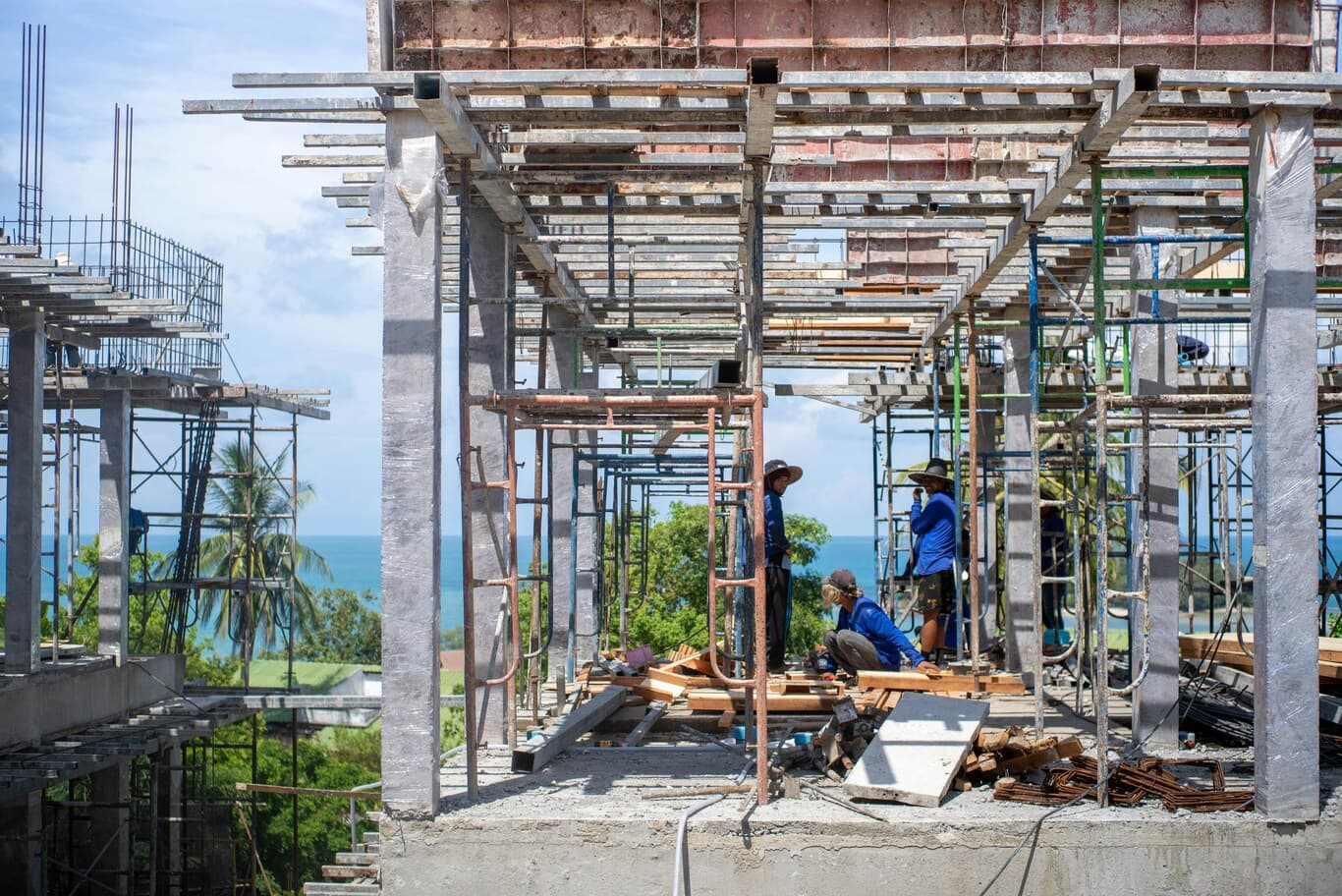
A practical guide to construction budget control in Dubai, covering earned value management, cost reporting, variation control, procurement strategy, and the warning signs that predict a project in financial trouble.
Budget overruns are the most commonly experienced failure in construction. A 2025 McKinsey analysis of large infrastructure and building projects globally found that 98% of megaprojects suffer cost overruns or schedule delays, with an average cost overrun of 80%. In Dubai's construction market — where AED 143 billion in construction contracts were awarded in Q1 2025 alone according to Turner & Townsend's UAE Market Intelligence 2025 and tender price inflation is running at 3.3% — the consequences of inadequate budget control compound quickly.
The gap between a project that finishes within budget and one that does not is rarely explained by bad luck. It is almost always explained by how budget control was structured, who was responsible for it, and whether the right reporting systems were in place early enough to make corrective decisions before small overruns became structural ones.
This guide covers the full spectrum of construction budget control as it applies to Dubai's 2026 market — from cost plan structure and procurement strategy through earned value reporting, variation management, and the red flags that reliably predict a project heading toward a cost crisis.
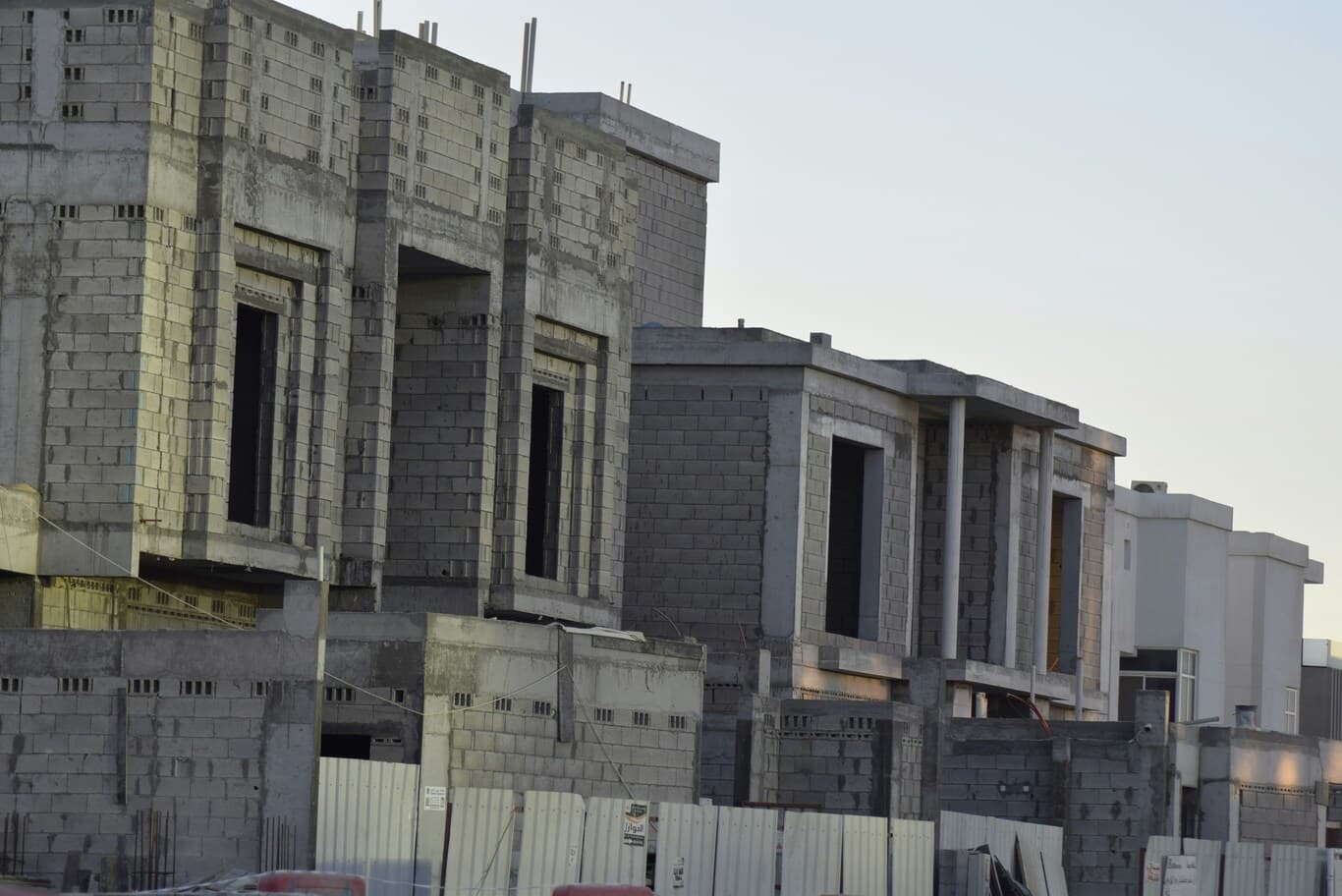
Why Budget Control Is Harder in Dubai Than Most Markets
Dubai's construction market presents a specific set of conditions that make cost control more demanding than in more settled environments.
Materials in the UAE now account for around 60% of construction baseline costs, with steel, aluminium, concrete and specialist equipment all subject to ongoing price volatility according to Grovy's 2026 UAE construction cost analysis, driven by the sector's heavy dependency on China and India for core inputs.
Labour and material costs in the UAE are expected to rise by 5% in 2025, driven by intense demand and a squeeze on both skilled workers and essential materials according to Yasu Trading's analysis of UAE construction cost management. Stricter accommodation standards for blue-collar workers boosted employer costs by an estimated 15% between 2024 and 2025 according to Mordor Intelligence's UAE Construction Market Report. These are not temporary pressures — they are structural features of the current market that any construction budget in Dubai must account for.
At the same time, the UAE remains the most cost-competitive construction market in the Middle East, with Dubai's average construction cost of USD 1,926 per square metre sitting well below comparable global cities including London, Singapore, and Riyadh according to Engel & Völkers' 2026 construction cost guide. This cost advantage is real, but it does not remove the need for rigorous budget control. A cost-efficient market with poor project controls still produces expensive outcomes.
Understanding what construction actually costs in Dubai in 2026 across all project types is the starting baseline for any credible cost plan — benchmarks that are either stale or sourced from unrepresentative projects will produce budgets that do not survive first contact with the tender market.
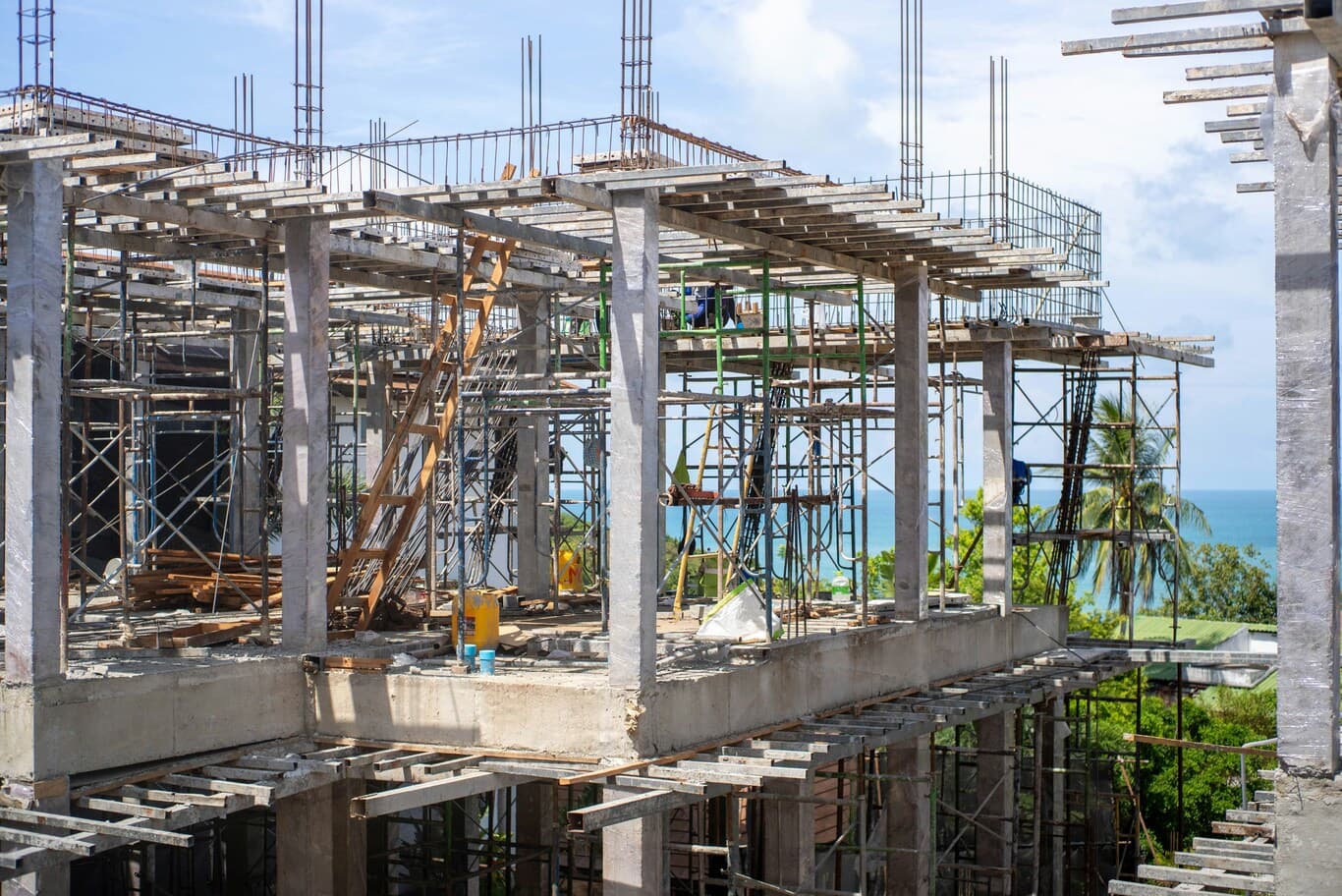
The Cost Plan: Foundation of Budget Control
Every credible budget control system begins with a well-structured cost plan. A cost plan is not simply an estimate — it is a document that structures the entire project budget into trackable components, allocates contingency at appropriate levels, and establishes the baseline against which actual costs are measured throughout delivery.
Cost Plan Structure
A well-structured cost plan for a Dubai construction project breaks the total project budget into the following categories:
Preliminaries and contractor overheads. The contractor's project-specific costs — site establishment, temporary works, management staff, safety infrastructure, insurance, and programme management. Preliminary costs for UAE projects typically represent 12 to 14% of construction contract value depending on project scale. With the UAE construction industry forecast to grow 5.2% in real terms in 2025 supported by a federal budget 11.6% larger than 2024 according to GlobalData, the demand for site management resources continues to push preliminary costs toward the higher end of that range on active projects. These are real costs that belong in the cost plan from day one.
Construction works by trade package. Structural works, facade and envelope, MEP (mechanical, electrical, plumbing), internal fit-out, and external works are each tracked as separate line items. Breaking the cost plan down to trade package level allows the project team to monitor cost performance in each discipline independently and identify where overruns are originating.
Professional and design fees. Architectural, structural, MEP engineering, quantity surveying, and project management fees. These are often forgotten in early-stage budgets and surface as surprises later.
Authority approval costs. Dubai Municipality permit fees, DEWA connection charges, Civil Defence approvals, community NOC fees, and geotechnical investigation. Pre-construction services that protect your budget include mapping these approval costs at feasibility stage — they are fixed and deterministic and should never be a budget surprise.
Contingency. Separately ring-fenced from the construction budget and allocated at a percentage appropriate to the stage of design and the specific risk profile of the project. Contingency is not a rounding error — it is a managed reserve.
Provisional sums. Allowances for scope elements that are defined in character but not yet fully priced — specialist equipment, client-specified items, or work that will be valued during construction. Provisional sums are a legitimate cost plan tool when used correctly and a budget risk when used to mask undefined scope.
Contingency Allocation
Contingency levels should track the maturity of the design. At concept stage — when the scope is defined but drawings are not — a contingency of 20 to 25% is appropriate. At schematic design, 15 to 20%. At detailed design, 10 to 15%. At tender — when the scope is substantially defined and priced — contingency should reduce to 5 to 10%, allocated against identified residual risks rather than general uncertainty.
A contingency buffer of 10 to 15% is the current standard in Dubai construction contracts for projects at detailed design stage. Projects that treat contingency as an accessible draw-down from day one — rather than a managed reserve unlocked against specific risk events — typically exhaust it before the most expensive risks materialise.
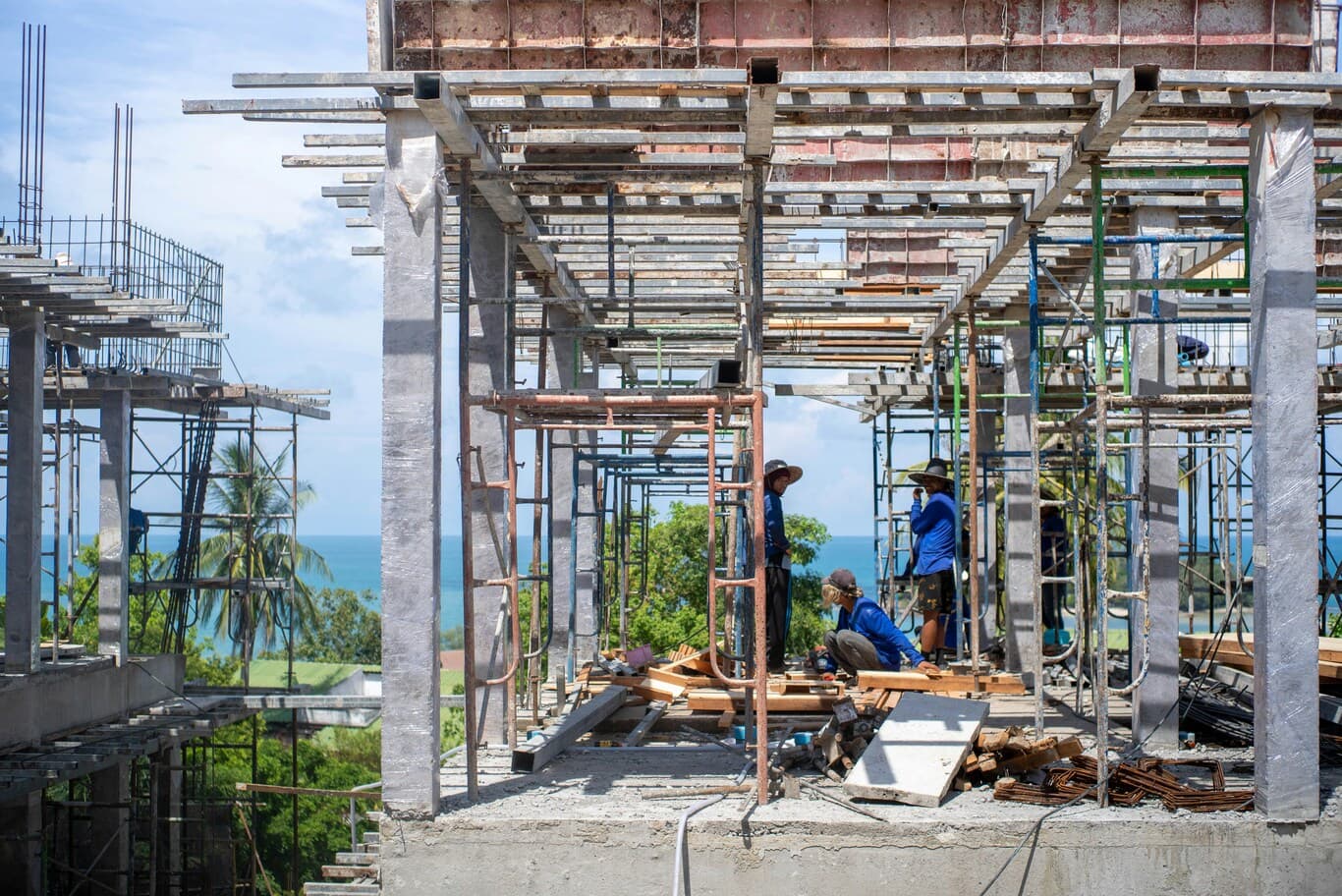
Procurement Strategy and Its Impact on Budget Certainty
The procurement route chosen for a project determines the point at which budget certainty is achieved, who bears the risk of cost overrun, and how flexible the budget is to scope changes during construction.
Lump-Sum Contracting
Under a lump-sum contract, the general contractor assumes the risk of delivering the agreed scope within the agreed price. Budget certainty for the owner is achieved at the point of contract award. Variations — changes to the agreed scope — are priced against the contract rates and valued by the quantity surveyor or contract administrator.
Lump-sum contracting provides maximum budget certainty for the owner when the design is fully developed before tender. When it is used on an incomplete design — as frequently happens in Dubai when owners are under time pressure to begin construction — the contractor's tender includes significant priced risk to cover the undefined scope, which the owner pays for regardless of whether those risks materialise. Value engineering decisions during design are most effective under a lump-sum model because the scope and specification are being resolved before the contract is placed.
Remeasurement (Admeasurement) Contracting
Under an admeasurement contract, the contractor is paid for the quantities of work actually executed, valued against agreed unit rates in the bill of quantities. The owner bears the risk of quantity changes — if more concrete is poured than the BQ anticipated, the owner pays the additional volume at the agreed rate. Remeasurement is appropriate for projects where quantities are genuinely uncertain — ground works, infrastructure, refurbishment — but introduces budget uncertainty that requires close monitoring.
Construction Management at Risk (CMAR)
Under CMAR, the construction manager provides a Guaranteed Maximum Price (GMP) and assumes the risk of delivering within it, while maintaining open-book cost visibility for the owner. CMAR is used in Dubai's more sophisticated development sector — particularly on phased, complex, or fast-track projects — because it combines early appointment, design influence, and cost transparency with a defined ceiling on owner cost exposure.
Procurement Timing and Market Conditions
In Dubai's current market, procurement timing affects budget outcomes independently of the contract model chosen. Intense competition among global contractors and cash flow pressures from long project lifecycles are defining features of Dubai's 2025 and 2026 construction market according to Aspire Management Solutions, with specialist trade packages in MEP, facade, and fit-out seeing the sharpest pricing as the pool of qualified subcontractors tightens.
Packaging procurement to maintain competition — splitting large MEP contracts into manageable packages, running sequential tender processes rather than issuing all packages simultaneously, and engaging the subcontractor market early — are active budget management decisions that the project team controls.
Earned Value Management: The Core Budget Control Methodology
Earned Value Management (EVM) is the most rigorous quantitative method for measuring construction cost performance in real time. It integrates three data points — planned value, earned value, and actual cost — to produce an objective assessment of whether a project is ahead of or behind its budget and programme simultaneously.
87% of UAE construction professionals surveyed agreed on the necessity of EVM implementation as a cost control tool, according to an IEEE study on EVM in the UAE construction industry, yet a significant proportion of UAE construction companies are not using it consistently. The gap between awareness and implementation is where budget overruns live.
The Three EVM Variables
Planned Value (PV) is the budgeted cost of the work scheduled to be complete at a given point in time. It answers the question: how much work did we plan to have done by today?
Earned Value (EV) is the budgeted cost of the work actually completed at that point. It answers: how much of the work we planned is actually done, valued at the planned rate?
Actual Cost (AC) is what has actually been spent to achieve that completed work. It answers: how much have we spent?
The Derived Performance Indicators
Cost Performance Index (CPI) = EV ÷ AC. A CPI of 1.0 means the project is spending exactly what was planned for the work completed. A CPI below 1.0 — for example, 0.85 — means the project is spending AED 1.18 for every AED 1.00 of value delivered. A CPI above 1.0 means the project is delivering more value per dirham than planned.
Schedule Performance Index (SPI) = EV ÷ PV. An SPI below 1.0 means the project is behind programme. An SPI of 0.90 means the project has completed 90% of the work it should have completed by the reporting date.
Cost Variance (CV) = EV − AC. A negative CV indicates a cost overrun at the current stage.
Estimate at Completion (EAC) = Budget at Completion ÷ CPI. This is the EVM-derived forecast of the total project cost if current cost performance continues to the end. On a project with a budget of AED 20 million and a CPI of 0.88, the EAC is AED 22.7 million — an overrun of AED 2.7 million projected forward from current performance.
Applying EVM in a Dubai Context
EVM requires a properly structured work breakdown structure (WBS) that maps the full project scope into measurable, independently valued work packages. On a Dubai villa or commercial project, the WBS typically mirrors the trade package structure of the contract — structural works, MEP, facade, finishes, external works — with each package having a defined budget, a programme of delivery, and a method for measuring completion percentage.
EVM calculations deliver performance measurement through data-driven insights, changing traditional cost management from a backward-looking exercise into a forward-looking forecast. The most valuable output of EVM is not the current-period variance — it is the Estimate at Completion, which tells the project team where the project is heading before it arrives.
The Monthly Cost Report: What It Should Contain
A monthly cost report is the primary instrument of budget communication between the project team and the client. A cost report that arrives late, lacks granularity, or presents only actual costs without forecasts provides the client with historical information rather than management intelligence.
A well-structured monthly cost report for a Dubai construction project contains:
Budget summary. Approved contract sum, approved variations to date, revised contract sum, and the project contingency position — how much has been drawn and how much remains.
Cost to date. Certified value to date, actual costs incurred to date, and cost variance against the earned value.
Forecast final cost. The Estimate at Completion by trade package, the total project EAC, and the variance against the approved budget.
Variation log. Every instruction, request, or event that has changed or may change the contract sum — identified, assessed for cost and time impact, and tracked to resolution. Unresolved variations are the most common source of end-of-project disputes in Dubai.
Cash flow forecast. The projected payment profile for the remaining works, updated monthly. Cash flow forecasting is particularly important in Dubai where payment terms and retention structures vary between contract types and where the contractor's cash position directly affects their ability to pay subcontractors.
Risk register summary. Identified risks that have not yet materialised, with estimated cost and probability, and the mitigation actions in place. A risk that is identified and tracked is a risk that can be managed. A risk that is discovered is a cost.
Effective construction project management in Dubai depends on the quality of financial reporting as much as it depends on site supervision — clients who receive rigorous monthly cost reports consistently achieve better outcomes than those relying on informal progress updates.
Variation Management: The Hidden Budget Risk
Variations — instructions that change the scope, specification, or sequence of work under an existing contract — are the single largest cause of construction budget overruns in Dubai. They are also the area where budget control most frequently breaks down, because variations tend to be processed incrementally and their cumulative cost is not fully visible until the project is well advanced.
A robust variation management process covers four stages.
Identification and instruction. Every change to the scope, specification, or sequence of work must be formally instructed in writing before the contractor implements it. Verbal instructions are the origin of most variation disputes. In Dubai, where the contract administrator may be the architect, engineer, or project manager depending on the contract structure, establishing a clear instruction-issuing protocol at the outset prevents the unauthorised variation problem that emerges when site supervisors agree scope changes without commercial sanction.
Assessment and pricing. The contractor submits a variation quotation — a breakdown of the cost impact of the instruction, priced against the contract rates where applicable, or at fair market rates where the instruction involves work of a different character from the contract scope. The quantity surveyor reviews and certifies the quotation before it is approved. Variations priced late — after the work is complete — are always more expensive than variations priced before commencement.
Approval and budget update. An approved variation is formally incorporated into the contract sum and reflected in the project cost plan. The contingency position is updated. The programme impact of the variation is assessed and the revised completion date is confirmed.
Register maintenance. Every variation — approved, pending, or potential — is logged in the variation register and reported in the monthly cost report. A variation register that is current, complete, and regularly reviewed is the most effective single tool for preventing variation-driven budget overruns.
Running large-scale construction projects in Dubai requires variation management to operate as a live process throughout the project, not a reconciliation exercise at practical completion.
Subcontractor Cost Control
In most Dubai construction projects, the majority of the physical work is carried out by specialist subcontractors appointed by the main contractor. Controlling subcontractor costs is therefore central to controlling the total project budget — whether under a lump-sum model (where the main contractor manages their subcontract costs independently) or under a CMAR model (where the owner has direct visibility of subcontract pricing through the open-book arrangement).
Under lump-sum contracting, the owner's cost control mechanism for subcontractors operates through the main contractor's payment application review process. The quantity surveyor verifies that the work claimed for payment has actually been completed to the required standard before certifying payment. Short-valuing interim payments increases the contractor's financial pressure without reducing the total contract sum; over-valuing reduces the owner's leverage in the event of defects or incomplete works at completion.
Under CMAR, the owner or their quantity surveyor reviews actual subcontract tenders, evaluates bids, and participates in subcontract appointments. This open-book visibility is the core cost transparency advantage of CMAR over traditional lump-sum contracting.
Subcontractor management on Dubai projects is addressed in detail in a dedicated guide — the coordination, payment, and performance management of specialist subcontractors is one of the most demanding aspects of project financial management on complex Dubai builds.
Cash Flow Management and Payment Structures
Cash flow management in Dubai construction is a distinct discipline from cost management, though the two are closely linked. A project can be on budget but experiencing payment delays that create financial stress for the contractor — which in turn affects their ability to pay subcontractors, procure materials, and maintain programme.
Dubai construction contracts typically operate on a monthly valuation and payment cycle. The contractor submits an interim payment application, the quantity surveyor or contract administrator reviews and issues a payment certificate, and the client pays within the contractually agreed period — typically 30 to 45 days from certification. Retention — typically 5% of certified value, held back during construction and released in two tranches at practical completion and at the end of the defects liability period — provides the client with financial security against incomplete or defective work.
Understanding the payment cycle and managing cash flow actively — rather than discovering cash shortfalls when payment applications are submitted — is a critical client-side financial management discipline. Clients who review and approve payment applications promptly maintain contractor goodwill and avoid the programme delays that inevitably follow when contractor cash flow is disrupted.
Case Study: Budget Overrun Recovery on a Commercial Fit-Out, Business Bay
Project context: A regional financial services company commissioning a Cat B commercial fit-out for a 6,500 sq ft office on the 34th floor of a Grade A tower in Business Bay. Contract value at award: AED 3.2 million. Delivery programme: 11 weeks within the landlord's rent-free period.
What went wrong: The project team received a cost report at week four showing actual costs of AED 980,000 against an earned value of AED 720,000 — a CPI of 0.73. The cost performance index indicated that at current cost efficiency, the project would complete at approximately AED 4.38 million against a budget of AED 3.2 million — a projected overrun of AED 1.18 million.
Analysis of the variation log identified three sources of overrun: a late client decision to upgrade the boardroom acoustic specification from Rw 38dB to Rw 52dB (adding AED 185,000 in partition works), an unidentified DEWA load amendment required by the server room specification (adding AED 43,000 in connection fees and three weeks to the approval programme), and a scope ambiguity in the original tender documents that had allowed the contractor to exclude all specialist AV cabling from their lump-sum price.
Recovery actions: The acoustic specification upgrade was formally instructed and the variation was priced, approved, and added to the contract sum. The DEWA load amendment was fast-tracked through a specialist contractor with an existing DEWA pre-qualification, recovering two of the three programme weeks. The AV cabling exclusion was resolved through negotiation — the contractor agreed to include the works at their bill of quantities rates in exchange for a two-day programme extension. The boardroom specification upgrade was partially value-engineered — a Rw 46dB double-glazed partition system was specified at a saving of AED 60,000 against the Rw 52dB option, meeting the client's acoustic requirement while recovering cost.
Outcome: The project completed at AED 3.51 million — AED 310,000 above the original contract sum but AED 870,000 below the EVM-projected overrun at week four. The early identification of the CPI deterioration, and the subsequent forensic analysis of its causes, allowed the team to make targeted corrections rather than managing a generalised cost crisis at practical completion.
Case Study: Budget Control on a Villa Construction Project, Dubai Hills Estate
Project context: A private client building a five-bedroom villa of 5,800 sq ft BUA in Dubai Hills Estate. Total project budget at outset: AED 22 million including land, design fees, construction, and fit-out. Construction contract value: AED 4.3 million under a lump-sum contract with Capital Associated Building Contracting LLC.
Budget control structure: The client appointed an independent quantity surveyor to manage cost reporting throughout. The QS prepared a pre-contract cost plan, reviewed all tender submissions, certified monthly interim payments, and managed the variation assessment process. Monthly cost reports were issued on the 5th of each month covering actual costs, earned value, EAC, the variation register, and the contingency position.
Key budget events: The project encountered two significant variation events during the 16-month construction programme. First, the geotechnical investigation revealed a localised zone of weak fill material below the pool basement that required additional piling at a cost of AED 68,000. This risk had been identified in the project risk register and was covered by the geotechnical contingency allocation. Second, the client elected to upgrade the external landscape specification six months into the programme — adding a water feature, upgraded boundary wall cladding, and mature specimen planting — at an agreed variation cost of AED 145,000.
Outcome: The construction contract was completed at AED 4.513 million — AED 213,000 (4.9%) above the contract sum. AED 68,000 was absorbed from the geotechnical contingency; AED 145,000 was a client-instructed variation. The project contingency position at completion retained AED 180,000 of the original AED 430,000 (10%) allocated. Total project cost landed at AED 21.8 million against a budget of AED 22 million.
Red Flags: Early Warning Signs of Budget Trouble
Experienced project managers recognise a consistent set of indicators that a project is heading toward cost problems before those problems are visible in the numbers. Identifying them early enough to make corrective decisions is the difference between a cost report and a cost management system.
Variation register not current. A variation register that has not been updated in the current reporting period, or that shows a large volume of pending variations without cost assessments, means the project's actual cost exposure is unknown. Pending variations are real costs — the fact that they have not been formally assessed does not reduce their impact on the final account.
CPI below 0.90 in the first third of the project. EVM research across construction projects globally consistently shows that the CPI established in the first 15 to 20% of the project is a reliable predictor of final cost performance. A CPI below 0.90 early in the programme almost always produces a final cost overrun. The corrective window is early; the further through the project, the less scope there is for recovery.
Contingency drawn before practical completion of structural works. If the contingency allocation is more than 50% committed before the structural phase is complete, the project is carrying unprotected risk through the more volatile MEP and finishes phases. A forensic review of what has drawn the contingency — and whether those draws represent genuine risk events or cost control failures — is the immediate action required.
Contractor submitting payment applications above the programme value. If a contractor is regularly claiming more than the programmed value for the period, there are two possible explanations: they are genuinely ahead of programme (a positive indicator) or they are claiming for work that is not yet complete or not yet at the quality standard specified. A quantity surveyor who certifies applications without rigorous site verification introduces budget risk that compounds across the payment cycle.
Absence of a forecast final cost. A cost report that shows actual costs to date without a forecast of the final cost position provides backward-looking information rather than forward-looking management intelligence. The absence of an EAC in a cost report is itself a red flag about the quality of the budget control system.
Subcontractor payment pressures surfacing on site. When subcontractors on a construction site are visibly under-resourced — fewer workers than the programme requires, materials not being procured on time, supervisors absent — the most common underlying cause is cash flow pressure from delayed or reduced payments from the main contractor. This is a leading indicator of programme delay and, through the delay-to-completion mechanism, potential cost claims.
Managing delays on Dubai construction projects before they become contractual time extensions is one of the highest-value activities in construction project management — delay claims and prolongation costs are the final-account surprises that no cost plan anticipates.

Technology in Budget Control: Tools Used in Dubai 2026
Construction cost management in Dubai has benefited from the adoption of cloud-based project management and cost reporting platforms that provide real-time visibility across projects, portfolios, and geographies.
Procore, Oracle Primavera, Aconex (now Oracle Construction and Engineering), and Autodesk Construction Cloud are all used by major contractors and project management firms in Dubai for integrated cost, programme, and document management. These platforms enable real-time cost reporting, variation tracking, and payment application management — replacing the Excel-based cost reports that still characterise a significant portion of the market.
BIM (Building Information Modelling) is increasingly integrated with cost management in Dubai, particularly on larger commercial and infrastructure projects. Advanced techniques for high-profile Dubai builds increasingly include 5D BIM — models that incorporate cost data alongside the geometric and programme information of 3D BIM — enabling real-time quantity takeoff from model changes rather than manual remeasurement.
The Role of the Construction Management Company
Budget control at the level described in this guide is a professional service, not a project administration function. It requires a quantity surveyor or cost manager with construction economics knowledge, contract administration experience, and the authority to challenge contractor claims and enforce the cost reporting process.
Construction management services in Dubai are designed to put that professional capability on the client's side of the project. A construction management company acts as the owner's financial representative throughout the project — preparing the initial cost plan, managing the tender process, certifying payments, controlling variations, and producing the monthly cost reports that give the client real decision-making information rather than post-hoc reconciliation.
What a general contractor delivers on complex builds is defined by the contract scope and the specification; what a construction manager delivers is defined by the client's financial interest — and those two orientations produce different outcomes on cost-sensitive projects.
The relationship between budget control quality and project outcome is not coincidental. Projects with professional cost management finish closer to budget than projects without it — not because the risks are fewer, but because the risks are identified, quantified, and managed before they become uncontrollable costs.
Understanding every stage of a construction project lifecycle — including the post-construction phase where budget control matters as much as during construction — helps owners set the right expectation for how long rigorous financial management needs to remain active.

Post-Construction Budget Considerations
Budget management does not end at practical completion. Three financial events follow practical completion that affect the total project cost.
Snagging and defects rectification. Practical completion triggers the defects liability period — typically 12 months in Dubai construction contracts. During this period, the contractor is obliged to remedy any defects that arise. The cost of defect rectification, where the contractor fails to respond, falls to the client and is recoverable against the retention or performance bond. Snagging, defects, and handover management in Dubai is covered in detail in a dedicated guide — a rigorous snagging process at practical completion prevents defects from becoming final account costs.
Final account settlement. The final account is the reconciliation of the full contract cost — the lump sum, all approved variations, remeasured quantities where applicable, and any agreed claims. Final account settlement frequently takes three to six months after practical completion in Dubai's commercial sector. A well-maintained variation register and cost report throughout the project compresses the final account negotiation period and reduces the scope for inflated contractor claims.
Retention release. Half of the retention — typically 2.5% of the contract sum — is released at practical completion. The second half is released at the end of the defects liability period. Tracking retention release dates and ensuring the contractor has met the conditions for release is a client-side financial management responsibility.

Frequently Asked Questions
What is construction budget control in Dubai? Construction budget control is the process of planning, monitoring, and managing the financial performance of a construction project from cost plan through to final account. It covers cost plan preparation, procurement strategy, earned value reporting, variation management, cash flow forecasting, and risk management. In Dubai's market, budget control is complicated by material price inflation, subcontractor capacity constraints, and the administrative requirements of the authority approval framework.
What causes construction budget overruns in Dubai? The most common causes of construction budget overruns in Dubai are: poorly defined scope at the time of contract award, creating variation exposure during construction; inadequate contingency allocation that is exhausted before the highest-risk phases; late design decisions that generate costly variations to work already in progress; weak variation management processes that allow unpriced instructions to accumulate; and subcontractor cost pressure driven by material price inflation or payment delays from the main contractor.
What is Earned Value Management and how is it used in construction? Earned Value Management (EVM) is a quantitative performance measurement methodology that integrates scope, schedule, and cost data to produce objective measures of project progress and cost efficiency. The three core variables are Planned Value (the budgeted cost of work scheduled), Earned Value (the budgeted cost of work completed), and Actual Cost (the actual spend to deliver completed work). The Cost Performance Index (CPI = EV ÷ AC) and Schedule Performance Index (SPI = EV ÷ PV) are the primary performance indicators. EVM is used in Dubai on commercial, hospitality, and infrastructure projects to produce forward-looking cost forecasts rather than backward-looking cost histories.
How much contingency should a Dubai construction project budget? Contingency levels depend on the stage of design at the time of budgeting. At concept stage, 20 to 25% is appropriate. At schematic design, 15 to 20%. At detailed design, 10 to 15%. At tender, 5 to 10% allocated against specific identified risks. Contingency should be managed as a separate reserve, unlocked against identified risk events with the client's approval, rather than as a buffer drawn freely throughout construction.
What is a variation in a construction contract? A variation is a formal change to the agreed scope, specification, quality, or sequence of work under an existing construction contract. Variations must be formally instructed in writing, priced by the contractor, assessed by the quantity surveyor, and approved before work proceeds. Verbal instructions, scope creep, and design changes implemented without formal variation orders are the primary source of end-of-project financial disputes in Dubai.
How do construction managers control costs in Dubai? Professional construction managers control costs through: a structured cost plan updated throughout the project; monthly EVM-based cost reports showing actual performance against budget; a live variation register tracking every change instruction; independent quantity surveying of interim payment applications; subcontractor procurement management to maintain competition and cost transparency; and proactive risk management to identify and mitigate cost risks before they become contractual claims.
How does stakeholder engagement affect construction costs? Stakeholder and community engagement during construction affects costs through its influence on programme — a project that disrupts a community and generates complaints requiring remedial action or programme modifications will incur costs that a project with proactive stakeholder management avoids. In Dubai's managed villa communities, community management engagement is also a formal approval requirement that affects the construction methodology and working hour restrictions on site.
Contact Us

Capital Associated Building Contracting LLC is a licensed contracting and construction management company in Dubai delivering contracting in the UAE alongside professional construction management services for commercial, hospitality, residential, and mixed-use projects. Budget control, cost reporting, and variation management are core capabilities across all project types.
Managing a construction project in Dubai and concerned about budget control? Discuss your project with our team for a professional assessment of your cost management framework.