
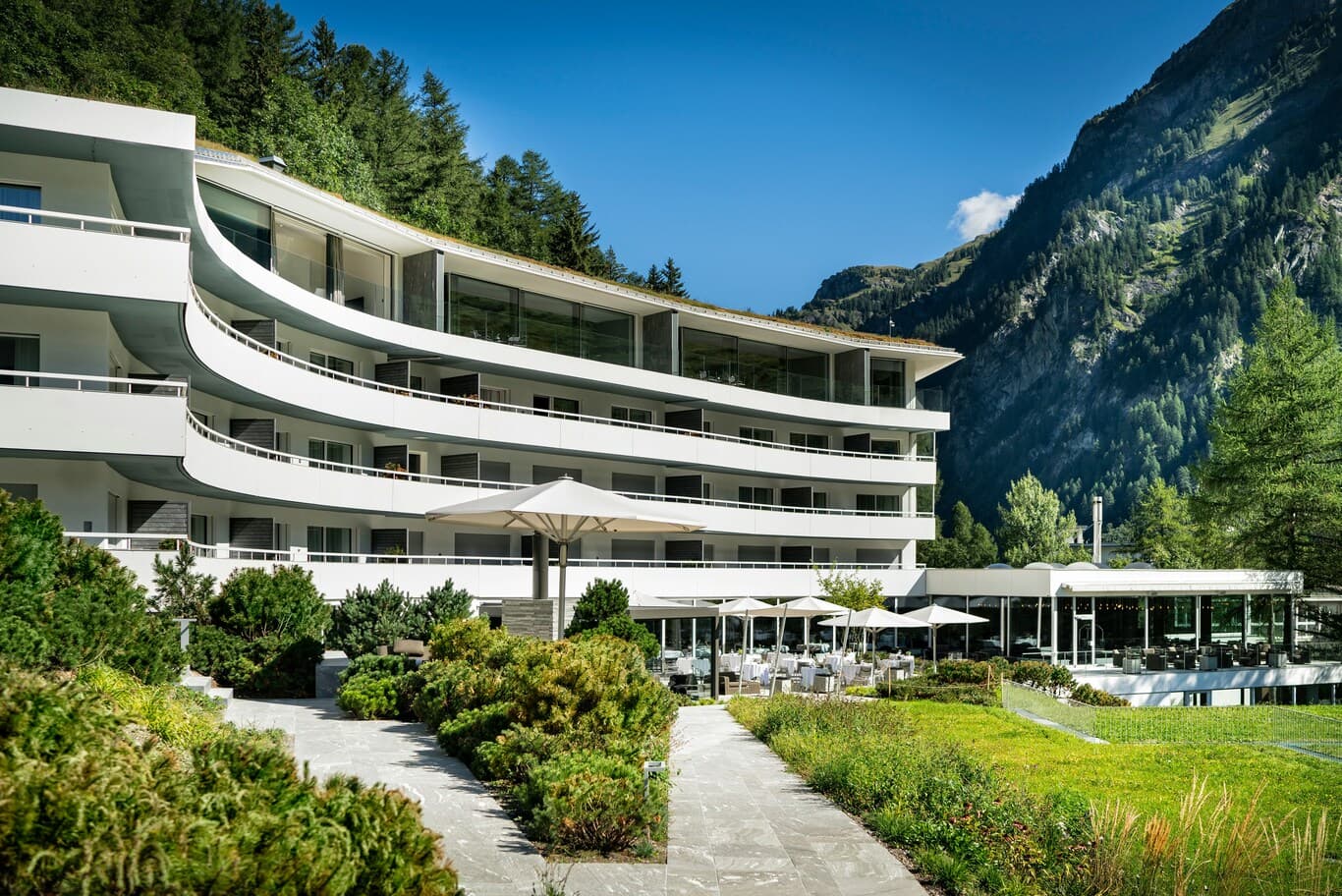
Hotel brand standards go beyond statutory code — here's what contractors and developers must deliver to satisfy brand approval.
International hotel brands don't leave much room for local interpretation. A Marriott property in Dubai is expected to deliver the same corridor width, the same lighting temperature in guest rooms, and the same finish quality a guest would find in a Marriott anywhere else in the world. That consistency is the entire value proposition of a branded hotel — guests choose it because they know what they're getting before they arrive. For contractors and developers, though, this consistency requirement introduces a layer of compliance that sits entirely separate from Dubai Municipality codes, fire safety regulations, or any other statutory requirement. Brand standards are contractual obligations layered on top of everything the law already requires, and getting them wrong doesn't just risk a failed inspection — it risks the brand affiliation itself.
What hotel brand standards actually cover
Brand standards manuals issued by groups like Marriott, Hilton, and IHG are extraordinarily detailed documents. They specify ceiling heights, corridor and doorway widths, lighting colour temperature by area, acoustic ratings between guest rooms, minimum bathroom fixture specifications, finish material grades, and even the exact positioning of light switches relative to a bed. Some brands publish design and construction standards running into hundreds of pages, covering everything from structural grid spacing in guest room towers to the acoustic isolation required between a ballroom and the guest floors above it.
These standards exist because hotel brands are franchising an experience, not just a building. A guest who books a specific brand is buying a predictable level of consistency, and the brand protects that consistency contractually — through development and design review at multiple stages of construction, not just at handover. A contractor working on a branded hotel isn't just building to code. They're building to a second, parallel specification that the brand's own representatives will inspect against, often multiple times before the property is permitted to open under that flag.
Where brand standards and statutory code overlap, and where they diverge
It's a common misconception that meeting Dubai Municipality and Civil Defence requirements automatically satisfies a hotel brand's standards. The two systems address different things. DM and civil defense codes set the legal minimum for life safety, structural integrity, and accessibility. Brand standards sit on top of that minimum and frequently exceed it — a brand might require fire-rated door assemblies rated above the statutory minimum, or specify acoustic isolation between rooms well beyond what code requires, simply because guest experience depends on it.
This is one of the more demanding aspects of hospitality construction's regulatory layering, where a contractor has to reconcile two specifications simultaneously rather than building to a single standard and calling it done. A design that satisfies DM code but falls short of brand minimums will pass municipal inspection and still fail brand approval — which means the building is legally complete but commercially unusable under the intended flag until the gap is closed.
Why consistency across multiple sites is harder than it looks
Brand replication sounds simple in principle: build the same thing, to the same spec, repeatedly. In practice, no two sites offer identical conditions, and reconciling a fixed brand specification against variable site conditions is one of the most underestimated parts of branded construction.
This challenge isn't unique to hotels — it shows up clearly any time a brand requires the same operational standard to be delivered across multiple, physically different locations. Across three restaurant builds for the same F&B brand in Dubai, the equipment list, layout standard, and design specification were identical at every site — same charcoal grill, same flat-top, same deep fryers, same kitchen throughput target, same interior finish package. What wasn't identical was each site's underlying infrastructure. One location sat inside a managed retail destination with an existing shared building riser available for the kitchen's grease exhaust to connect into, which meant the compliance work centred on fire dampers at each floor penetration the duct passed through on its way up. A second location was a standalone commercial shell with no shared infrastructure at all, which meant building the entire exhaust system from scratch — a rooftop fan, external ductwork, a fire-rated roof penetration — with both Dubai Municipality and Civil Defence inspecting the installation independently before kitchen commissioning could proceed.
Same brand spec. Same equipment list. Two completely different technical solutions, driven entirely by what each site's existing infrastructure allowed. This is exactly the dynamic that plays out at hotel scale, just with far higher stakes — a hotel brand's guest room module, lighting standard, and bathroom fixture spec doesn't change from site to site, but the structural grid, MEP riser strategy, and building envelope absolutely does, and reconciling a fixed brand requirement against a variable structural reality is where experienced contractors earn their value. Site conditions drive cost and technical approach far more than most budgets account for upfront, and that's just as true scaling from a 2,800 sq ft restaurant to a 337,000 sq ft hotel tower as it is comparing two restaurant sites against each other.
Brand approval as a recurring checkpoint, not a one-time review
Unlike statutory inspections, which generally happen once per milestone, brand design and construction reviews tend to recur at multiple stages — concept design, detailed design development, and again during construction at key milestones like guest room mock-up approval. A "mock-up room" is standard practice on branded hotel projects: a single, fully finished guest room built early, specifically so brand representatives can inspect it in person and approve the finish standard before that same specification is replicated across every floor above.
This mock-up stage matters enormously, because any deviation flagged at this point is comparatively cheap to fix — it's one room, not eighty. The same deviation discovered after several floors have already been built to the same incorrect specification becomes an exponentially more expensive problem. A contractor experienced in branded hotel delivery treats the mock-up review as a critical gate in the construction programme, not a formality to get through quickly so the "real" work can start. Reducing time-to-market pressure on a hotel build depends heavily on getting this gate right the first time, since a failed mock-up review doesn't just cost the time to fix the room — it can stall the entire floor-by-floor rollout schedule behind it.
MEP systems carry brand requirements too, not just finishes
It's tempting to think of brand standards purely in terms of visible finishes — flooring, lighting, fixtures. In practice, brand requirements extend deep into MEP performance. Guest room HVAC needs to hit specific noise thresholds, since an audibly loud air handling unit directly undermines the guest experience a brand is selling. Hot water delivery times to guest bathrooms are frequently specified to a maximum number of seconds. Even Wi-Fi coverage density and backup power requirements for life safety and guest-facing systems can carry brand-specific minimums above statutory code.
This is where hotel MEP planning decisions made early in design need to account for two specifications simultaneously — code compliance and brand compliance — rather than designing to code first and retrofitting brand requirements afterward. A chiller plant or district cooling allocation sized only against code-minimum cooling loads, without factoring in a brand's specific guest comfort thresholds, risks falling short of brand approval even while technically meeting statutory requirements.
Common points where branded hotel projects fall short
The most frequent failure point is treating the brand standards manual as a design reference consulted once at concept stage, rather than a living document checked against at every subsequent design and construction milestone. Brand standards do get updated, and a design that was compliant when concept drawings were approved can fall out of step with a revised manual by the time construction reaches finishing stages.
A second common gap is procurement-driven substitution. Brand standards often specify particular fixture grades, finish types, or even approved supplier lists. A contractor who substitutes a "close enough" alternative without securing brand approval first risks a finishing-stage rejection that's far more expensive to correct than if the correct specification had been procured from the outset.
A third gap involves MEP performance verification. Brand standards frequently require commissioning reports and acoustic or thermal performance testing as part of final approval, not just visual inspection. A contractor who completes the physical installation but doesn't budget time and cost for this verification step can find a project structurally and aesthetically complete, but still unable to open under the brand flag pending test results.
Why this matters for contractor selection on a branded hospitality project
A general contractor's experience with brand-standard construction should include direct questions about brand-standard experience specifically — not just general hospitality construction experience, but documented exposure to the mock-up approval process, brand-specific MEP performance thresholds, and procurement discipline against an approved materials list. This is exactly what belongs in a hospitality-specific RFP rather than a generic contractor questionnaire.
It's worth asking a prospective contractor to describe how they've reconciled a fixed brand specification against a difficult site condition on a past project... The due diligence stage before a contract is awarded on a branded project should weight this kind of experience heavily, since the cost of a brand approval failure discovered mid-construction dwarfs almost any savings achieved by hiring on price alone.
Time carries unique weight on hospitality projects specifically because of the interest-carry clock running against a delayed hotel opening — a failed brand mock-up review doesn't just cost the time to fix one room, it can stall the schedule behind it while that clock keeps running.
How delivery model affects brand standard compliance
The delivery model chosen for a branded hotel project has a direct bearing on how smoothly brand compliance gets managed. Under a single-contract design-build approach, the team responsible for reconciling brand requirements against structural and MEP reality is the same team accountable for construction execution — which means brand-driven design decisions get tested for buildability before they're locked into a final design package. Under a traditional split delivery model, brand compliance can become a point of friction between the design consultant who interpreted the brand manual and the contractor who has to actually build to it, with disputes over interpretation surfacing mid-construction rather than being resolved during design development.
Capital Associated's approach to branded hospitality construction
Capital Associated approaches branded hospitality projects by treating the brand standards manual as a parallel compliance track alongside Dubai Municipality and civil defense requirements from the earliest design stage, not as a finishing-stage checklist. Guest room mock-ups are scheduled as critical path milestones in the construction programme, with brand sign-off built into the schedule as a gate rather than an afterthought. MEP design accounts for brand-specific performance thresholds — acoustic, thermal, hot water delivery — alongside statutory code minimums, so commissioning and verification testing doesn't surface gaps late in the project when they're most expensive to fix.
If you're planning a branded hotel or hospitality development in Dubai and want a general contracting team in Dubai experienced in reconciling brand standards against real construction conditions, get in touch to discuss your project's requirements.