
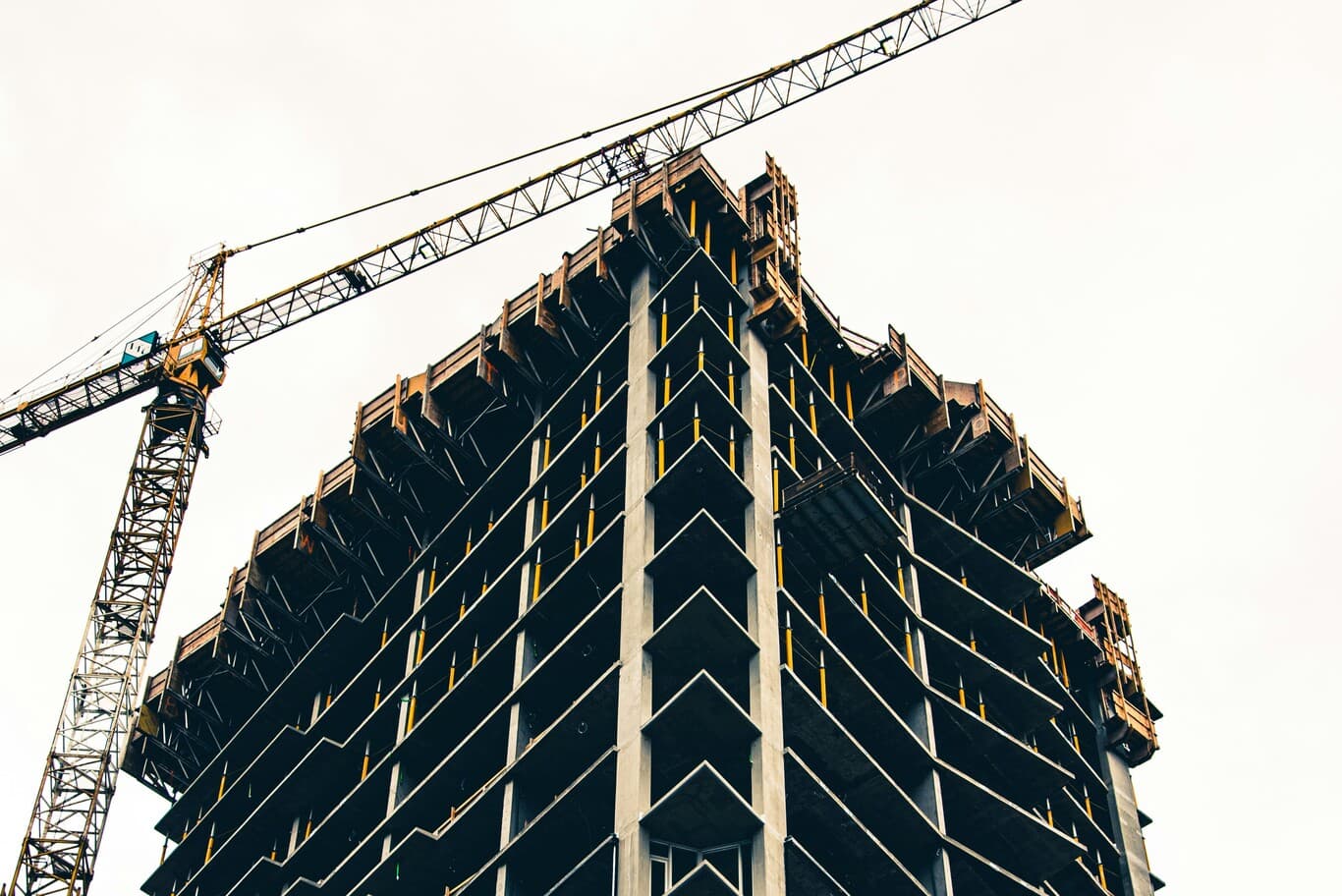
Hotel MEP is 40% of build costs. Use this checklist for HVAC, GRMS, and Dubai compliance before you break ground on your project.
A hotel’s architecture gets photographed. Its lobby gets talked about. But the systems running behind the walls, above the ceilings, and beneath the floors determine whether that hotel operates profitably or bleeds cash for decades. Mechanical, electrical, and plumbing (MEP) systems are the operational backbone of every hotel, and the decisions made during pre-construction planning lock in performance outcomes that no amount of post-opening renovation can fully correct.
Consider the numbers: MEP installations typically represent 30–40% of a hotel’s total construction budget. After opening, those same systems drive roughly 65% of operating costs through energy consumption, water usage, and ongoing maintenance. A poorly sized chiller plant or an undersized electrical distribution system will cost the owner far more over a 25-year building lifecycle than the initial savings gained by cutting corners during design.
For developers building hotels in Dubai and the wider Gulf region, the stakes are higher. Ambient temperatures regularly exceed 45°C in summer. Regulatory frameworks span multiple authorities—Dubai Municipality, DEWA, Dubai Civil Defence—each with distinct approval requirements for MEP designs. And guest expectations in a market defined by five-star competition leave zero room for HVAC failures, plumbing noise, or lighting inconsistencies.
This checklist walks through every major MEP decision a hotel developer should address before breaking ground. It draws from real project outcomes, documented engineering approaches, and the regulatory realities of building in the UAE. If you’ve already read The Developer’s Playbook for Hotel Builds, treat this as the technical companion to that strategic framework.
What Makes Hotel MEP Different from Other Building Types
Hotels are among the most MEP-intensive building types in commercial construction. A standard office building might have uniform HVAC zones across entire floors. A hotel has hundreds of individually controlled guest rooms, each requiring independent temperature management, fresh air supply, hot water on demand, and lighting scenes that shift between sleep mode and full brightness at the touch of a switch.
Beyond guest rooms, hotels contain a mix of occupancy types under one roof: commercial kitchens generating massive heat and grease exhaust loads, laundry facilities consuming significant water and energy, swimming pools requiring dedicated filtration and chemical treatment, banquet halls needing flexible lighting and acoustic isolation, and parking structures demanding separate ventilation and smoke extraction systems.
Each of these zones operates on different schedules, serves different occupancy patterns, and carries different code requirements. The MEP engineer’s job is to design systems that serve all of them simultaneously without interference, while keeping total energy consumption within budget and meeting every regulatory threshold.
Mechanical Systems: HVAC, Ventilation, and Smoke Management
HVAC Design and Climate Considerations
In Dubai’s climate, HVAC accounts for the single largest share of a hotel’s energy bill—often exceeding 50% of total consumption. The choice between district cooling and on-site chiller plants is the first major mechanical decision, and it carries long-term financial consequences.
District cooling, supplied by providers like Empower or Emirates District Cooling, eliminates the need for rooftop or basement chiller plants. This frees up valuable real estate within the building footprint and shifts maintenance responsibility to the provider. However, district cooling comes with allocated flow rates per plot, and developers who underestimate peak demand during design may face capacity shortfalls during high-occupancy summer months.
Industry insight: Radisson Hotel, Palm Jumeirah
The 4-star Radisson Hotel on Palm Jumeirah, a 3B+G+14 Floors project spanning approximately 337,000 sq. ft., encountered exactly this challenge. The district cooling provider allocated a lower chilled water flow rate than the project initially required. The MEP engineering team, the consultant firm they worked with, addressed this through a comprehensive smart design approach: gas-fired boilers replaced electric water heaters for the domestic hot water system, LED lighting with intelligent controls reduced internal heat gains, and the complete water supply system was transfer-boosted from the basement level to eliminate the need for overhead tanks—freeing up space and reducing the building’s electrical load demand.
The electrical system was further optimized through variable frequency drives on elevators and power factor correction from 0.8 to 0.95, using capacitor banks with D2 reactors to improve power quality across the building.
For official project details and developer information, visit the official Radisson Hotel Palm Jumeirah website.
Guest Room HVAC: Individual Control at Scale
Every guest room needs independent temperature control. Fan coil units (FCUs) remain the standard for hotel guest rooms because they allow room-by-room adjustment without affecting adjacent spaces. The critical design parameters include:
- Noise levels: FCU units must operate below 35 dB(A) in guest rooms. Equipment selection and duct sizing directly affect this. A guest who hears the HVAC system running will leave a negative review.
- Fresh air supply: ASHRAE 62.1 mandates minimum outdoor air ventilation rates per person. Hotels must balance fresh air intake with energy costs, especially when outdoor air temperatures exceed 45°C.
- Condensate management: In humid Gulf climates, FCUs generate significant condensate. Drain lines must be properly sloped and connected to prevent water damage—a frequent cause of ceiling staining and mold in poorly designed hotels.
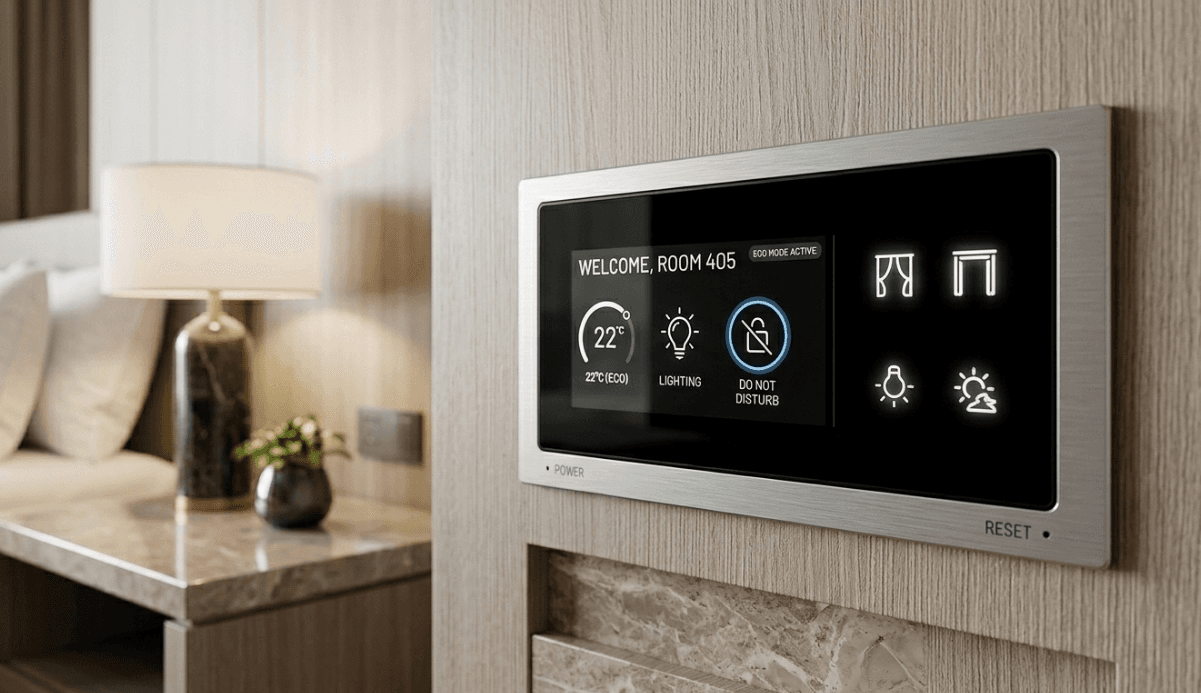
- Guest room management systems (GRMS): Modern hotels integrate HVAC control with lighting, curtains, and occupancy sensing through a unified in-room control panel. When a guest leaves the room, the system shifts to setback mode, reducing energy consumption by 20–30%.
Ventilation and Smoke Management
Kitchen exhaust, car park ventilation, and smoke extraction each require dedicated engineering attention. Commercial hotel kitchens generate enormous grease and heat loads, requiring high-capacity exhaust hoods with makeup air systems that don’t create negative pressure in dining areas.
Car park ventilation must comply with Dubai Civil Defence requirements for smoke extraction in the event of fire. Jet fan systems and ducted extraction must be designed to clear smoke within specified timeframes, and these systems must integrate with the building’s fire alarm panel for automatic activation.
Electrical Systems: Power Distribution, Lighting, and Low Voltage
Power Planning and DEWA Compliance
DEWA (Dubai Electricity and Water Authority) approval is mandatory for all electrical designs before construction begins. This involves submitting load schedules, transformer sizing calculations, and switchgear specifications. Under-sizing the electrical infrastructure is one of the most expensive mistakes in hotel construction because increasing capacity after construction requires rewiring, adding transformers, and potentially reconfiguring electrical rooms—costs that dwarf the original savings.
Key electrical planning items for hotels include:
- Emergency power: Hotels require standby generators sized to support life safety systems, elevators, minimum lighting, and refrigeration. Generator room placement, fuel storage, exhaust routing, and acoustic treatment all need resolution during design.
- Power factor correction: DEWA mandates minimum power factor requirements. Capacitor banks and harmonic filters should be specified from the outset to avoid penalty charges on the electricity bill.
- Electrical room sizing: DEWA has specific spatial requirements for transformer rooms, meter rooms, and LV switchgear rooms. These requirements must be incorporated into the architectural floor plan early—not squeezed in later when space is already committed.
Lighting Design: Function Meets Atmosphere
Hotel lighting serves a dual purpose: functional illumination and atmospheric design. Lobbies, restaurants, and corridors each require different lighting scenes that shift throughout the day. The MEP scope must accommodate:
- Lighting control systems: Programmable scene-setting panels in public areas, dimmable circuits in guest rooms, and occupancy sensors in back-of-house areas. These systems can reduce lighting energy consumption by 25% or more when properly commissioned.
- Emergency lighting: Dubai Civil Defence requires maintained emergency lighting in all escape routes, with battery backup providing minimum illumination for at least 3 hours.
- Exterior and façade lighting: LED technologies are standard for creating nighttime visual impact while minimizing energy consumption. Façade lighting designs must be coordinated with the MEP electrical distribution to avoid overloading exterior circuits.
Low Voltage and ELV Systems
Hotels require extensive extra-low voltage (ELV) infrastructure beyond standard power and lighting. This includes structured cabling for data and telecommunications, IPTV distribution to guest rooms, access control and electronic lock systems, CCTV coverage of public areas and service corridors, and public address and background music systems. These systems share riser space with power and plumbing services, making early coordination through BIM modeling critical to avoiding clashes in the ceiling void and vertical risers.
Plumbing Systems: Water Supply, Drainage, and Fire Protection
Domestic Water and Hot Water Systems
Hotels consume water 24 hours a day. Unlike office buildings that peak during business hours, hotels see demand spikes at morning shower times, during restaurant service, and from laundry operations running continuously. The plumbing design must handle these overlapping peaks without pressure drops that guests will notice immediately.
Hot water system selection carries long-term operating cost implications. The main options include:
- Gas-fired boilers: Lower operating cost per liter of hot water compared to electric heaters, and the system can be sized to handle peak demand from hundreds of simultaneous showers. Requires LPG storage or natural gas supply infrastructure.
- Heat pump systems: Higher capital cost but significantly lower energy consumption. Coefficient of performance (COP) ratings of 3.0–4.0 mean each unit of electricity produces 3–4 units of heat energy.
- Solar thermal pre-heating: Dubai’s Al Sa’fat green building rating system encourages solar thermal water heating. Rooftop solar collectors can pre-heat incoming water, reducing the load on primary heating systems by 30–40%.
Industry Spotlight: Burj Khalifa — Plumbing at Extreme Scale
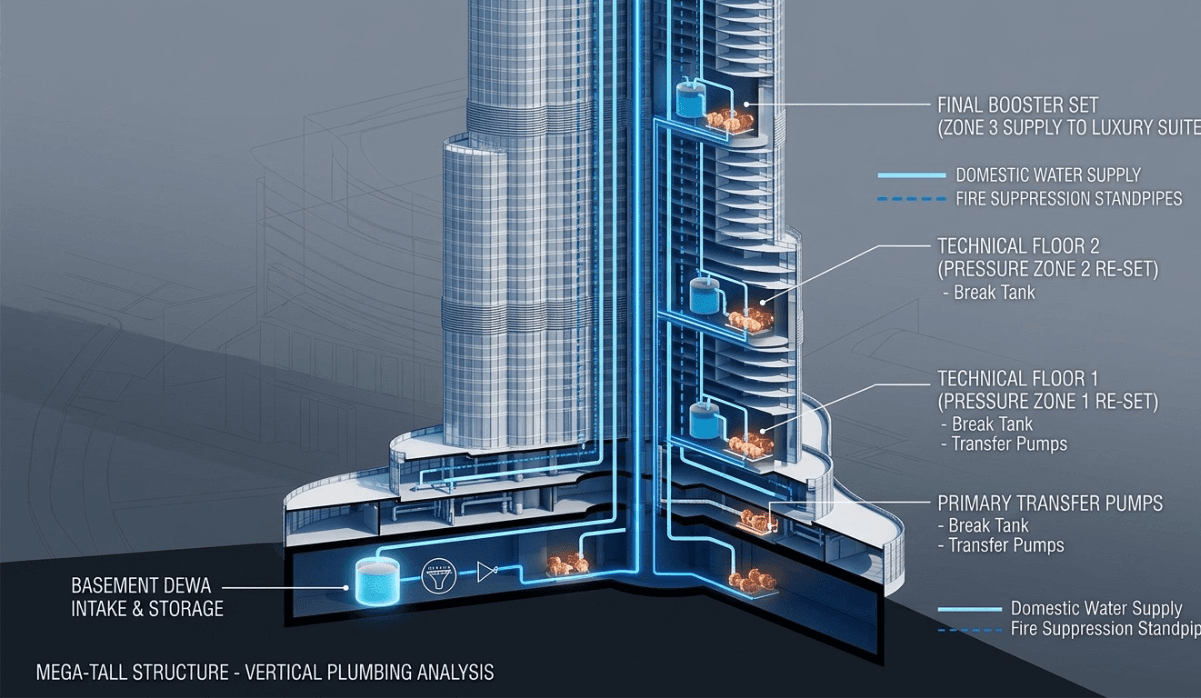
The Burj Khalifa demonstrates what happens when plumbing engineering must serve extreme vertical distances. The tower’s water system delivers an average of 946,000 liters of water daily through 100 km of piping. An additional 213 km of piping serves the fire emergency system, and 34 km supplies chilled water for air conditioning.
Delivering water to upper floors required pressure booster sets operating at 30 bar, positioned at the basement level and on two intermediate technical floors located one-third of the way up the tower’s height. The chilled water system operates at one of the highest pressures in the world at 460 psi (3.2 MPa), and an innovative condensate recovery system captures moisture from the air conditioning process—producing enough fresh water annually to fill 14 Olympic-sized swimming pools rather than relying entirely on desalination.
While most hotel projects won’t approach this scale, the engineering principles remain relevant: pressure zoning, booster pump placement, and water recovery systems all apply to mid-rise and high-rise hotel developments in Dubai.
For official project details and developer information, visit the official Burj Khalifa website.
Drainage and Waste Management
Drainage design in hotels must account for kitchen grease waste (requiring grease traps and separate drainage lines), laundry chemical waste, swimming pool backwash, and standard sanitary drainage from hundreds of guest room bathrooms. Pipe sizing, slope calculations, and vent stack placement must follow Dubai Municipality plumbing codes and prevent cross-contamination between waste streams.
Fire Protection Systems
Dubai Civil Defence requirements govern every aspect of hotel fire protection. The fire suppression package includes sprinkler systems throughout the building, standpipe systems for firefighter access, fire pump rooms with primary and backup pumps, smoke detection and alarm systems integrated with the building management system, and stairwell pressurization to keep evacuation routes clear of smoke.
Fire protection design must begin during the schematic design phase, not after architectural layouts are finalized. Late-stage fire engineering changes are among the most disruptive and expensive modifications in hotel construction.
MEP Coordination and BIM: Where Projects Succeed or Fail
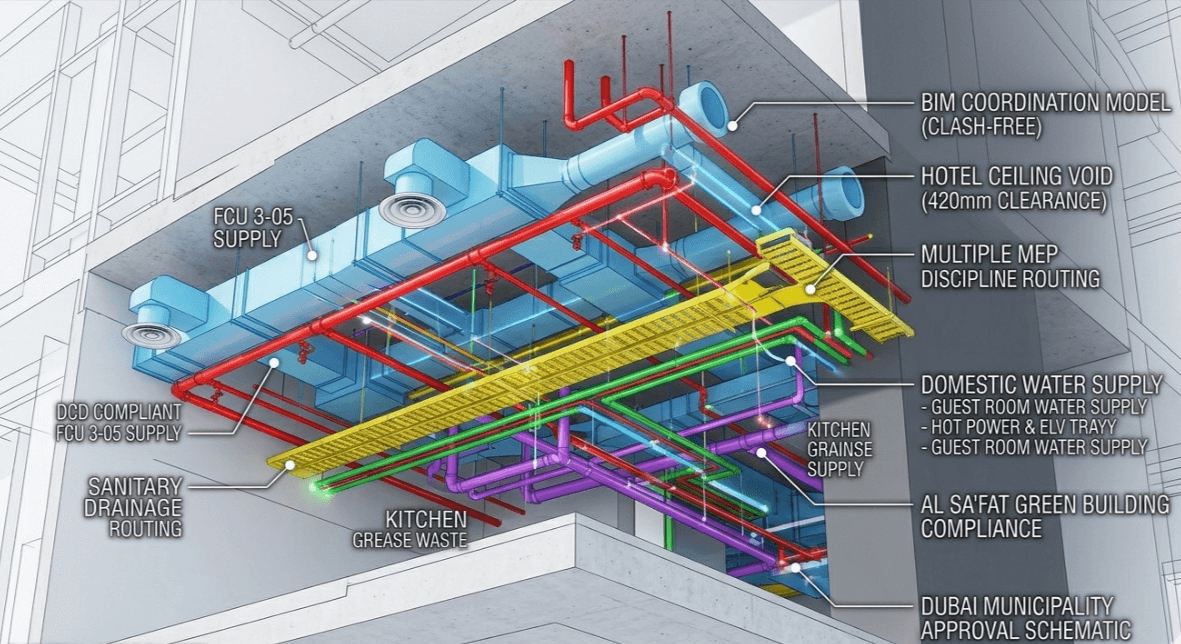
The single greatest risk to hotel MEP performance is poor coordination between mechanical, electrical, and plumbing disciplines. When HVAC ducts, cable trays, plumbing risers, and fire sprinkler piping compete for the same ceiling void space, the result is field clashes that require expensive rework, construction delays, and compromised ceiling heights that affect the guest experience.
Building Information Modeling (BIM) has become the industry standard for MEP coordination, and Dubai Municipality now requires BIM submission for large-scale projects. Clash detection software identifies conflicts between MEP systems and structural elements before construction begins, reducing on-site rework by an estimated 20–30%.
The Westin Doha Hotel project, engineered by another consultancy firm, demonstrated how full MEP integration during the design phase improves outcomes. IP-based MEP control systems—including lighting controls, guest room management, building energy management, and local HVAC controls—were designed to operate on a single unified platform. Thermal modelling was applied to design the smoke management system, and solar thermal water heaters were integrated throughout the complex. The result was a cohesive system that met both the high aesthetic demands of a luxury hotel and stringent sustainability targets.
For official project details and developer information, visit the official Westin Doha Hotel website.
Where Interior Design Meets MEP Engineering
One of the most underappreciated aspects of hotel MEP planning is the relationship between interior design intent and mechanical system performance. A beautiful guest room with visible diffuser grilles, noisy FCU returns, or poorly placed light switches undermines the design investment. The most successful hotel projects bring interior designers and MEP engineers into the same room during the schematic design phase.
Industry insight: Boutique Hotel, Doha, Qatar
Eng. Tareq Skaik, a licensed interior designer with over 12 years of international experience across the US, UK, and Middle East, and Head of Design at Algedra, was assigned as design manager for a boutique hotel near Doha’s new airport. The project presented significant design-to-engineering coordination challenges. According to the project scope, he was brought onto the project specifically because he had demonstrated the ability to provide inventive solutions for difficulties that arose during design coordination.
Skaik’s methodology—beginning with spatial programming, circulation studies, and volumetric planning before layering in aesthetic considerations—directly reduced conflicts between interior finishes and MEP routing. By resolving spatial fundamentals first, the project minimized miscommunication across architecture, lighting, MEP, and fit-out teams. This approach is relevant for every hotel developer: early spatial coordination between design and engineering disciplines prevents costly field changes and protects the guest experience.
The Developer’s MEP Checklist: 15 Items to Resolve Before Breaking Ground
Address each of these during your pre-construction phase to avoid costly redesign, regulatory delays, and long-term operating inefficiencies.
Mechanical
- Confirm district cooling allocation versus on-site chiller plant sizing. Verify peak demand calculations against allocated flow rates.
- Specify guest room FCU noise ratings below 35 dB(A) and confirm condensate drainage routing for every floor.
- Design kitchen exhaust and makeup air systems with sufficient capacity for all planned F&B outlets, including future expansion.
- Complete car park ventilation and smoke extraction design in compliance with Dubai Civil Defence standards.
- Select the guest room management system (GRMS) platform and confirm integration with HVAC, lighting, and curtain controls.
Electrical
- Submit DEWA load schedule and confirm transformer sizing, electrical room dimensions, and metering arrangements.
- Size emergency generators for life safety loads plus operational minimums (elevators, refrigeration, minimum guest room lighting).
- Specify lighting control systems for all public areas with scene-setting capability and daylight harvesting where applicable.
- Plan ELV infrastructure: structured cabling, IPTV, access control, CCTV, and public address systems with dedicated riser space.
Plumbing
- Select hot water generation method (gas boiler, heat pump, or hybrid) and size for peak simultaneous demand.
- Design pressure zoning and booster pump placement for buildings exceeding 6–8 stories.
- Specify separate drainage systems for kitchen grease waste, laundry, pool backwash, and sanitary waste.
Integration
- Execute full BIM coordination across all MEP disciplines with clash detection before construction documents are issued.
- Schedule MEP integration workshops with architecture, interior design, structural, and fire engineering consultants.
- Confirm all regulatory submissions are prepared: Dubai Municipality MEP plans, DEWA electrical approval, and Dubai Civil Defence fire and life safety approval.
Dubai’s Regulatory Landscape for Hotel MEP
Hotel MEP in Dubai requires approval from three primary authorities, each reviewing different aspects of the same systems:
Authority:
Dubai Municipality: Mep Review scope including general plans, ventilation rates, plumbing codes, green building compliance.
Key requirements: BIM submission for large projects; Al Sa’fat green building rating; MEP schematics showing energy-efficient HVAC and low-flow fixtures
DEWA: Mep review scope includes electrical installations, water supply connections, metering.
Key Requirements: Load schedules, transformer specs, cable sizing, power factor correction, electrical room spatial requirements.
Dubai Civil Defence: MEP review scope including fire alarm, sprinkler, smoke management, emergency lighting, evacuation systems.
Key Requirements: UAE Fire and Life Safety Code compliance; design review and site inspections during construction; fire-rated cables and automatic shutdown systems.
Failing to secure any one of these approvals will block construction progress, delay DEWA connections, or prevent issuance of the building completion certificate. Coordinate all three submission packages simultaneously during the design phase—not sequentially.
MEP Cost Perspective: Upfront Investment vs. Lifecycle Returns
Developers who view MEP as a line item to minimize during construction routinely spend more over the building’s operating life. The math is straightforward:
- A Building Management System (BMS) for a 150-key hotel involves a meaningful upfront investment but typically delivers annual energy savings that produce a payback period of under 2 years. Hotels that skip the BMS to reduce construction costs forfeit those savings every year for the building’s entire operational life.
- HVAC optimization through scheduling and occupancy-based controls can reduce mechanical energy consumption by 30%. Lighting management through daylight harvesting and occupancy sensors adds another 25% reduction in lighting energy costs.
- Predictive maintenance capabilities built into modern BMS platforms reduce equipment failure rates by approximately 40%, cutting both repair costs and guest disruption from system outages.
The developer who designs MEP systems for 25-year performance rather than lowest-bid construction cost creates an asset that commands higher operating margins from day one. This lifecycle perspective is central to the pre-construction services approach that separates successful hotel developments from troubled ones.
Planning a Hotel Project in Dubai?
MEP decisions made during pre-construction define your hotel’s operating economics for decades. Capital Associated’s pre-construction and project management teams coordinate MEP engineering, interior design, and regulatory compliance into a single integrated delivery process.
Frequently Asked Questions
What percentage of hotel construction cost goes to MEP systems?
MEP systems typically account for 30–40% of total hotel construction costs. This is higher than most other commercial building types because hotels require room-by-room HVAC control, extensive hot water infrastructure, guest room management systems, and comprehensive fire protection. The exact percentage varies based on hotel category, number of keys, and the complexity of food and beverage, pool, and spa facilities.
When should MEP design start in the hotel development process?
MEP design should begin during the schematic design phase, alongside architectural design. Starting MEP engineering after architectural layouts are finalized leads to costly rework, spatial conflicts in ceiling voids and risers, and regulatory delays. Early engagement allows MEP engineers to reserve adequate space for mechanical rooms, electrical rooms, and vertical risers before those areas are allocated to other functions.
What is a Guest Room Management System (GRMS)?
A GRMS is an integrated control platform that manages HVAC, lighting, curtains, and occupancy sensing within each hotel guest room. When a guest leaves the room (detected through keycard removal or occupancy sensors), the system automatically shifts to energy-saving setback mode. When the guest returns, the room restores to their preferred settings. Properly commissioned GRMS installations reduce per-room energy consumption by 20–30%.
What MEP approvals are required for hotel construction in Dubai?
Hotel MEP designs in Dubai require approval from three authorities: Dubai Municipality (general MEP plans, ventilation, plumbing, and green building compliance), DEWA (electrical installations, water supply connections, load schedules, and transformer sizing), and Dubai Civil Defence (fire alarm, sprinkler, smoke management, emergency lighting, and evacuation systems). All three must be obtained before construction proceeds.
How does BIM improve hotel MEP coordination?
Building Information Modeling creates a three-dimensional digital model of all building systems, allowing engineers to detect clashes between HVAC ducts, plumbing pipes, cable trays, and structural elements before construction starts. For hotels, where ceiling void space is tight and multiple disciplines compete for the same routing corridors, BIM-based clash detection reduces on-site rework by an estimated 20–30% and prevents costly construction delays.
Can MEP systems be upgraded after a hotel opens?
Certain components can be upgraded—lighting fixtures, control software, individual FCU units—but the core infrastructure (pipe diameters, duct sizing, electrical distribution capacity, riser shaft dimensions) is extremely difficult and expensive to change post-construction. This is why getting MEP design right during pre-construction planning is critical. Under-sizing core infrastructure creates operational limitations that persist for the building’s entire lifecycle.