
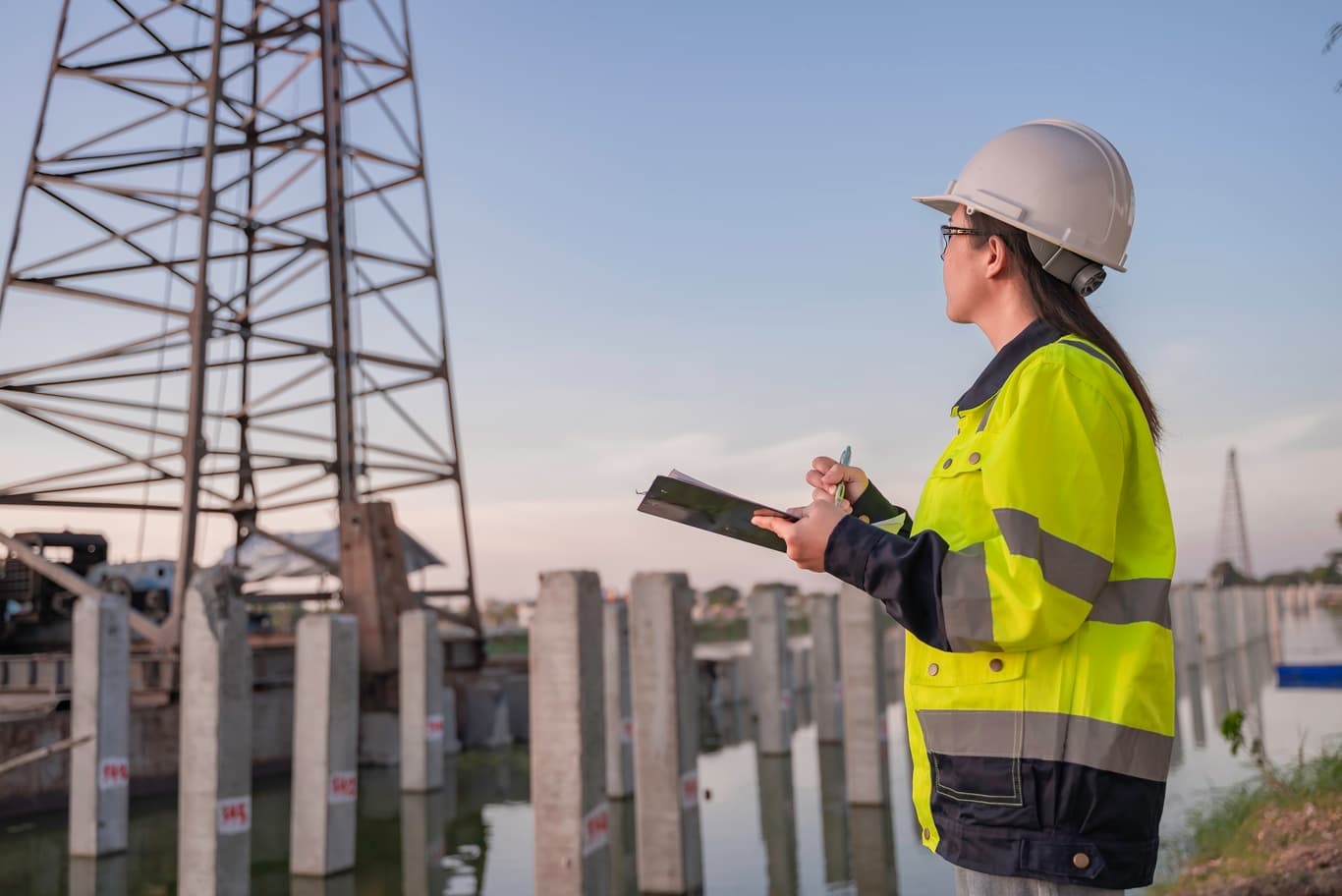
How piling and foundations get built in Dubai — bored piles, CFA, driven piles, and piled rafts, engineered for the emirate's sands, sabkha, and high water table.
Every tower, villa, and warehouse in Dubai transfers its entire weight into the ground through one system: the foundation. Get that system right, and the structure above stands stable for generations. The emirate makes the task demanding, because Dubai's ground combines loose desert sands, variable calcareous sandstone, pockets of salt-rich sabkha, and a water table that sits close to the surface and carries aggressive chlorides and sulfates. A general contractor earns real value here by matching the foundation method to the ground, then building it with the precision that deep work requires.
For developers and owners planning a project, the foundation stage sets the tone for everything that follows. Decisions made below ground shape the programme, the budget, and the long-term performance of the asset, and they reward early, expert attention from a contractor who has built across the emirate's varied ground. A foundation matched to the site carries the building safely for its whole life and keeps the schedule intact from the first day on site. The sections below explain how Dubai's ground behaves, which piling and foundation methods suit which conditions, and how a contractor executes the work to the standards the emirate demands.
Reading Dubai's Ground
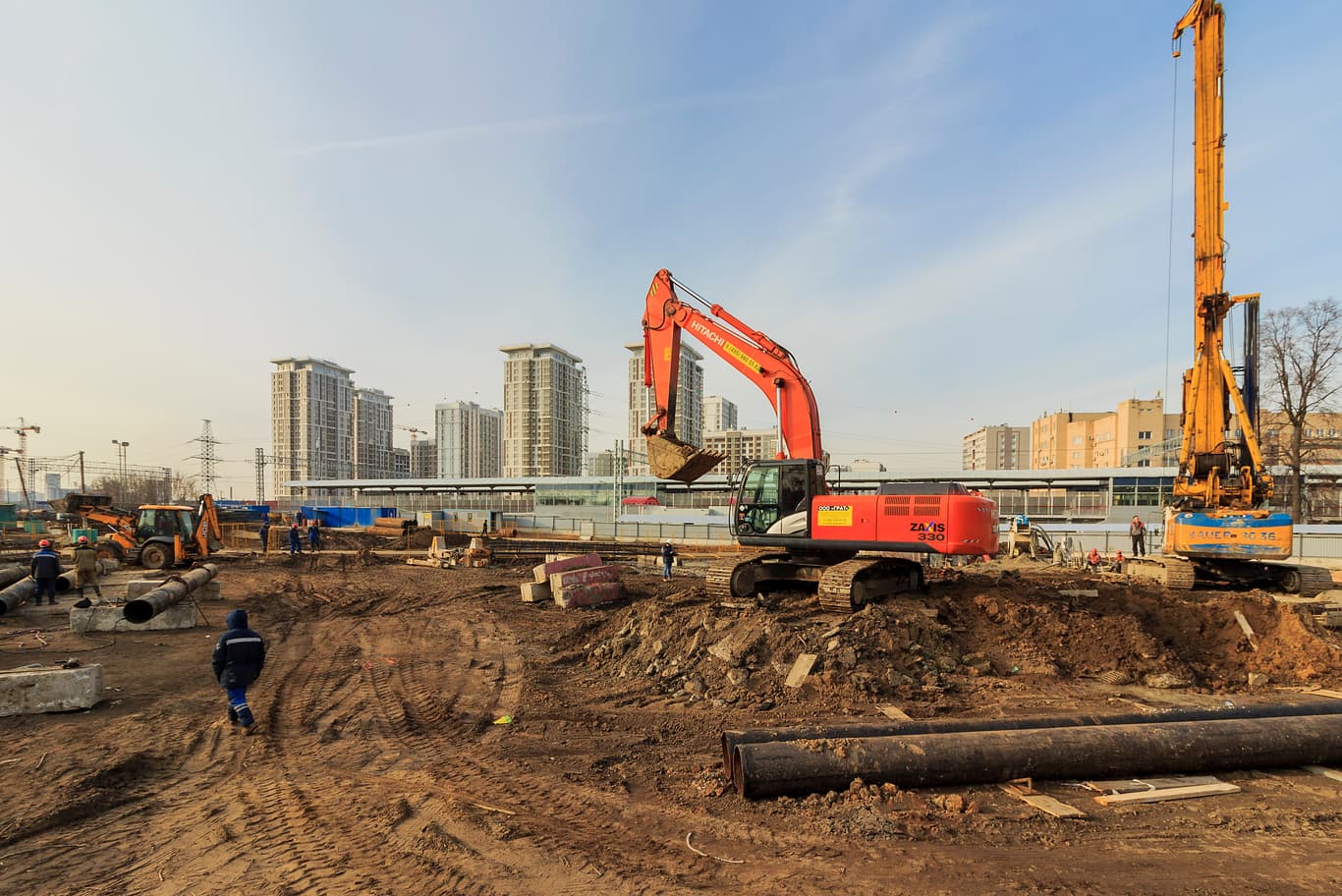
Foundation design starts with the soil profile, and Dubai's profile follows a recognisable pattern with important local variations. The upper layers typically hold medium-dense to loose aeolian (wind-blown) sands. Beneath them sit weak to moderately weak calcareous sandstone — often called calcarenite — interbedded with weakly cemented sand, gypsum-bearing siltstone, and conglomerate. On the Burj Khalifa site, geotechnical work characterised these carbonate soils and rocks to depths beyond 46 metres, which illustrates how deep the competent bearing layers can sit.
Two features make the local ground distinctive. The first is sabkha: salt-flat deposits that hold high concentrations of soluble salts and lose bearing capacity when saturated. The second is groundwater. Across coastal and low-lying districts, the water table stands high — on the Burj Khalifa site it sat roughly 2.5 metres below ground level — and its proximity to the Arabian Gulf makes it chemically aggressive toward concrete and steel. A contractor plans both the foundation type and the concrete durability strategy around these two realities.
Understanding this profile before design begins is the whole purpose of the subsurface investigation programme that precedes every serious project. Boreholes, in-situ testing, and laboratory chemical analysis of soil and groundwater translate the ground into numbers the engineer uses to size the foundation with confidence.
Shallow Foundations: When the Ground Cooperates
Where competent soil or rock sits close to the surface and loads stay modest, shallow foundations do the job efficiently. Three forms appear across Dubai projects.
Isolated pad footings support individual columns and suit low-rise buildings, villas, and light commercial structures on firm ground. Strip footings run continuously beneath load-bearing walls, spreading their weight along a line. Raft (or mat) foundations use a single thick reinforced-concrete slab to carry an entire building, distributing load across a wide area — a strong choice where soil bearing capacity is moderate and where a basement already calls for a solid base slab.
A general contractor favours shallow foundations wherever ground conditions allow, because they use less material and less time. The geotechnical data decides: when the near-surface layers offer enough bearing capacity and settlement stays within tolerance, a shallow system delivers a sound, economical base. When loads climb or the strong strata lie deep, the design moves downward to piles.
Deep Foundations: Reaching Competent Strata
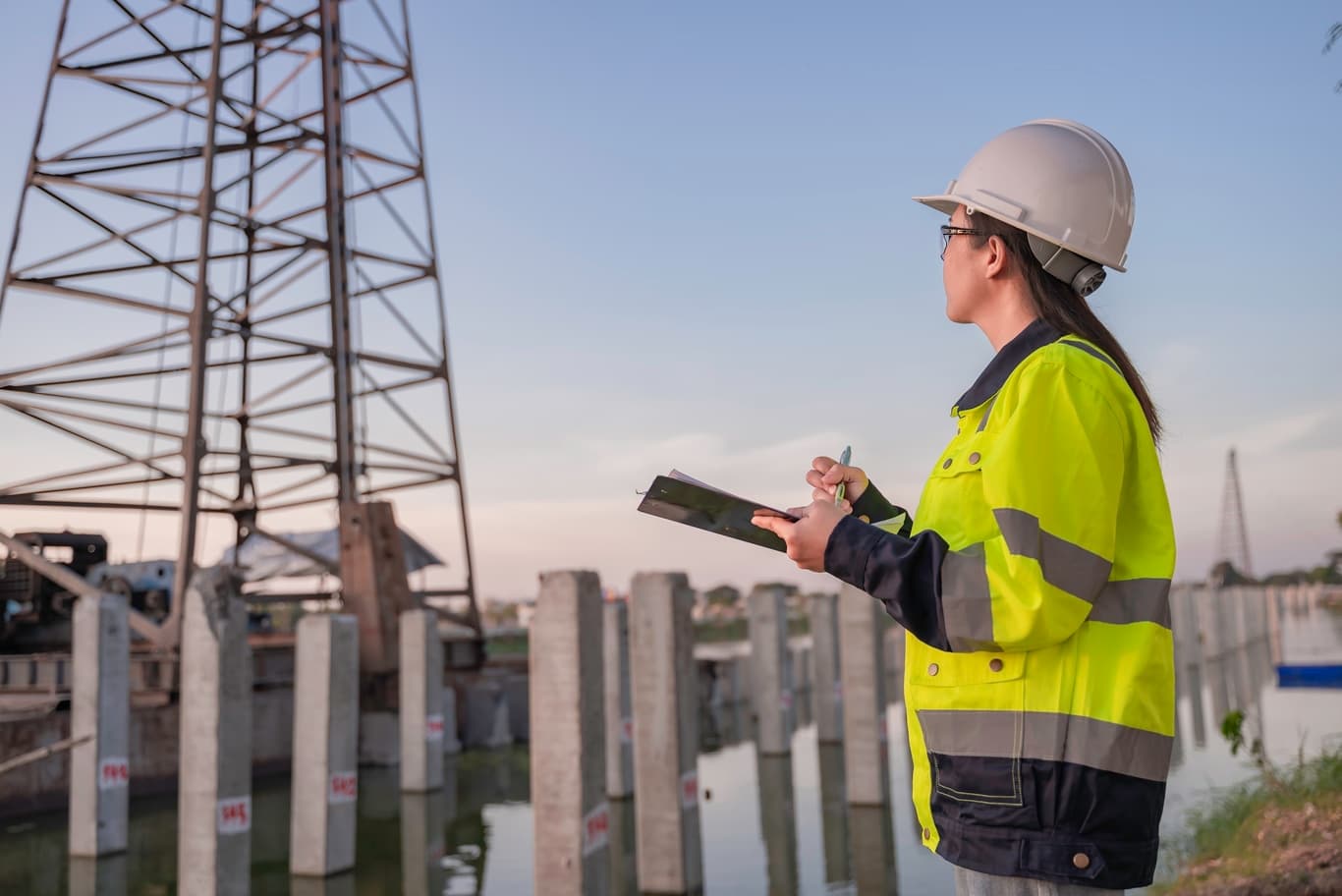
Deep foundations carry structural loads past weak upper soils and into the stronger sandstone and rock below. Tall towers, heavy industrial buildings, structures on sabkha, and any project with high or concentrated loads rely on them. Several methods serve Dubai sites, and each suits particular conditions.
Bored Cast-in-Situ Piles
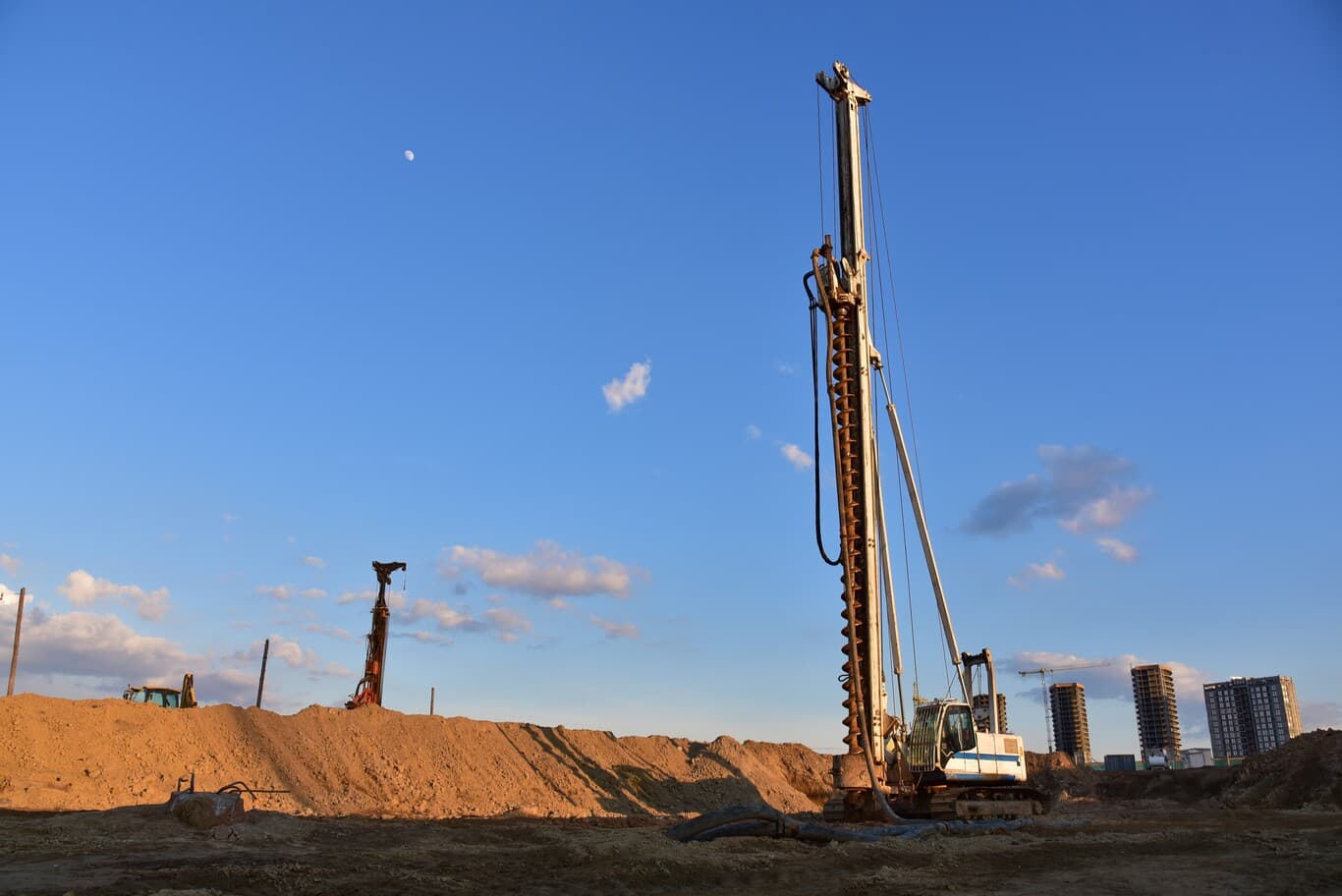
Bored piles are the workhorse of Dubai's larger projects. A rotary rig drills a shaft to design depth, engineers stabilise the bore, a reinforcement cage drops in, and concrete fills the shaft from the bottom up. The result is a cast-in-place column that transfers load through shaft friction and end bearing into competent strata.
Because Dubai's water table sits high, contractors keep the bore open using support fluid — bentonite slurry or a polymer solution — which balances groundwater pressure and holds the shaft wall steady until concreting. Bored piles handle large diameters and deep founding levels, which makes them ideal for high-rise work. The Burj Khalifa illustrates the scale this method reaches: a piled raft with 1.5-metre-diameter bored piles extending roughly 50 metres below a 3.7-metre-thick raft, each pile designed for a working load in the region of 30 meganewtons. The same principle scales down neatly to mid-rise towers and heavy commercial buildings across the emirate.
Continuous Flight Auger (CFA) Piles
CFA piling offers speed and quiet operation, which suits urban sites near occupied buildings. A continuous auger drills to depth in one pass; as it withdraws, concrete pumps through the hollow stem to fill the shaft, and reinforcement follows. The method keeps the bore supported by the auger and the soil throughout, so it performs well in sands and works cleanly above a high water table. CFA piles typically serve small-to-medium diameters and moderate depths, making them a productive choice for residential blocks, low-to-mid-rise commercial structures, and infrastructure.
Driven Piles
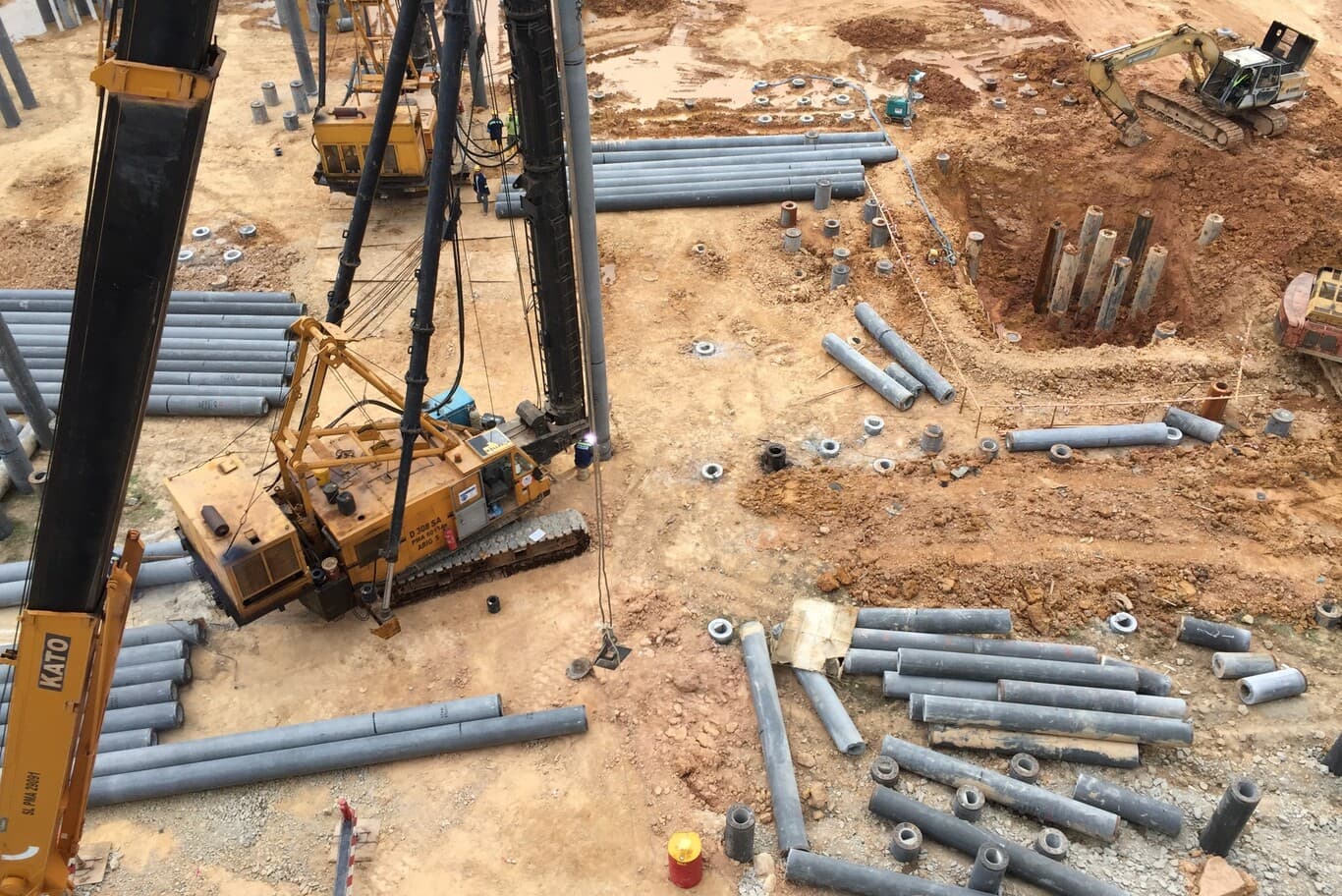
Driven piles — precast concrete or steel sections hammered or vibrated into the ground — displace soil rather than removing it, and they suit sites where the ground accepts displacement and where speed and clean spoil handling add value. Because driving generates noise and vibration, contractors weigh their use carefully on dense urban sites and near sensitive neighbours. Where conditions suit, driven piles deliver rapid, reliable capacity with the reassurance of installation records for every pile.
Piled Raft Foundations
The piled raft marries two systems into one. A thick reinforced-concrete raft spreads load across the footprint while piles beneath it carry the concentrated loads down to strong strata, and the two share the burden. For supertall and heavily loaded buildings on Dubai's carbonate ground, the piled raft controls total and differential settlement elegantly — the approach that carries the world's tallest building. A general contractor coordinating this system aligns the raft pour, the pile layout, and the load-sharing design into a single, well-sequenced operation.
Ground Improvement: Strengthening the Soil Itself
Some Dubai sites benefit from a third path that sits between shallow and deep foundations: improving the ground so it carries more load. Vibro compaction densifies loose sands by lowering a vibrating probe that rearranges the grains into a tighter, stronger state — a strong fit for the emirate's aeolian sands. Vibro stone columns drive columns of compacted aggregate into weaker soils, stiffening the ground and speeding drainage, which suits softer and sabkha-affected areas. Dynamic compaction drops heavy weights from height to consolidate large open areas ahead of construction. Each technique raises bearing capacity and controls settlement, often allowing a lighter, more economical foundation above. A contractor weighs ground improvement wherever it shortens the foundation, trims cost, and holds performance within the engineer's targets.
Engineering Against Groundwater and Salt
Dubai's aggressive groundwater shapes foundation durability as much as foundation type. Chlorides threaten steel reinforcement with corrosion, and sulfates attack ordinary cement. A contractor answers with a durability strategy built into the concrete itself: sulfate-resisting cement or blended cements with pulverised fuel ash and ground granulated blast-furnace slag, low water-cement ratios for a dense, low-permeability matrix, generous cover to the reinforcement, and protective coatings or membranes where the design calls for them. Meeting these measures keeps a foundation sound across the decades of service the owner expects.
Waterproofing the substructure completes the picture. Basements and pile caps below the water table receive tanking systems and water bars that hold back groundwater and protect the internal spaces. A methodical approach here pays back throughout the building's life, because a dry, protected substructure supports everything built above it.
Site Mobilisation and Execution
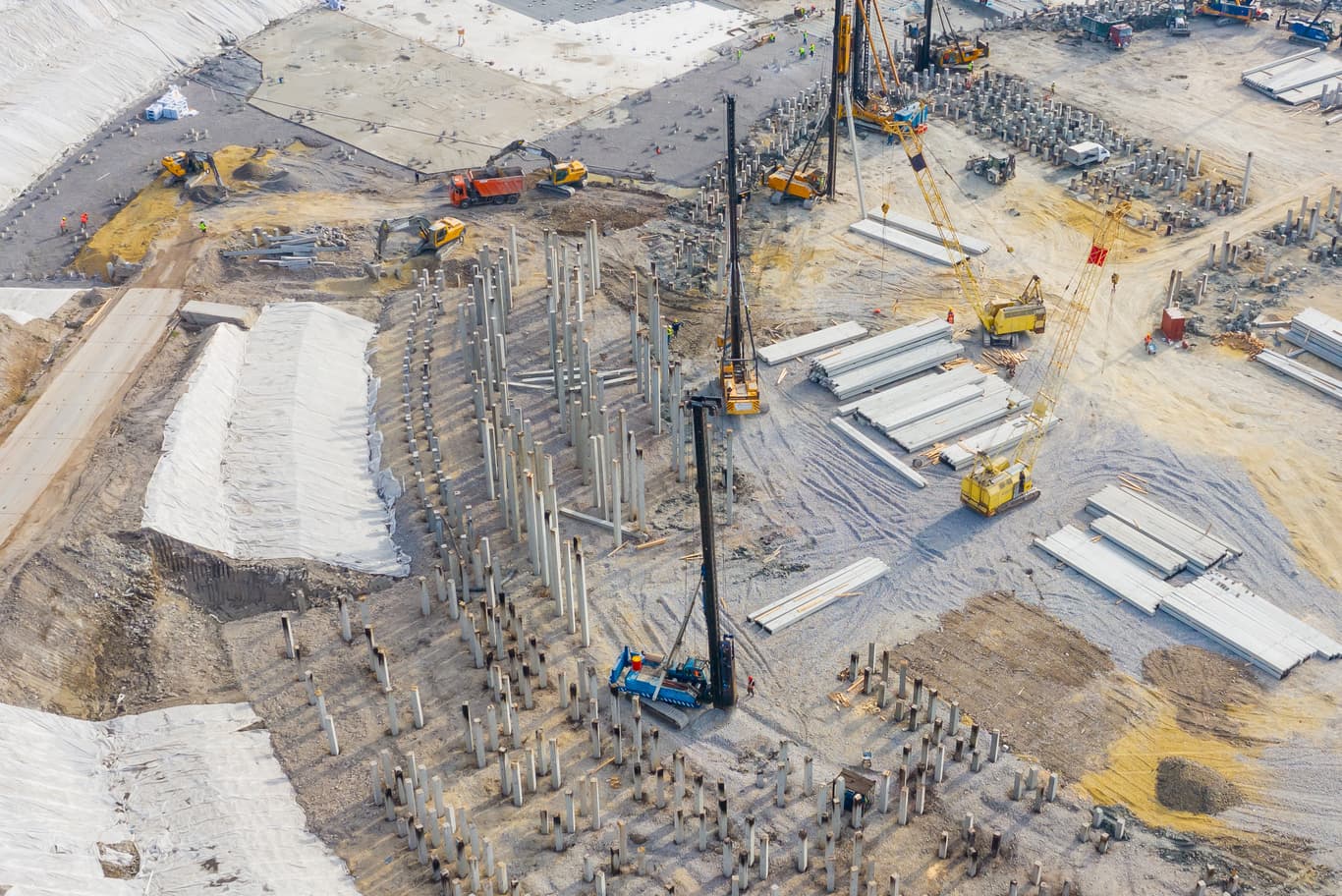
Turning a foundation design into a built reality calls for disciplined site work, and the sequence matters. A contractor mobilises rigs, sets out pile positions with survey precision, and prepares a working platform stable enough to carry heavy plant. Where excavation reaches below the water table, dewatering wells or wellpoints draw the water down and shoring systems — secant pile walls, sheet piles, or diaphragm walls — hold back the surrounding ground and groundwater so that work proceeds on dry, safe ground.
The piling operation then runs as a repeating cycle: position, drill or drive, place reinforcement, concrete, and move on. A contractor experienced in Dubai conditions sequences this flow to keep rigs productive and concrete supply steady, mirroring the wider craft of managing large-scale projects with tight coordination. Once the piles cure, pile caps and ground beams tie them together, and the substructure rises to meet the shell and core stage that follows.
Basements and Deep Excavation
Many Dubai developments add basements for parking and services, which pushes excavation well below the water table and raises the engineering stakes. Contractors hold the sides of a deep excavation with embedded retaining walls — secant or contiguous bored pile walls, or diaphragm walls for the deepest boxes — and manage groundwater through controlled dewatering. On tight urban sites, a top-down method builds the permanent floor slabs as the dig descends, using each slab to prop the walls and letting superstructure work begin earlier. Bringing excavation, propping, dewatering, and waterproofing together into one safe, well-ordered sequence is where deep-basement experience proves its worth, and it ties the foundation directly to the basement structure it supports.
Testing: Proving Every Pile
Confidence in a foundation rests on testing, and Dubai practice applies a thorough regime. Two categories work together.
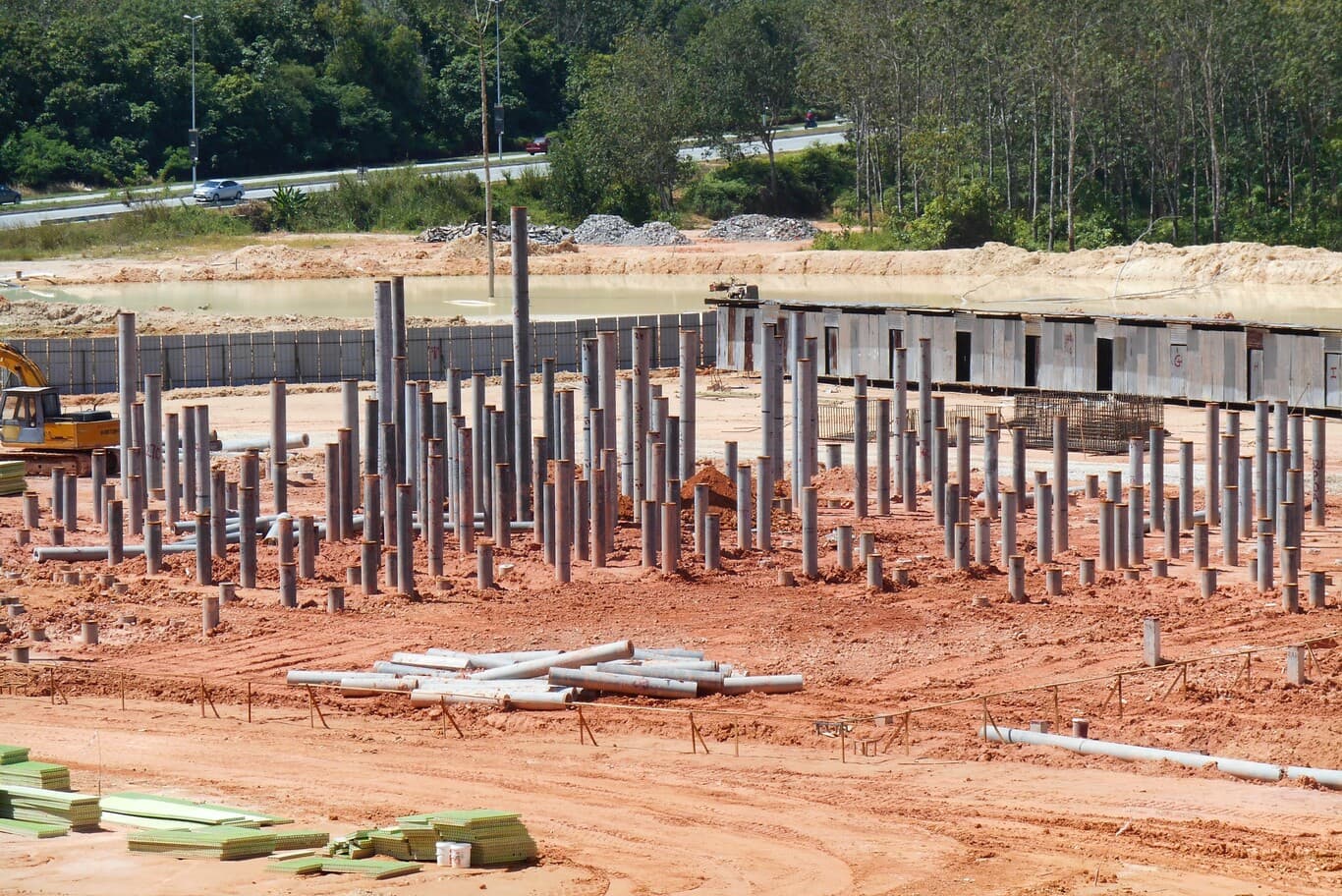
Load testing proves capacity. A static load test applies loads well above the working level to a sacrificial or working pile and measures settlement, confirming that the pile carries its design load with the required margin. High-strain dynamic testing offers a faster route to verify capacity across a wider sample. Both give the engineer hard evidence that the foundation performs as designed.
Integrity testing proves soundness. Low-strain integrity testing (pile integrity testing) sends a stress wave down each pile and reads the reflection to detect anomalies along the shaft. On larger bored piles, cross-hole sonic logging passes signals between cast-in access tubes to confirm the concrete's continuity through the full length. Running these checks across the piling works gives the contractor and the owner assurance that each element meets specification before the structure loads it.
Matching the Method to the Project
Choosing among these methods rests on a clear set of factors, and an experienced contractor weighs them together. Structural loads point the way first: taller and heavier buildings press the design toward deep piles or a piled raft, while lighter structures rest happily on shallow systems or improved ground. The soil and rock profile sets the founding depth and the achievable capacity, so the geotechnical report stays central to every choice. Groundwater level guides both the installation method and the concrete durability strategy. Site constraints add the human dimension — access, proximity to occupied buildings, and tolerance for noise and vibration shape whether bored, CFA, or driven piles suit the location. Programme and budget then temper the final decision. A contractor who reads all of these together arrives at a foundation that fits the ground, the building, and the schedule at once, which is the essence of sound pre-construction judgement.
Permits, Approvals, and Compliance
Foundation work in Dubai proceeds under a clear regulatory framework, and a contractor keeps the project moving by clearing each gate in good time. Excavation, shoring, dewatering, and piling all require the right approvals, and coordination with Dubai Municipality, the relevant authorities, and utility providers keeps the groundwork compliant from the first bore. A structured walk through the permits that clear construction to begin shows how these approvals stack in sequence.
Compliance continues into the technical standards that govern substructure work. Building the foundation to Dubai Municipality's construction requirements keeps each inspection on track and protects the completion certificate at the far end of the programme. A contractor who commands these standards protects the developer's timeline, because foundation approvals sit squarely on the critical path.
Programme and Cost: The Value of Getting It Right Early
Foundations concentrate risk and opportunity at the start of a project. The stage carries heavy line items — piling rigs, reinforcement, large concrete pours, dewatering, and shoring — and it sets the schedule for everything above ground. A well-planned foundation operation delivers savings that ripple through the whole build, while a rushed or mismatched design invites settlement, water ingress, and costly remediation later.
Careful sequencing keeps the stage efficient: night pours in Dubai's cooler hours improve concrete quality, just-in-time delivery keeps congested sites clear, and productive rig cycles convert directly into programme saved. Tracking committed cost against progress from the first pile gives the developer early visibility, in line with the discipline behind steady cost control across a live project. Foundations also sit at the front of the wider construction project lifecycle, so decisions made here echo through design, structure, and handover.
How Capital Associated Approaches Foundations
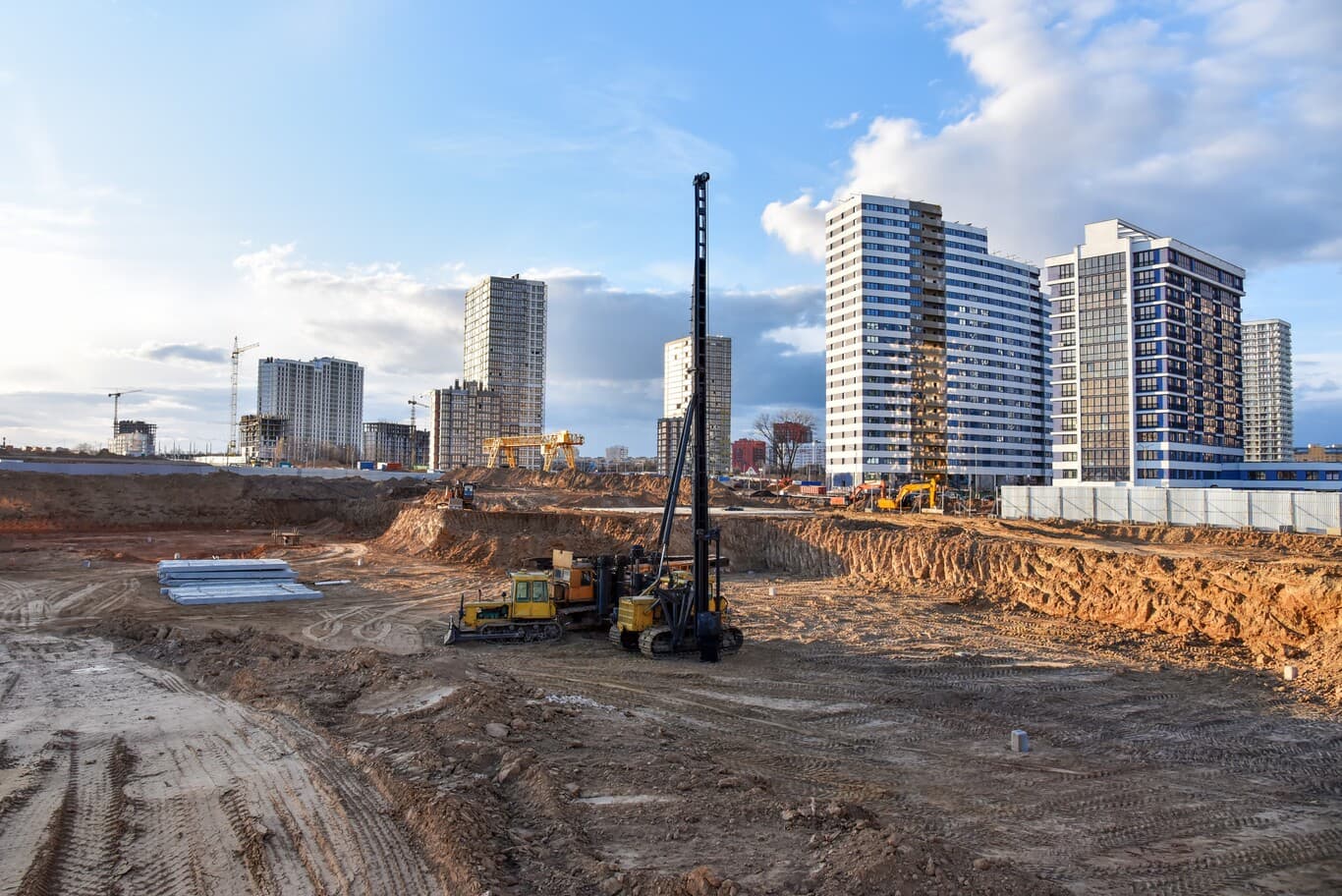
Capital Associated treats the foundation as the stage where careful planning pays the highest dividend. Working from the geotechnical report, the team matches the method to the ground — shallow footings or rafts where conditions allow, bored piles, CFA piles, driven piles, or a piled raft where loads and strata demand depth — and builds a durability strategy around Dubai's groundwater from the outset. As a general contractor in Dubai managing complex builds end to end, the team coordinates survey, dewatering, shoring, piling, testing, and pile caps under one point of accountability, so the substructure arrives sound, tested, and on schedule.
Developers gain the most when a builder engineers the foundation with the same rigour as the visible structure. Every choice — method, depth, concrete mix, testing regime — feeds a programme and a budget that hold firm through completion. That integrated command is the practical reason to engage an experienced contracting company in Dubai early, well before the first rig arrives on site. The broader expertise behind that approach appears in the overview of the general contractor's role on complex builds.
Building on Solid Ground
A Dubai foundation succeeds through a clear chain of good decisions: read the ground, choose the method that fits, engineer for the water and the salt, execute with precision, and prove every pile with testing. General contractors who master that chain give developers a rare kind of confidence — a substructure that carries the building safely for its whole life and keeps the project on track from the very first pour.
To discuss the foundation strategy for a project in Dubai, reach out to the Capital Associated team for a consultation on ground conditions, method selection, and programme.