
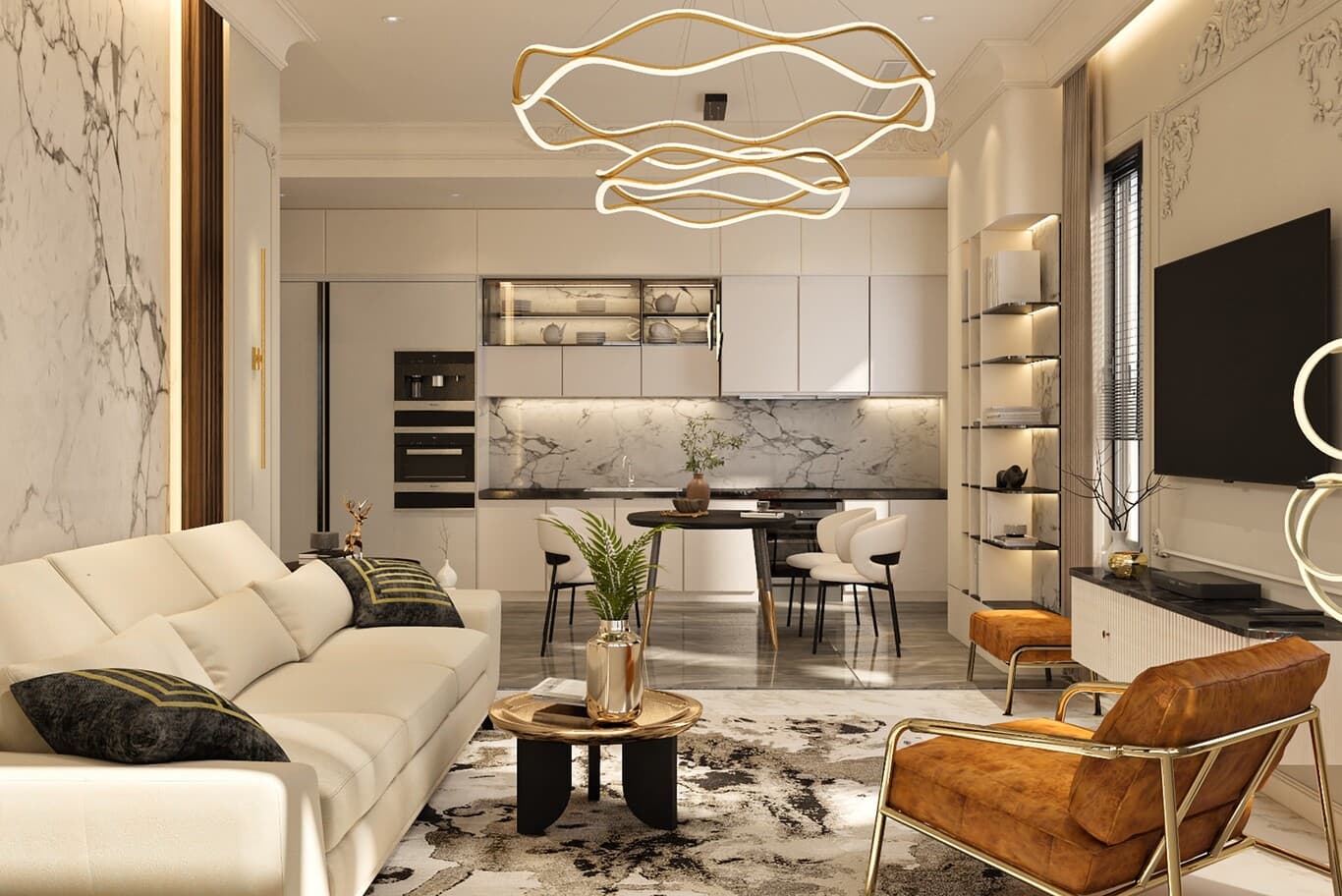
How a villa interior fit-out works in Dubai, stage by stage — design, procurement, MEP, joinery, finishes, and handover — plus costs and realistic timelines.
Buying a villa as shell and core, or building one to that point, leaves an owner with a structure rather than a home: walls up, roof on, external windows in, and everything inside waiting to be created. The villa interior fit-out is the journey that closes that gap, taking a bare shell to a fully finished, move-in-ready home across a coordinated sequence of trades. Understanding that journey stage by stage helps an owner picture the work ahead and recognise a well-run project when they see one.
Dubai villas span a wide range, from three-bedroom family homes of a few thousand square feet to landmark residences above fifteen thousand, spread across communities such as Dubai Hills, Arabian Ranches, Emirates Hills, Jumeirah, and the Palm. Scale and specification vary enormously, yet the underlying sequence stays remarkably consistent. Here is how a villa comes together, from the first design conversation to the final walkthrough.
What a Villa Fit-Out Covers
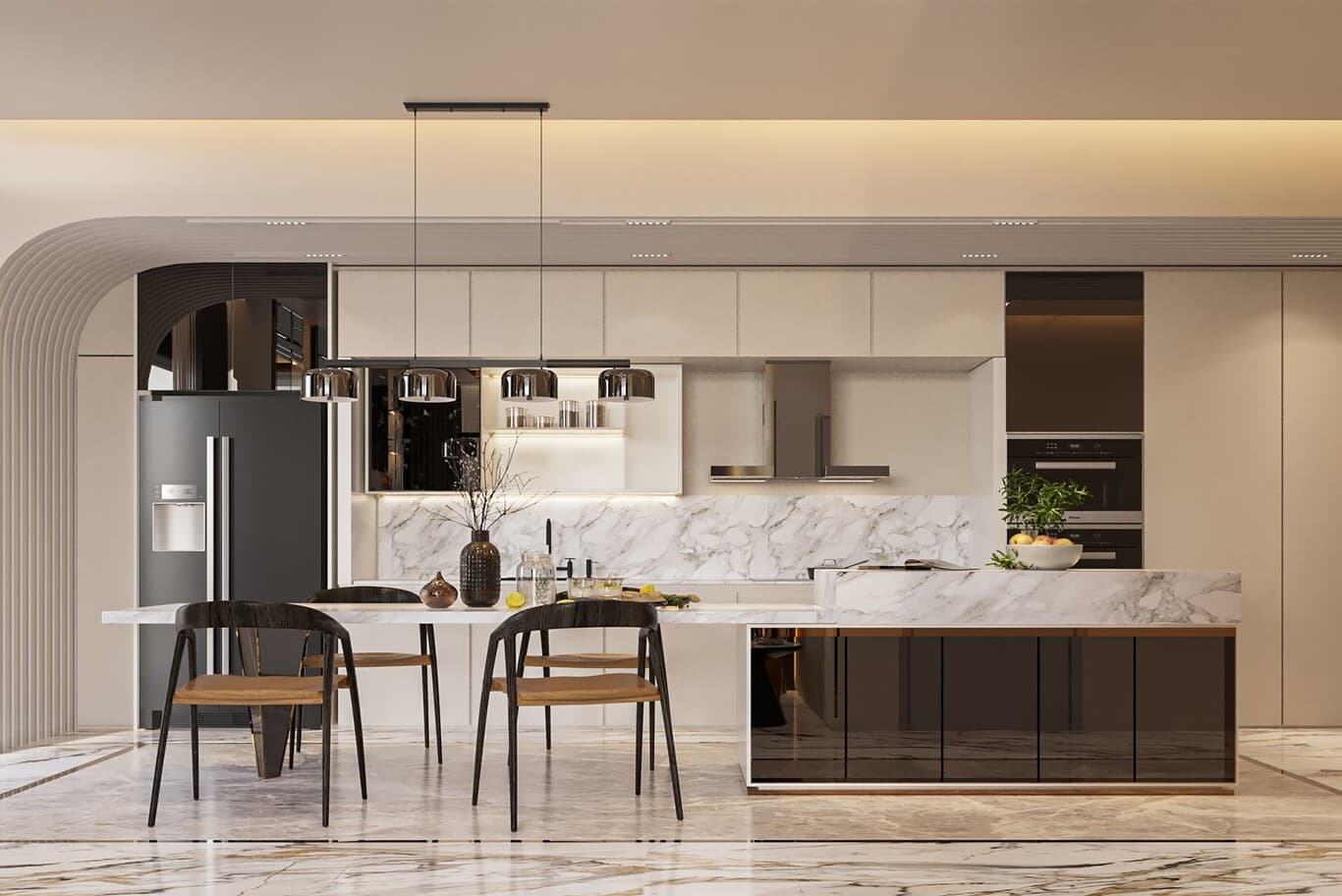
A fit-out encompasses every trade and material that turns a structurally complete building into a finished home. Inside, that means flooring, wall finishes, and ceilings; joinery in the form of kitchens, wardrobes, vanities, and storage; the second fix of every mechanical, electrical, and plumbing element, from light fittings and switches to sanitaryware and air-conditioning grilles; doors and ironmongery; glass and metal features; and architectural detailing such as mouldings, niches, and feature walls.
Where a villa was bought as shell and core, the fit-out often extends outdoors as well, taking in facade cladding, balcony tiling, glass balustrades, pergolas, driveway paving, and boundary-wall treatment. Defining that full scope at the outset, and confirming what the shell already includes, gives the whole project a firm foundation. The wider arc from structure to finished residence appears in the overview of the villa build from design to handover.
Stage One: Design and Material Selection
Every villa fit-out begins on paper. The design stage translates the owner's brief — how the family lives, entertains, works, and relaxes — into layouts, elevations, material palettes, and a full set of technical drawings. Kitchen and bathroom configurations settle here, lighting schemes take shape, and every finish gets chosen and specified. Time invested at this stage returns itself many times over, because decisions made now cost little to change and much to alter later.
Material selection deserves particular care in a villa, where the choices define both the look and the budget. The gap between standard porcelain and imported marble, between a production kitchen and a bespoke one, shapes the final figure as much as the villa's size does. Settling these choices early also protects the programme, since the finishes with the longest lead times need ordering first.
Stage Two: Procurement and Long-Lead Items
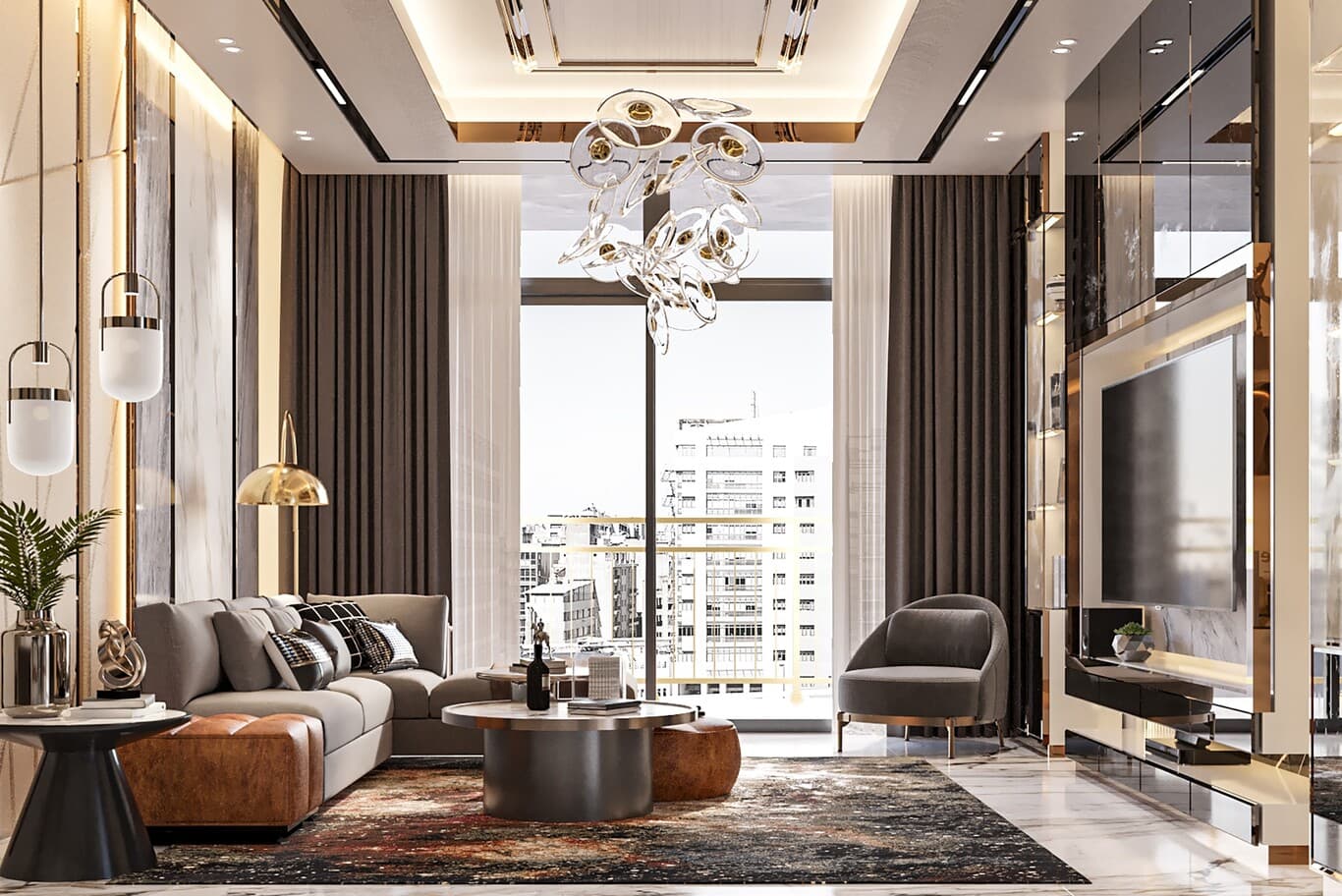
Procurement is where a programme either holds or unravels. Italian marble, German kitchen systems, bespoke joinery components, designer sanitaryware, and specialist lighting frequently carry lead times of eight to twelve weeks, and a villa waits on whichever item arrives last. A capable fit-out team places these orders as soon as the design settles and tracks each delivery against the construction sequence, so materials reach site just as their trade becomes ready for them. Managing that logistics puzzle well keeps the whole project moving and spares the owner the frustration of a site standing idle for want of a worktop.
Stage Three: MEP First Fix
With the shell prepared, the mechanical, electrical, and plumbing first fix runs services through the fabric of the villa before finishes conceal them. Electrical conduits and back-boxes, water supply and drainage pipework, air-conditioning ducting, and the cabling for lighting, data, and smart systems all install now, threaded through walls, floors, and ceiling voids. Precision at this stage governs everything that follows, because every socket, tap, and light later lands exactly where these first-fix routes place it. Coordinating the trades so they share the space cleanly is the heart of good fit-out management.
Stage Four: Flooring and Wall Finishes
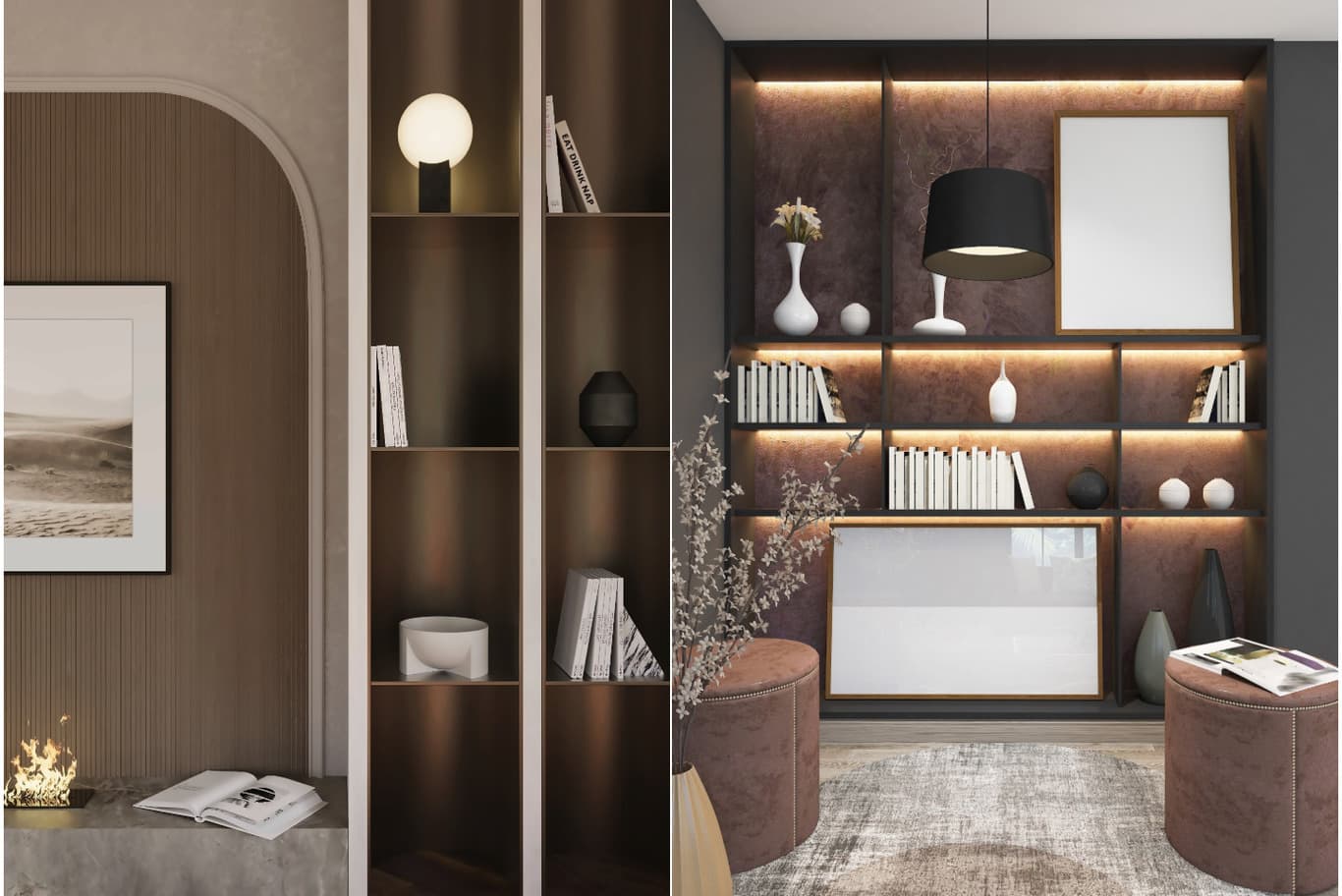
Once services sit safely within the structure, the villa's surfaces go on. Screeds and substrates prepare the floors, waterproofing goes down in wet areas and gets tested before tiling, and flooring — marble, porcelain, engineered timber, or natural stone — is laid across the home. Wall finishes follow: plaster and paint, feature cladding, panelling, and stone. Coastal villas warrant extra attention to moisture at this point, and the principles set out in the guide to moisture control in seaside villas protect the finishes for the long term. Surfaces get protected as soon as they are down, since the trades that follow work above and around them.
Stage Five: Joinery Installation
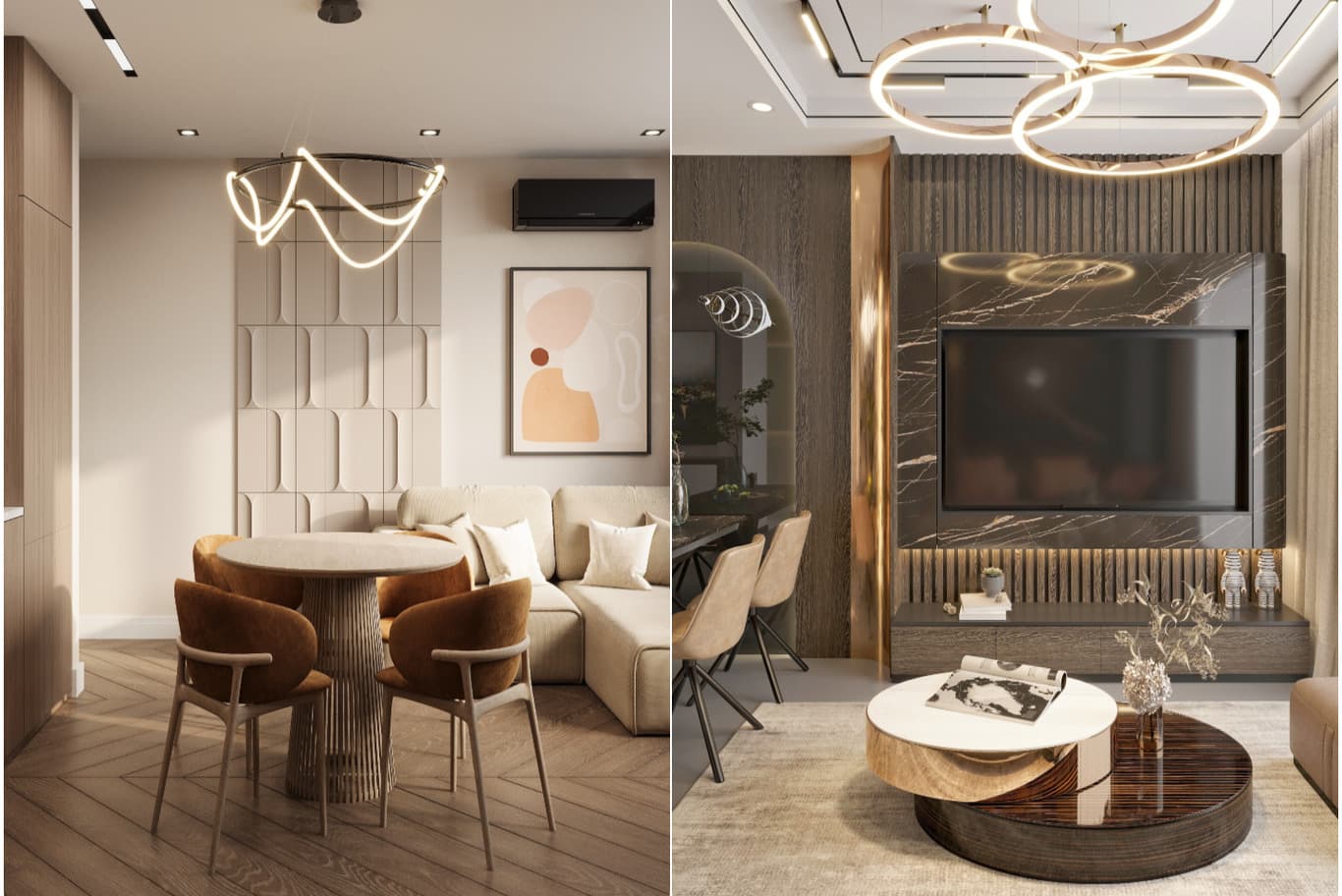
Joinery brings a villa to life, and it installs after flooring and wall finishes so that cabinet surfaces stay protected. Kitchens lead the list and represent the single largest joinery investment in most homes, followed by wardrobe systems across the bedrooms, bathroom vanities, media and display units, study desks, and bespoke storage throughout. A fit-out company with its own workshop holds a real advantage here, controlling quality, tolerance, and timing on the elements that owners touch and use every day. Fitted precisely against the finished walls and floors, quality joinery defines the character of the whole home.
Stage Six: MEP Second Fix and Smart Systems
With surfaces and joinery in place, the second fix brings the villa's systems to life. Light fittings, switches, and sockets go in; sanitaryware, taps, and shower systems connect; air-conditioning grilles and controls install; and the home's technology — lighting scenes, climate control, audio, security, and network — gets commissioned and tested. Planning these systems thoughtfully during design pays off now, and the approach set out in the guide to planning smart-home systems turns a collection of devices into a home that responds intelligently to the family living in it.
Stage Seven: Painting and Final Finishes
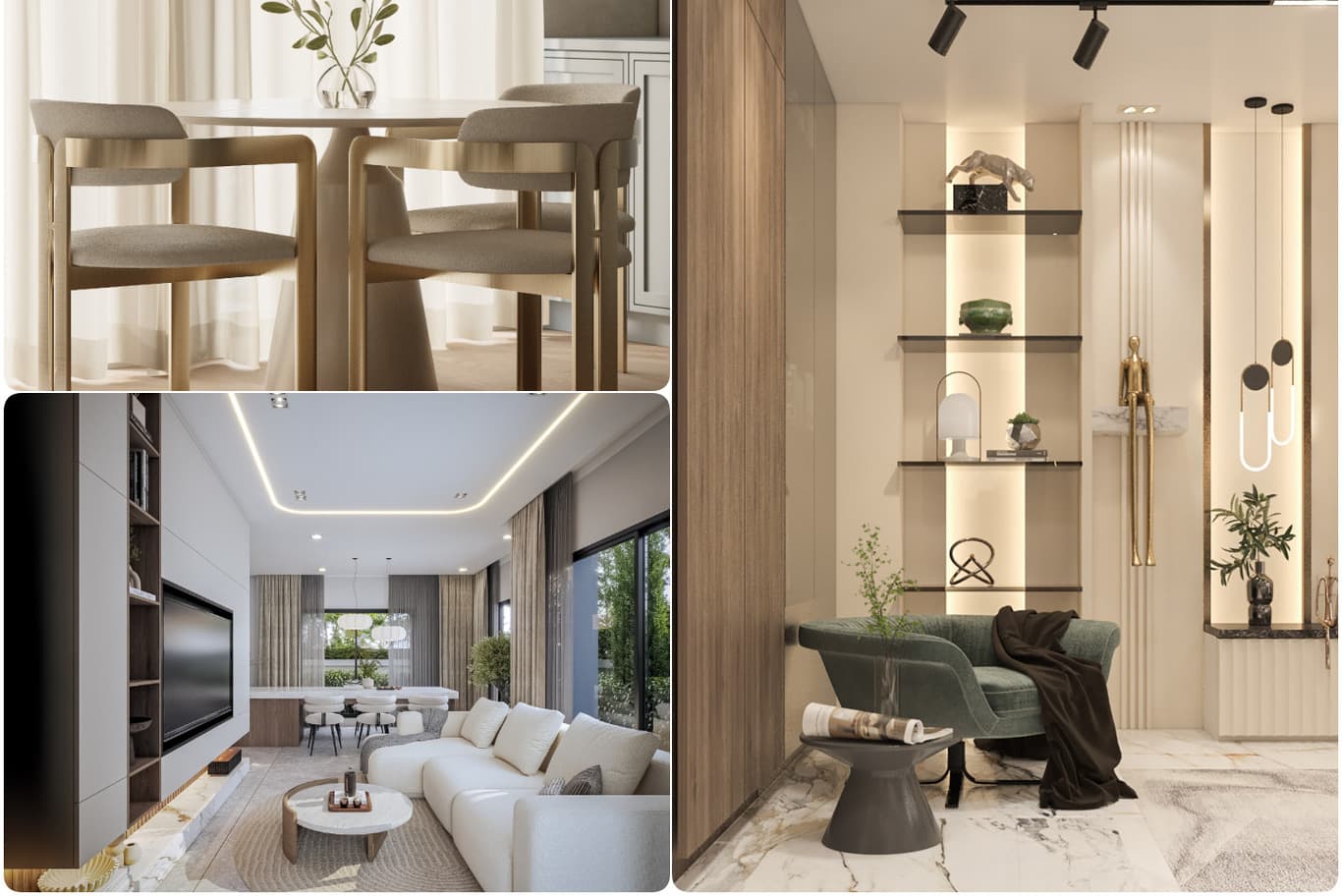
The villa now moves into its final indoor phase. Decorative painting and wallpapering complete the walls, final floor finishes and thresholds go down, doors and ironmongery hang and adjust, mirrors and glass features fix in place, and the architectural detailing that gives a home its polish — cornices, skirtings, niche lighting — receives its finishing touches. Attention to detail separates a good result from a great one here, since these are the surfaces and edges the eye settles on every day.
Stage Eight: Exterior Finishing
For a villa taken on as shell and core, the outdoor scope completes the transformation. Facade treatment, balcony and terrace tiling, glass balustrades, driveway and pathway paving, boundary walls, and landscaped features turn a finished interior into a finished property. Considered outdoor living space extends the home into Dubai's climate for much of the year, and the ideas in the guide to villa outdoor living areas show how pergolas, decks, and terraces earn their place. Coordinating the exterior alongside the interior keeps the whole project on a single programme.
Stage Nine: Snagging and Handover
The final stage turns a finished villa into a home the owner accepts with confidence. A thorough snagging inspection walks every room to identify defects and incomplete items, the team resolves each one, and systems receive their final commissioning checks. Handover then transfers the keys along with warranties, as-built drawings, and operating information for the home's systems, and a defects liability period — commonly twelve months — stands behind the workmanship. The disciplined structure behind this close-out appears in the guide to final snagging before handover.
Where the Budget Goes
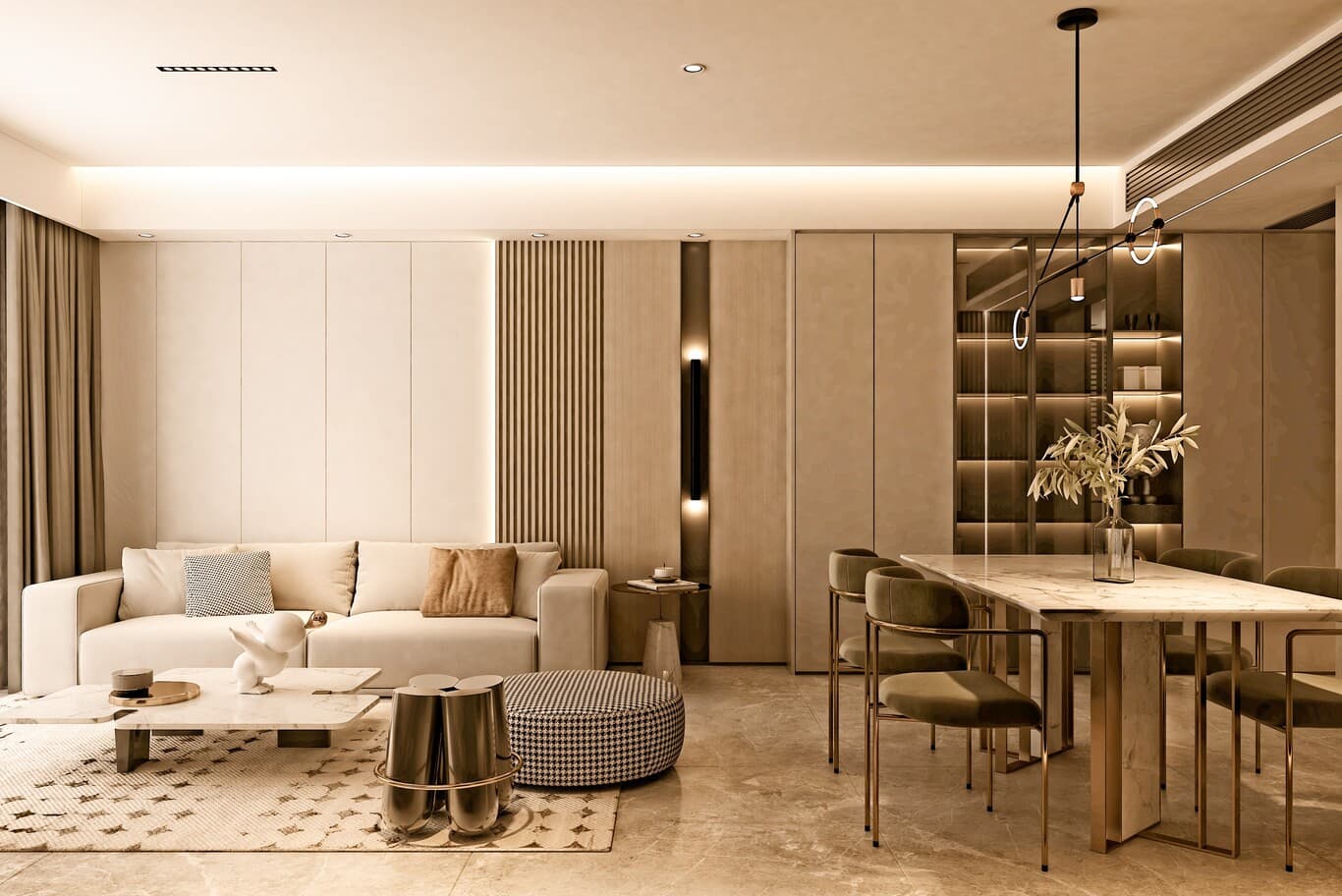
Understanding the shape of a villa fit-out budget helps an owner direct it well. Joinery commonly commands the largest share, led by the kitchen and the wardrobes across a four- or five-bedroom home. Flooring and wall finishes form the next major block and the most variable one, since the choice between porcelain and premium marble swings the figure widely. MEP systems account for a further substantial portion, much of it out of sight yet central to how the home performs. Doors, glass, detailing, and final-fix items fill out the remainder. Benchmark figures for the Dubai market appear in the guide to villa build costs, and directing the budget toward the rooms and finishes the family values most produces the strongest result.
What to Expect on Timeline
A full villa fit-out typically runs three to six months on site, with premium homes carrying imported materials and bespoke manufacturing extending toward six to nine months. Adding the design phase of four to eight weeks and material procurement of eight to twelve weeks gives a realistic total of roughly six to ten months from first conversation to move-in. Owners often hear only the on-site figure, so viewing the project as one continuous journey — design, procurement, approvals, and construction together — sets expectations that hold. Any structural, MEP, or external changes require approval from Dubai Municipality or the relevant master developer, which a competent contractor folds into the programme from the start.
Quality Checks at Every Stage
A well-run villa fit-out gates each stage behind a quality check before the next trade begins, and that rhythm protects the finished home. Level surveys confirm that floors and ceilings sit true. Waterproofing tests prove the wet areas hold before tiling covers them. Electrical continuity checks verify the first-fix wiring, alignment checks keep the joinery square against finished surfaces, and finish inspections catch imperfections while they remain easy to correct. Each check happens at the moment it carries most value, so a defect gets found and fixed before later work seals it away.
Staged assurance of this kind rewards the owner twice: once in the quality of the result, and again in the peace of mind that comes from knowing each layer was proven sound before the next went on. A contractor who builds these checkpoints into the programme, rather than leaving them all to a final inspection, delivers a home that performs from day one.
The Value of One Accountable Team
A villa fit-out draws together a dozen trades — MEP engineers, joiners, tilers, painters, stone specialists, and technology installers among them — and coordinating them is where projects succeed or struggle. A single team carrying the whole scope keeps that coordination internal, so the handoffs between trades happen cleanly and the owner holds one relationship rather than refereeing several. The kitchen fitter works to the same programme as the electrician who serves it; the stone mason and the joiner resolve their shared edge between themselves. That integrated control is the practical reason a turnkey fit-out runs more smoothly than a set of separately appointed trades, and it shows most clearly in the finished detail.
How Capital Associated Delivers Villa Fit-Outs
Capital Associated takes villas from shell to move-in ready through its villa fit-out services in Dubai, delivering design coordination, procurement, MEP, joinery, finishes, smart systems, exterior works, and handover under one accountable team. Every trade sits within a single programme, quality checks gate each stage before the next begins, and a defects liability period stands behind the finished home. Owners engaging an established contracting company in Dubai at the design stage secure the widest choice of finishes and the smoothest procurement, since the longest-lead decisions carry the most value when made early.
From Empty Shell to Finished Home
A villa fit-out succeeds through a clear sequence carried out with care: design thoroughly, procure early, run the services precisely, lay the finishes and joinery in the right order, bring the systems to life, and hand over a home tested and complete. An owner who understands that journey — and chooses a team that controls every stage of it — ends up with a villa that reflects exactly how the family wants to live.
To discuss a villa interior fit-out in Dubai, reach out to the Capital Associated team for a consultation on scope, specification, and programme.