

A contractor's guide to selecting a construction firm in the UAE — covering licensing, safety, contracts, and due diligence.
Selecting a construction firm in the UAE requires verifying that a contractor is legally registered, technically classified, financially stable, and operationally capable of delivering your specific project type — whether that is a custom villa, a commercial fit-out, or a mixed-use tower.
Dubai's regulatory framework changed with the introduction of Law No. 7 of 2025, effective January 15, 2026. This law established mandatory contractor registration, professional certification requirements, and a compliance-linked classification system that applies across mainland Dubai, free zones, and the DIFC. Project awards under this framework now account for a company's technical capacity, workforce qualifications, financial health, and compliance track record.
At Capital Associated Building Contracting LLC — a licensed Dubai building contractor since 2021 — we have delivered over a hundred projects across residential villas, commercial builds, restaurant fit-outs, high-rise towers, and luxury developments. This guide walks through the selection process we recommend to any project owner, developer, or investor entering the UAE construction market. Every criterion here reflects what we see matter in practice.
Define Your Project Scope First

The most common mistake project owners make is approaching contractors before their own scope is clear. A contractor cannot give you a meaningful proposal — or a realistic timeline — if the project brief is vague.
Before reaching out to any firm, document these fundamentals: project type (residential, commercial, hospitality, mixed-use), approximate gross floor area, number of floors, site conditions (new plot or existing structure), budget range, and whether you have approved construction drawings or need design services.
A contractor building a villa in Dubai Hills operates differently from one delivering a commercial tower in Business Bay. Their team structures, subcontractor networks, equipment inventories, and insurance coverages are scaled to different project values. A firm perfectly qualified for one category may be underqualified or overpriced for another.
If your project involves structural work, MEP (mechanical, electrical, and plumbing) coordination, or façade systems, those details should be part of the initial brief. Contractors who specialise in civil shell-and-core work may not have in-house MEP management capability — a gap that only becomes apparent after contract signing if you have not asked upfront.
For projects where the end use involves food service, healthcare, or education, mention this explicitly. These sectors trigger additional authority approvals (Dubai Municipality food safety, Dubai Health Authority, KHDA) that affect both timeline and contractor qualification requirements.
Verify Licensing and Regulatory Compliance

This is where the 2026 regulatory environment demands particular attention. Under Law No. 7 of 2025, all contractors operating in Dubai must be formally registered in the central Contractor Register maintained by Dubai Municipality. This register is integrated with the Invest in Dubai digital platform, creating a unified compliance and licensing framework that project owners can check directly.
Here is what to verify for any contractor you are considering:
DET Trade License. Every construction company operating on the Dubai mainland must hold an active trade license issued by the Department of Economy and Tourism (formerly DED). The license must list the specific construction activities the company is authorised to perform — building contracting, civil engineering works, electromechanical contracting, or building maintenance. Ask to see the license and confirm its validity on the DET portal.
Dubai Municipality Classification Certificate. Issued under the Consultants and Contractors Licensing Standards, this certificate classifies contractors based on technical capacity, project experience, workforce qualifications, and financial standing. The classification determines what types and sizes of projects a contractor can legally undertake. A firm classified for G+4 residential work cannot take on a G+20 tower project. Request the certificate and confirm the category matches your project scope.
Professional Competency Certification. Law No. 7 introduced a requirement for technical staff — engineers, project managers, site supervisors — to hold professional competency certificates issued through the Dubai Engineering Qualification System (DEQS). Ask whether the firm's key personnel are certified, whether those certifications are current, and whether the approved engineer listed on their Dubai Municipality profile is the same person who will supervise your project. Some firms list a qualified engineer for registration purposes but assign a less experienced person to actual site work.
Insurance Coverage. A licensed UAE contractor should carry Contractor's All Risks (CAR) insurance covering physical damage to works, plant, machinery, and third-party liability. Workmen's compensation insurance is mandatory under UAE Labour Law. For design-build firms, professional indemnity insurance protects against claims of design error or negligence. Ask to see certificates of insurance rather than relying on verbal confirmation — and verify the coverage amount is proportional to your project value.
Penalty and Compliance History. Under the 2026 framework, first-time violations carry fines from AED 1,000 to AED 100,000, doubling for repeated offenses within the same year. Severe violations can result in technical staff deregistration or competency certificate cancellation. A reputable firm will answer questions about compliance history transparently.
Evaluate Experience Against Your Project Type

A contractor with a large portfolio is not necessarily the right contractor for your project. What matters is whether their delivered work matches your project's type, scale, and complexity.
Ask for specific examples. If you are building a luxury villa, ask how many villas they have completed, in which communities, and at what specification levels. If you need a commercial build, ask about their experience coordinating approvals across Dubai Municipality, DEWA, Dubai Civil Defence, and the Roads and Transport Authority — commercial projects typically require multi-authority approval workflows that residential work does not.
Industry insight: Restaurant and hospitality projects multiply the coordination challenge. A recent turn-key restaurant build-out across three Dubai locations — Al Khawaneej, JBR, and City Walk — required separate kitchen ventilation designs per site, grease trap specifications matching each community's drainage infrastructure, fire suppression system approvals from Dubai Civil Defence, and health authority inspections on different timelines. Each location had its own structural constraints and authority requirements. Contractors without hospitality-specific experience routinely underestimate this complexity.
A portfolio should show completed and handed-over projects — not renderings or proposals. Ask whether you can visit finished sites. The difference between a contractor's marketing material and their actual finishing quality is often significant. A physical inspection reveals details — tile alignment, joinery precision, paint consistency, MEP access panel placement — that photographs do not capture.
Pay attention to project continuity too. A firm that has completed ten projects for the same client or within the same community is demonstrating repeat trust — one of the strongest indicators of reliable delivery. Ask whether any past clients have engaged them for second or third projects.
For a structured framework on what to evaluate, see our detailed criteria for evaluating Dubai contractors in 2026.
Assess How the Firm Manages Subcontractors
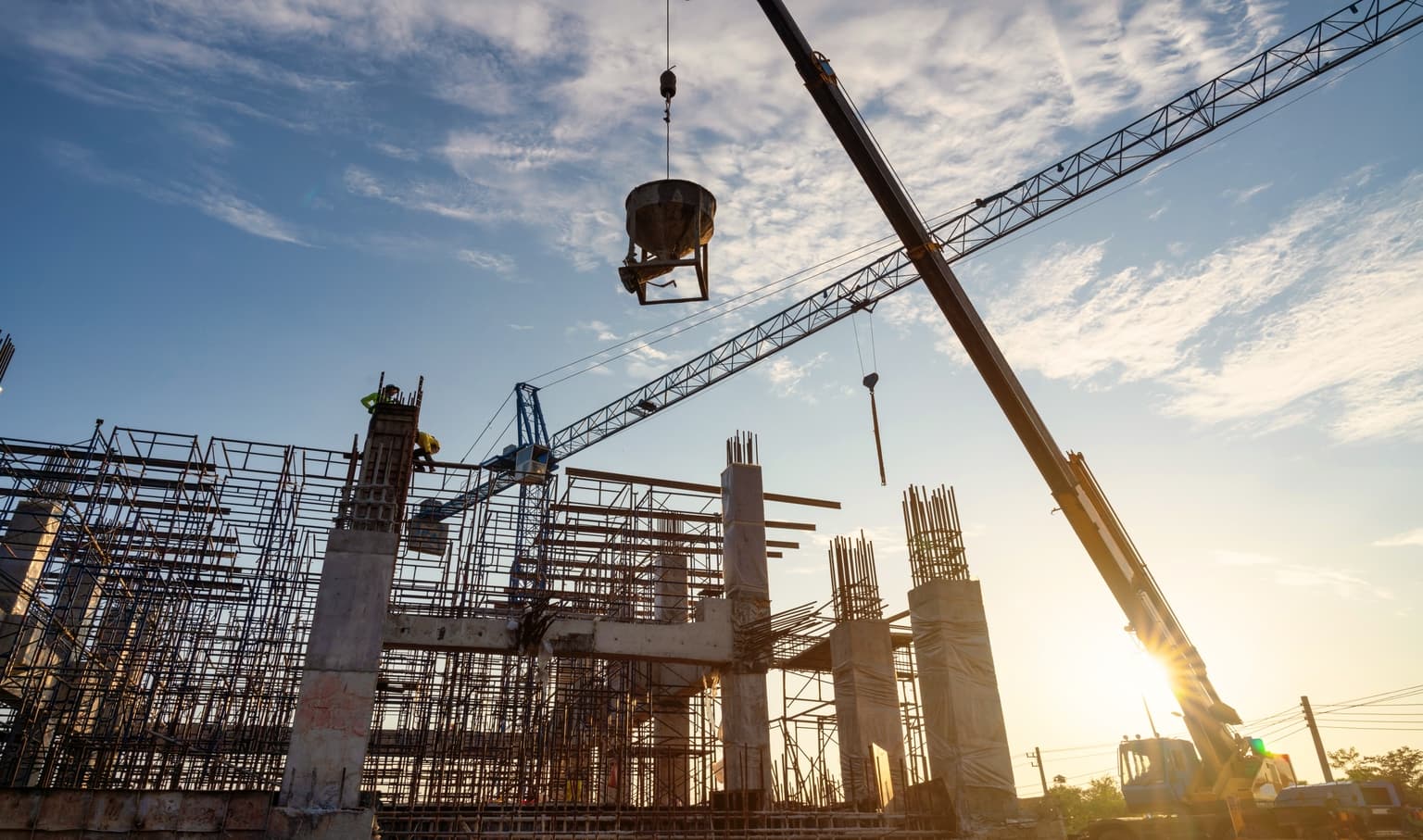
Most construction firms in the UAE do not self-perform every trade. They subcontract specialised work — MEP, aluminium and glazing, waterproofing, fire alarm systems, landscaping — to trade-specific firms. The quality of your finished project depends heavily on the quality of those subcontractors and how the main contractor manages them.
Ask which trades the contractor self-performs and which they subcontract. Ask whether they work with a consistent roster of subcontractors or source new ones per project. Consistent subcontractor relationships usually indicate stable payment practices and reliable coordination — both of which benefit your project.
Industry insight: A villa project in a Dubai Hills community experienced a three-week waterproofing delay because the main contractor's regular waterproofing subcontractor was overcommitted and they brought in a replacement crew at short notice. The replacement crew used a different membrane system that required a new Dubai Municipality inspection cycle. The entire basement timeline shifted by 26 days. A pre-construction check on subcontractor availability and commitment would have prevented this.
Under Law No. 7, subcontracting arrangements now require formal documentation and, in some cases, pre-approval. Ask the contractor how they manage subcontractor compliance with the new regulatory requirements — this tells you whether they are operating within the 2026 framework or still running on pre-reform practices.
Assess Project Management Capability

Technical skill gets a building constructed. Project management determines whether it is constructed on time, within budget, and without disputes that damage the client-contractor relationship.
When meeting a potential firm, ask how they structure their project team. Who is the project manager, how many projects are they handling concurrently, and what is their reporting cadence? A project manager overseeing five simultaneous sites cannot give yours the same attention as one managing two.
Ask about scheduling methodology. A credible contractor should produce a detailed construction programme — typically in Primavera P6 or Microsoft Project — that breaks work into phases, assigns durations, identifies critical path activities, and shows float. If the firm cannot produce this during pre-construction, they will not produce it during execution either.
Change order management matters equally. Construction projects almost always involve scope changes. The question is how those changes are documented, priced, and approved. A well-managed firm has a formal variation order process with written approval requirements before any additional work is executed. Firms that allow scope creep without documentation create the conditions for budget overruns and contractual disputes.
Ask to see a sample progress report from a recent project (with client details redacted). The structure, detail, and frequency of reporting reveals the firm's operational maturity faster than any presentation.
Investigate Financial Stability

A contractor's financial position directly affects your project. Cash flow problems appear on your site as delayed material deliveries, subcontractors walking off because they have not been paid, and work stoppages that compound over weeks and months.
Request financial references: a bank letter confirming account standing, trade references from material suppliers, and payment history with recent subcontractors. For projects above AED 5 million in contract value, request audited financial statements. A firm reluctant to share basic financial references is signalling instability or lack of transparency.
The Dubai Municipality classification system already evaluates financial health as part of its grading criteria. A firm with a higher classification has passed a stricter financial review. However, classification alone does not replace your own due diligence — a firm that was financially sound when classified may have taken on over-leveraged commitments since.
Performance bonds and retention. For projects above AED 2–3 million, consider requiring a performance bond (typically 10% of contract value) from the contractor's bank. This guarantees financial recourse if the contractor defaults or abandons the project. Retention — withholding 5–10% of each progress payment until the defects liability period expires — provides additional protection. Both mechanisms are standard in UAE construction contracts and any established firm will be familiar with providing them.
Review Safety Practices

Construction carries inherent risk. Falls, electrical incidents, excavation collapses, and crane-related accidents remain among the leading causes of workplace injuries in the sector — and the UAE construction environment, with its high temperatures and large migrant workforce, adds additional safety variables.
A responsible contractor maintains an active Health, Safety, and Environment (HSE) management system: written HSE policy, site-specific risk assessments, toolbox talks, permit-to-work systems for high-risk activities, and incident reporting protocols.
Ask for the firm's lost-time injury rate (LTIR) and total recordable incident rate (TRIR) for the past three years. These are standard industry metrics. A firm that cannot provide them either does not track safety performance or does not want to share the data.
Dubai Civil Defence compliance is mandatory for fire safety systems and structural safety. Verify that the contractor has experience coordinating Civil Defence inspections and obtaining completion certificates. Projects that fail Civil Defence inspection at handover create costly delays that fall back on the client if the contract does not assign responsibility clearly.
For the full permit and approval workflow that applies to construction projects in Dubai, including Civil Defence coordination, see our Dubai building permits and regulations guide.
Safety is also a proxy for management quality. Firms that invest in safety training, PPE compliance, and site housekeeping tend to manage other aspects of their projects — scheduling, quality control, documentation — with similar discipline.
Analyse Communication and Reporting
Poor communication is the single most common source of disputes in construction projects. It is also the easiest problem to identify before signing a contract.
During initial meetings, evaluate how the firm communicates: prompt responses, clear written follow-ups, and a single point of contact. The way a contractor handles pre-contract communication closely predicts how they will handle post-contract reporting.
Establish reporting expectations in writing before contract execution. At minimum: weekly progress reports with photographic documentation, monthly cost reports showing budget versus actual expenditure, and immediate notification of any delays, variations, or safety incidents. Digital project management platforms — Procore, Aconex, PlanGrid, or well-structured shared drives — make this information accessible in real time.
The contractor should attend regular site meetings (weekly during active construction phases) and produce meeting minutes with action items and deadlines. If the firm resists structured reporting, they are either unfamiliar with professional delivery standards or uninterested in the transparency that protects both parties.
Ask how they handle dispute escalation. Every project has disagreements. What matters is whether those disagreements are resolved through documented processes or through informal pressure. A contractor with a clear escalation path — site engineer to project manager to senior management — handles problems before they become contractual claims.
Compare Cost Estimates with Specificity
Request a bill of quantities (BOQ) or detailed cost breakdown separating the estimate into measurable components: structural works, MEP, finishing, external works, preliminaries (site establishment, temporary facilities, scaffolding, insurance), and contingencies. Each line item should include quantities, unit rates, and totals.
When comparing proposals from different firms, ensure the scope is identical. A lower price may mean a narrower scope — fewer finishing items, lower-grade materials, excluded authority fees, or no post-handover defects liability coverage. Side-by-side comparison of BOQs is the only reliable way to identify these differences.
Industry insight: A recent villa project in one of Dubai's master-planned communities received three bids with a 22% spread between the lowest and highest. The lowest bid excluded landscaping, boundary wall construction, and swimming pool MEP — items that totalled AED 380,000 when priced separately. The mid-range bid included full scope. The "cheapest" contractor would have cost the client an additional 15% in variation orders had they been selected.
Be cautious with estimates significantly below the market range. In Dubai's construction sector, where margins are tight, an abnormally low bid typically means the contractor plans to recover through variation orders, substitute specified materials with cheaper alternatives, or underpay subcontractors — all of which create problems during execution.
Equally, an unusually high estimate does not automatically indicate quality. It may reflect inefficiency, overhead bloat, or opportunistic pricing. The mid-range of three competitive bids, assuming equivalent scope, usually represents the realistic market cost for your project.
Understand Contract Terms
The construction contract is the most important document in your project. Every other understanding — verbal assurances, email commitments, handshake agreements — is subordinate to what the contract states.
In the UAE, construction contracts commonly follow FIDIC (Fédération Internationale des Ingénieurs-Conseils) conditions, particularly the Red Book for employer-designed projects and the Yellow Book for design-build. Some projects use bespoke contracts or simplified agreements, especially for smaller residential work.
Ensure these provisions are clearly addressed:
Scope of work. The contract must define exactly what the contractor delivers, referencing approved drawings, specifications, and BOQ.
Contract price and payment schedule. Payment milestones should be tied to measurable deliverables (completion of foundation, structural frame, MEP rough-in, finishing) — not calendar dates. Retention (typically 5–10% of each payment) should be held until the defects liability period expires.
Programme and completion date. A detailed construction programme and a defined completion date. Delay liquidated damages (a pre-agreed daily penalty for late completion) provide financial incentive for the contractor to meet deadlines. Standard rates in the UAE range from 0.05% to 0.1% of contract value per day — verify the rate is meaningful enough to serve as a real deterrent.
Variation order process. Any scope change requires written approval and agreed pricing before work proceeds. Without this clause, disputes over additional costs become difficult to resolve.
Defects liability period. Standard in the UAE is 12 months from practical completion, during which the contractor must repair any defects at their own cost. Some clients negotiate extended periods for waterproofing (up to 10 years), structural elements, or MEP systems.
Termination provisions. The contract should define the conditions under which either party can terminate — contractor default, prolonged delay, insolvency — and the financial consequences of termination. Without clear termination clauses, exiting a failed contractor relationship becomes legally expensive and time-consuming.
If you are unfamiliar with construction contract review, engage a construction lawyer or quantity surveyor with contract administration experience. The cost of professional review is negligible compared to a poorly drafted agreement.
Check References and Visit Sites
Contact at least three references from projects similar in type and scale to yours. Ask about schedule adherence, budget accuracy, finishing quality, and responsiveness to defect reports. Ask whether the project had disputes, how they were resolved, and whether the client would hire the firm again.
If possible, ask for references from the architect or engineer of record as well. Consultants work alongside contractors daily and observe technical competence, coordination skills, and willingness to comply with specifications. Their perspective often reveals details that clients, who may only visit the site occasionally, do not notice.
For site visits: on active construction sites, observe organisation, material storage, waste segregation, and PPE compliance. On completed projects, open electrical panels, check sealant lines around fixtures, inspect tiling grout consistency, and paint finish under natural light. These details reflect the contractor's actual quality control standards. Strong project delivery combines technical execution with structured oversight — see our analysis on how effective project management delivers results.
Prioritise Local Knowledge
Dubai's construction approval process involves multiple government authorities, each with specific requirements and timelines. The Building Permit Procedures published by Dubai Municipality outline the steps for permit issuance, technical inspections, and completion certificates.
Key authorities include Dubai Municipality (building permits, structural approvals, Dubai Building Code compliance), Dubai Civil Defence (fire safety systems), DEWA (electrical and water connections), the Roads and Transport Authority (access and infrastructure coordination), and — for projects in master-planned communities — each developer's own approval and NOC processes.
Industry insight: Contractors who have built within specific communities (Emaar, Nakheel, Meraas, DAMAC developments) understand each developer's particular requirements, approved contractor lists, and working-hour restrictions. A recent residential project in a gated community required the contractor to submit method statements, noise management plans, and a construction traffic management plan to the developer's facilities management team before mobilisation — requirements outside the standard Dubai Municipality workflow that unfamiliar contractors frequently miss. The project timeline assumed a two-week mobilisation period; without these submissions, it would have been six weeks.
Dubai Municipality's performance-based Contractor and Engineering Consultancy Rating System, operational since early 2026, evaluates contractors on financial discipline, technical capacity, and compliance history. This rating provides a government-verified data point for your selection process.
Evaluate Post-Construction Support
The defects liability period — typically 12 months — requires the firm to address any construction defects that emerge during normal use. A reliable contractor has a dedicated snagging and maintenance team that responds to defect reports within a defined timeframe.
Ask how the firm manages post-handover communication: dedicated contact for defect reports, committed response times, and a formal tracking system. For larger projects, some contractors offer extended warranties on waterproofing, structural movement joints, or MEP installations beyond the standard 12-month period. These warranties add cost to the contract but provide meaningful protection for components where failures carry significant repair expenses.
Projects delivered under a turnkey construction Dubai model — where a single firm manages both design and construction — simplify post-handover accountability because there is no ambiguity over whether a defect originated in the design or in the execution.
Industry insight: A commercial fit-out project handed over in Q3 2025 had 47 snagging items logged at practical completion. The contractor's maintenance team resolved 41 items within the first two weeks and the remaining 6 (which required specialist subcontractor return visits) within 45 days. This response cadence was documented in the contract as a KPI. Without that contractual commitment, post-handover defect resolution timelines frequently stretch to three or four months — by which point the client has already occupied the space and the disruption cost of repairs increases significantly.
Contractor Selection Checklist
Licensing and compliance: Active DET trade license, Dubai Municipality classification certificate matching project scope, professional competency certifications for technical staff, registration in the central Contractor Register under Law No. 7.
Experience: Completed projects of similar type and scale, accessible site visits, verifiable client and consultant references, evidence of repeat client engagements.
Financial stability: Bank references, supplier payment history, audited statements for larger projects, CAR and workmen's compensation insurance, capacity to provide performance bonds.
Subcontractor management: Consistent subcontractor roster, formal subcontractor agreements, compliance with Law No. 7 subcontracting documentation requirements.
Project management: Dedicated project manager, detailed construction programme, formal variation order process, structured reporting systems, sample progress reports available.
Safety: Written HSE policy, site-specific risk assessments, trackable metrics (LTIR/TRIR), Civil Defence compliance history.
Contract terms: Clear scope definition, milestone-based payments, delay liquidated damages, defined defects liability period, written variation approval process, termination provisions.
Communication: Single point of contact, weekly progress reporting, digital project management tools, regular site meeting schedule, documented dispute escalation process.
Local knowledge: Familiarity with Dubai Municipality, DEWA, Civil Defence, and RTA approval workflows; experience within specific master-planned communities; understanding of developer-specific NOC processes.
Post-construction: Defect response process with contractual KPIs, dedicated maintenance contact, extended warranty options for critical building systems.
Conclusion
The UAE construction market under the 2026 regulatory framework rewards firms that invest in compliance, technical capability, and transparent operations. As a project owner, use this framework as a selection tool. Verify classification, check the Contractor Register, confirm insurance, and hold every firm to the same standard of evidence.
Trust what you have verified, not what you have been told. Documentation matters. And a contractor who is transparent about their limitations — telling you honestly that a particular project type is outside their core competence — is often worth considering over one that claims to do everything.
If you are planning a construction project in Dubai or anywhere in the UAE, we are here to discuss your requirements directly.
Frequently Asked Questions
What should I check before hiring a construction company in the UAE?
Verify the DET trade license, Dubai Municipality classification certificate, professional competency certifications for technical staff, insurance coverage (CAR and workmen's compensation at minimum), and registration in the central Contractor Register under Law No. 7. Request client references, visit completed projects, and compare detailed BOQs from at least three firms. For projects above AED 5 million, request audited financial statements and a performance bond.
Why does Dubai Municipality classification matter?
The classification certificate determines what project types and sizes a contractor can legally undertake. It is issued based on the firm's technical capacity, project experience, workforce qualifications, and financial standing. Hiring a contractor who is not classified for your project type can result in permit refusals, project delays, and fines under the 2026 framework.
How do I compare construction cost estimates fairly?
Request a BOQ from each firm with line-item breakdowns covering structural work, MEP, finishing, external works, preliminaries, and contingencies. Compare scope coverage rather than total price alone. A lower bid that excludes authority fees, finishing specifications, or post-handover defects coverage will generate additional charges during construction. The mid-range of three competitive bids at equivalent scope usually represents the realistic market cost.
Is local experience in Dubai important?
Dubai's approval process involves coordination across Dubai Municipality, DEWA, Civil Defence, RTA, and developer-specific workflows. A contractor with local experience navigates these processes faster and avoids the submission errors and rework that unfamiliar firms commonly encounter. For projects within master-planned communities (Emaar, Nakheel, Meraas, DAMAC), the contractor also needs familiarity with each developer's specific NOC requirements and working-hour restrictions.
What changed with Law No. 7 of 2025?
Mandatory contractor registration, professional certification, and a compliance-linked classification system — effective January 15, 2026 across mainland Dubai, free zones, and the DIFC. Contractors now qualify based on technical capacity and compliance history, with fines from AED 1,000 to AED 100,000 for violations. The law also introduced subcontracting controls and a requirement for contractors to archive project documentation for ten years.
Should I visit a contractor's completed projects before hiring them?
Yes. Site visits reveal finishing quality, material standards, and attention to detail that photographs and brochures do not capture. On active sites, observe site organisation, safety compliance, and material storage practices. On completed projects, check less visible details — electrical panel wiring, sealant lines, grout consistency, paint quality under natural light — as these reflect the contractor's actual quality standards.