
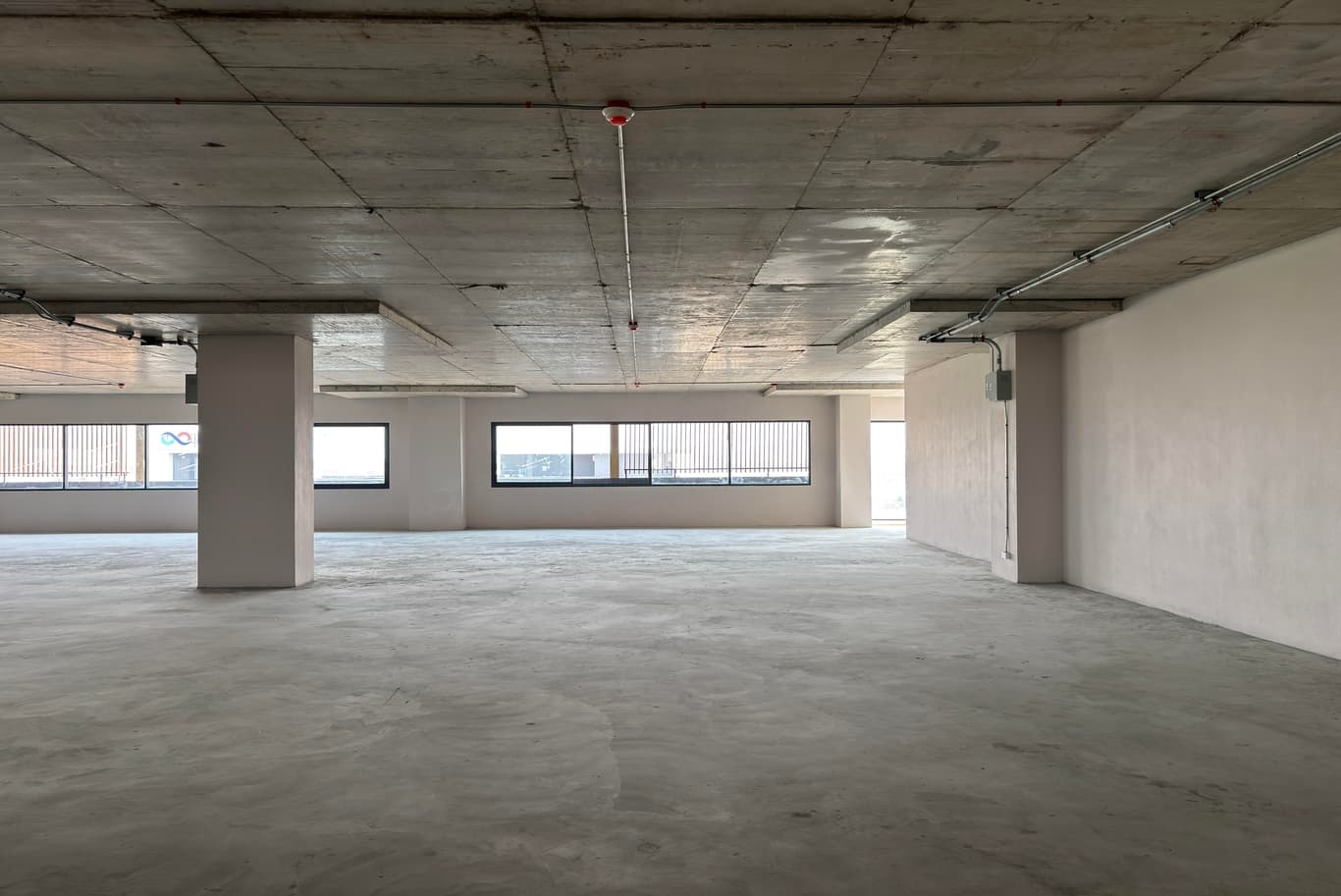
A complete guide to Cat A and Cat B fit-out in Dubai — covering definitions, 2026 cost benchmarks, authority approvals, and how to choose the right stage for your space.
The moment a tenant signs a commercial lease in Dubai, one question follows almost immediately: what condition is the space in, and how much will it cost to make it usable? The answer depends almost entirely on where the property sits in the fit-out spectrum — shell and core, Category A, or Category B. Confusing these stages is one of the most consistent causes of budget overruns and missed handover dates in the UAE commercial market.
This guide covers each stage in technical detail, explains what distinguishes Cat A from Cat B in the Dubai context, provides current cost benchmarks, walks through the authority approval process, and shows how the right fit-out strategy directly affects the total cost of occupying a space.
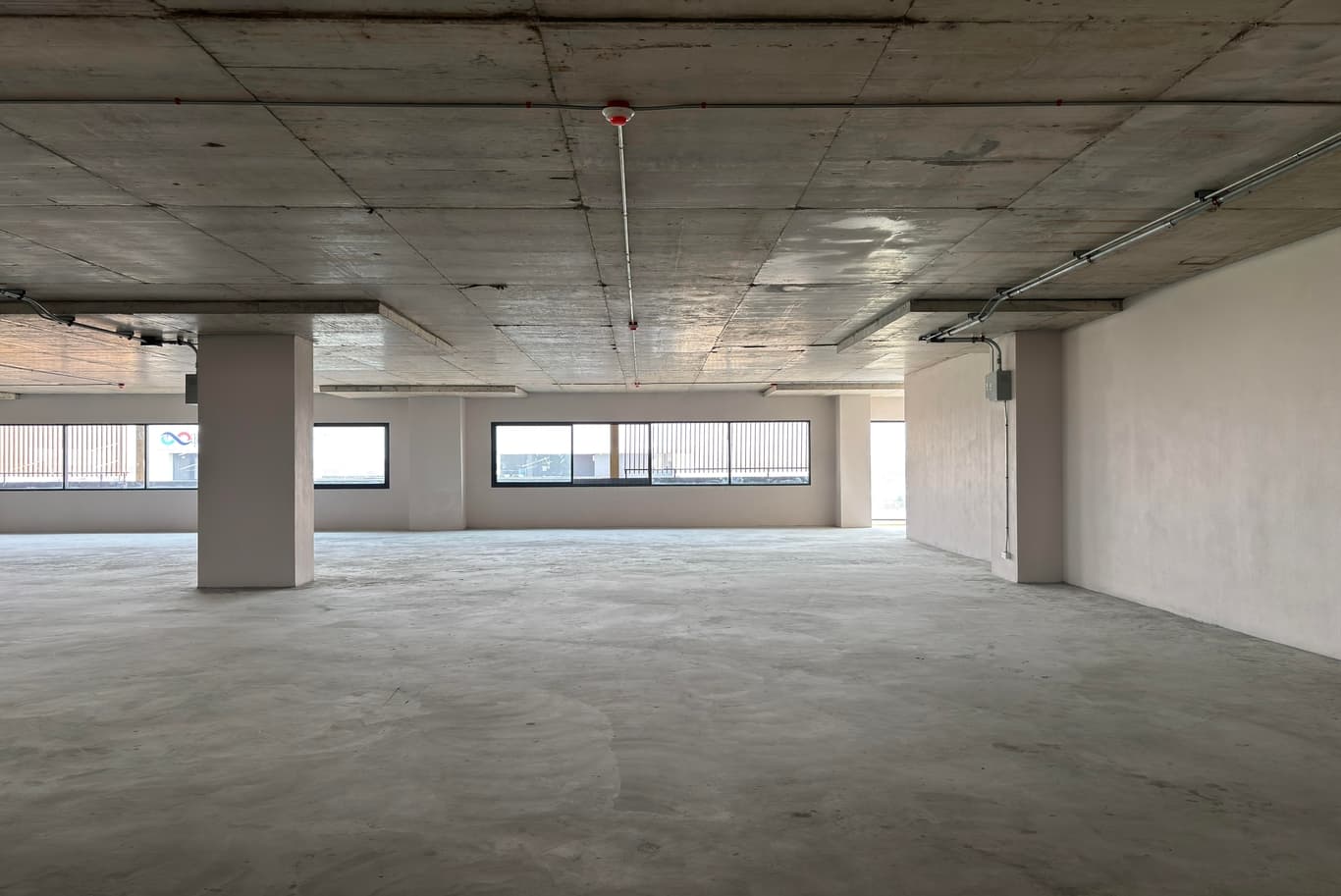
The UAE Fit-Out Market in 2026: Why This Decision Matters More Than Ever
Dubai's commercial real estate market closed 2025 at historic highs. Commercial real estate sales in Dubai surged more than 210 percent in 2026 compared to 2025, with office demand emerging as one of the strongest indicators of business confidence. Office sales for 2025 closed at AED 13.1 billion — double the previous year — while rental activity surpassed AED 126 billion, marking another record in a market increasingly driven by corporate expansion and institutional capital.
Behind those transaction numbers lies a quieter but equally significant market: interior fit-out. The UAE interior fit-out market is currently valued at USD 10 billion, with a dynamic mix of regional and international players contributing to innovation and service delivery. TechSci Research projects the market will reach USD 4.13 billion in the office and commercial segment alone by 2030, rising at a CAGR of 4.85%.
Every office lease signed, every shell-and-core unit purchased, and every retail unit fitted out in Dubai generates a fit-out decision. Getting that decision right — understanding what stage your space is in and what it requires to become operational — determines whether your occupancy cost is manageable or punishing. Before any of that work begins, understanding what pre-construction planning actually covers helps set realistic expectations for the full project lifecycle.
The Three-Stage Fit-Out Framework
Commercial spaces in Dubai typically pass through three progressive stages before they are ready for occupation. Each stage builds on the one before it.
Shell and Core
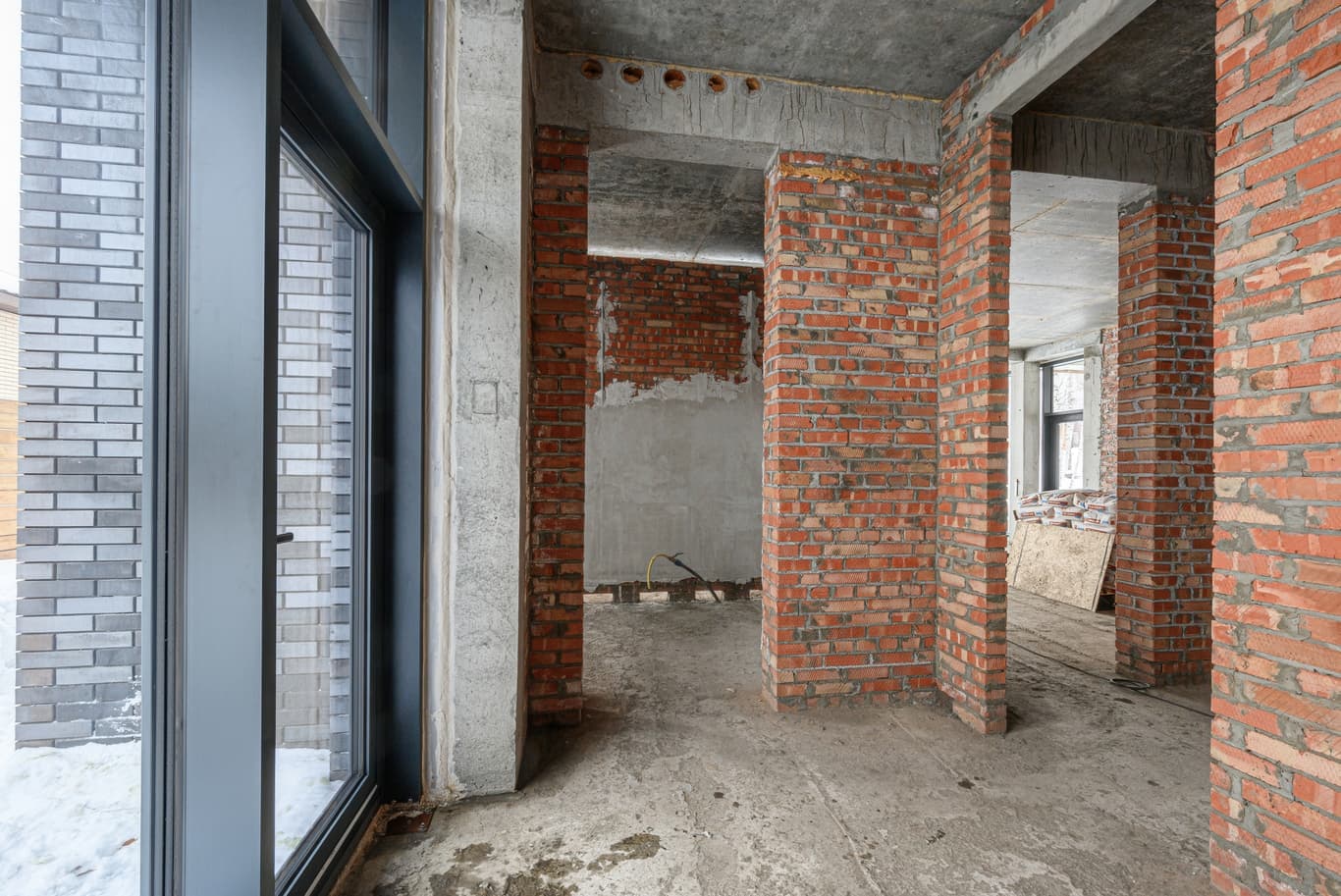
Shell and core is the starting point. The developer delivers the structural envelope: the concrete frame, façade glazing, roof, and the building's central mechanical plant and distribution systems in common areas. Inside the lettable unit itself, the tenant receives bare concrete floors and soffits, unfinished walls, and no internal MEP services beyond the main incoming connections at the riser.
Shell and core units are common in newly delivered commercial towers across Business Bay, DIFC, and JLT, as well as in off-plan commercial acquisitions where the developer hands over the bare structure. A cheaper shell-and-core lease may appear attractive on a per-square-foot rental basis but carry significantly higher fit-out costs that erode the apparent saving within the first year. Every commercial property decision made in this market should account for the full occupancy cost across the entire lease term, not just the headline rent.
Category A (Cat A) Fit-Out
Category A fit-out takes the shell and core space to a finished, leasable condition. This stage is typically carried out by the developer or landlord before the space is offered to tenants, though in some cases tenants acquire shell and core units and carry out Cat A works themselves.
Cat A works typically deliver raised access flooring systems where specified, a suspended ceiling grid with standard ceiling tiles, and basic mechanical, electrical, and plumbing (MEP) services distributed throughout the floor plate — including HVAC supply and return, sprinkler heads, and standard lighting circuits. Fire detection and alarm systems are installed, electrical distribution boards and basic power sockets are in place, and perimeter walls are painted or finished. Male, female, and disabled washroom facilities may also be included in the landlord's delivery, depending on the tower specification.
The result is a clean, white-box space. Category A produces a leasable but functionally empty environment. There are no internal partitions, no meeting rooms, no reception, no branded environment, and no furniture. The space is technically finished but operationally hollow.
Category B (Cat B) Fit-Out
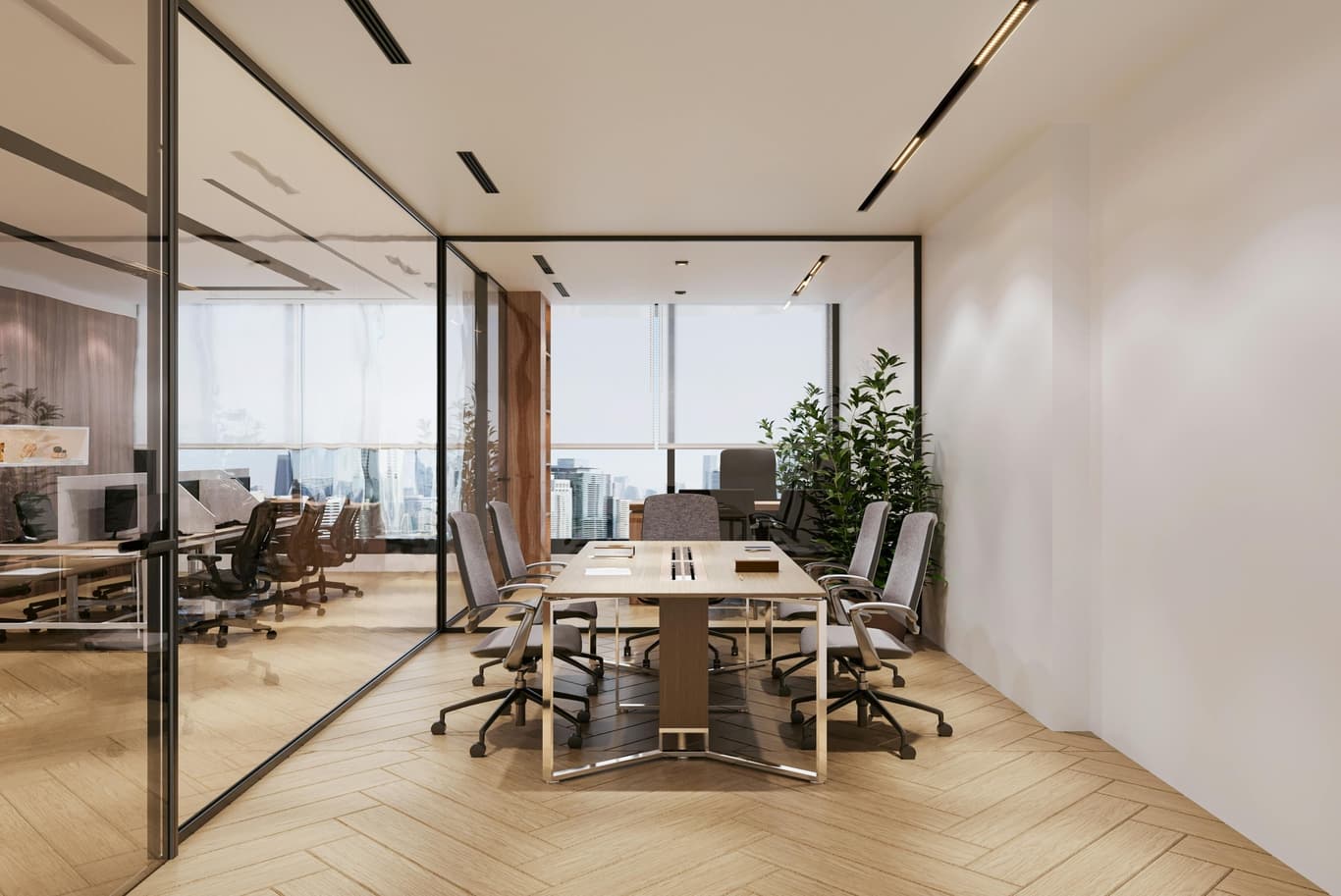
Category B is where the tenant takes the Cat A shell and makes it their own. This is the full customisation layer that transforms a neutral, generic floor plate into a functional, branded work environment.
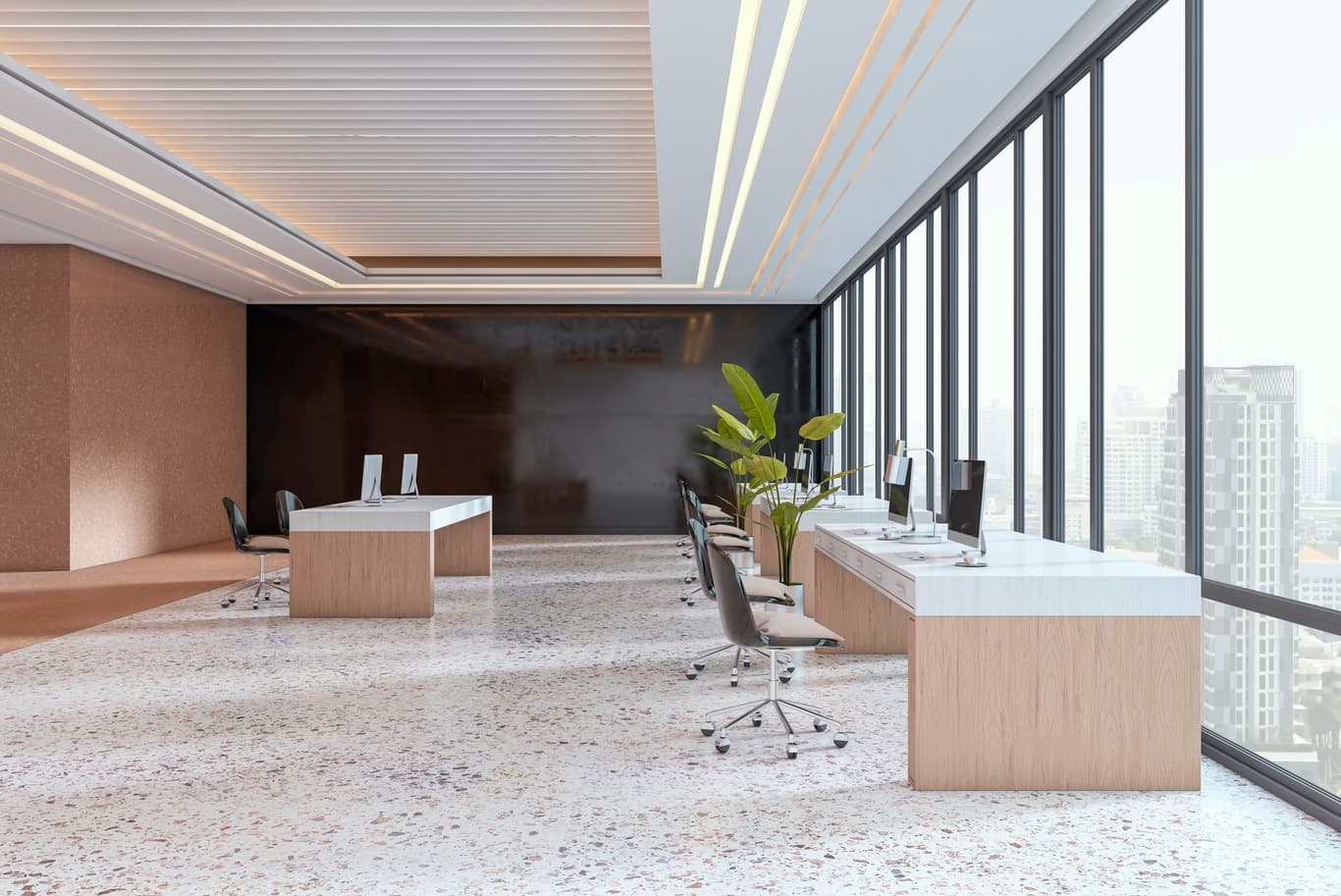
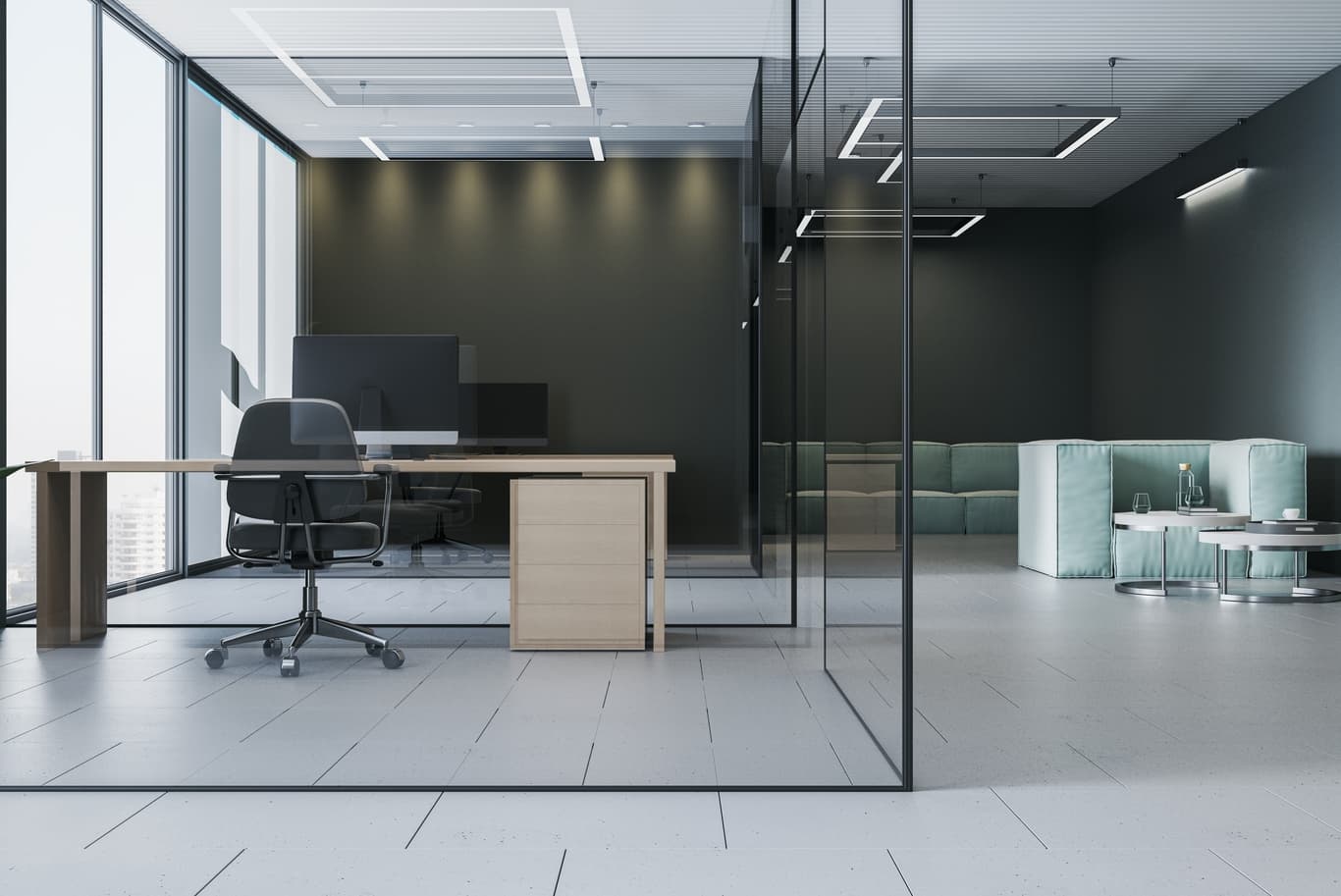
Cat B works encompass internal partition walls in glass, dry-wall, or a combination; meeting rooms, breakout spaces, and private offices; reception areas with branded joinery and feature finishes; flooring finishes in carpet, LVT, polished concrete, or stone; custom ceiling modifications with feature lighting and decorative elements; kitchen and pantry fit-out; server room or IT room construction; audio-visual and conferencing systems; network infrastructure and data cabling; signage and branded graphics; window treatments; and furniture with loose fixtures.
The Cat B fit-out is the stage that consumes the majority of the tenant's fit-out budget and is the most visible expression of the company's brand and culture in its physical environment. For context on how material specification decisions at this stage affect overall project cost, the guide to choosing the right materials for commercial fit-out covers the trade-offs between durability, lead times, and budget in detail.
Cat A vs Cat B: The Defining Distinctions
The clearest way to understand the two stages is to think about who pays, who decides, and what the output is.
Category A is typically delivered and funded by the developer or landlord, producing a neutral, generic floor plate. Category B is delivered and funded by the tenant, producing a branded, fully functional workspace. In Cat A, partitions and furniture are absent; in Cat B, the full internal layout is built out. Cat A MEP is distributed uniformly across the floor plate to a standard grid; Cat B MEP is extended and customised to fit the specific room layout. Regulatory approval for Cat A is the landlord's responsibility; Cat B authority approvals fall entirely to the tenant.
In practice, several nuances apply in the Dubai market.
Some landlords deliver Cat A works as part of the lease incentive. In a competitive leasing environment — particularly in Grade A towers in Business Bay, DIFC, and Downtown Dubai — landlords sometimes offer rent-free periods and fully fitted Cat A spaces as tenant inducements. In these cases, the tenant proceeds directly to Cat B without incurring Cat A construction costs.
Some tenants acquire shell and core and carry out both Cat A and Cat B. This is more common in owner-occupier scenarios or when a company acquires a commercial unit off-plan and specifies the Cat A stage to their own standards before proceeding to Cat B. It involves greater upfront cost but delivers a space built entirely to the occupant's requirements.
Fit-out contributions and landlord incentives are negotiable. In Dubai's current market, Dubai's Grade B office market was the best-performing segment in Q1 2026, with rental rates increasing by 23.4% year on year according to JLL. In that environment, landlords in prime locations hold greater negotiating power, but secondary locations still offer meaningful fit-out contribution opportunities for tenants.
Current Cost Benchmarks: Dubai 2026
Understanding the cost difference between Cat A and Cat B is critical to building a realistic budget before signing a lease.
Cat A Cost Range
Category A fit-out costs in Dubai typically range from AED 200 to AED 450 per square foot. The variation reflects the specification level of the MEP systems, the ceiling and flooring specification, and whether the developer delivers the space with a fit-out contribution already applied. When the landlord delivers a Cat A-fitted space as part of the lease deal, the tenant's Cat B programme starts from a lower cost base — the base building services are in place and the Cat B contractor is extending them, not installing them from scratch.
Cat B Cost Range
Category B costs vary substantially because they reflect the full scope of tenant-specific customisation.
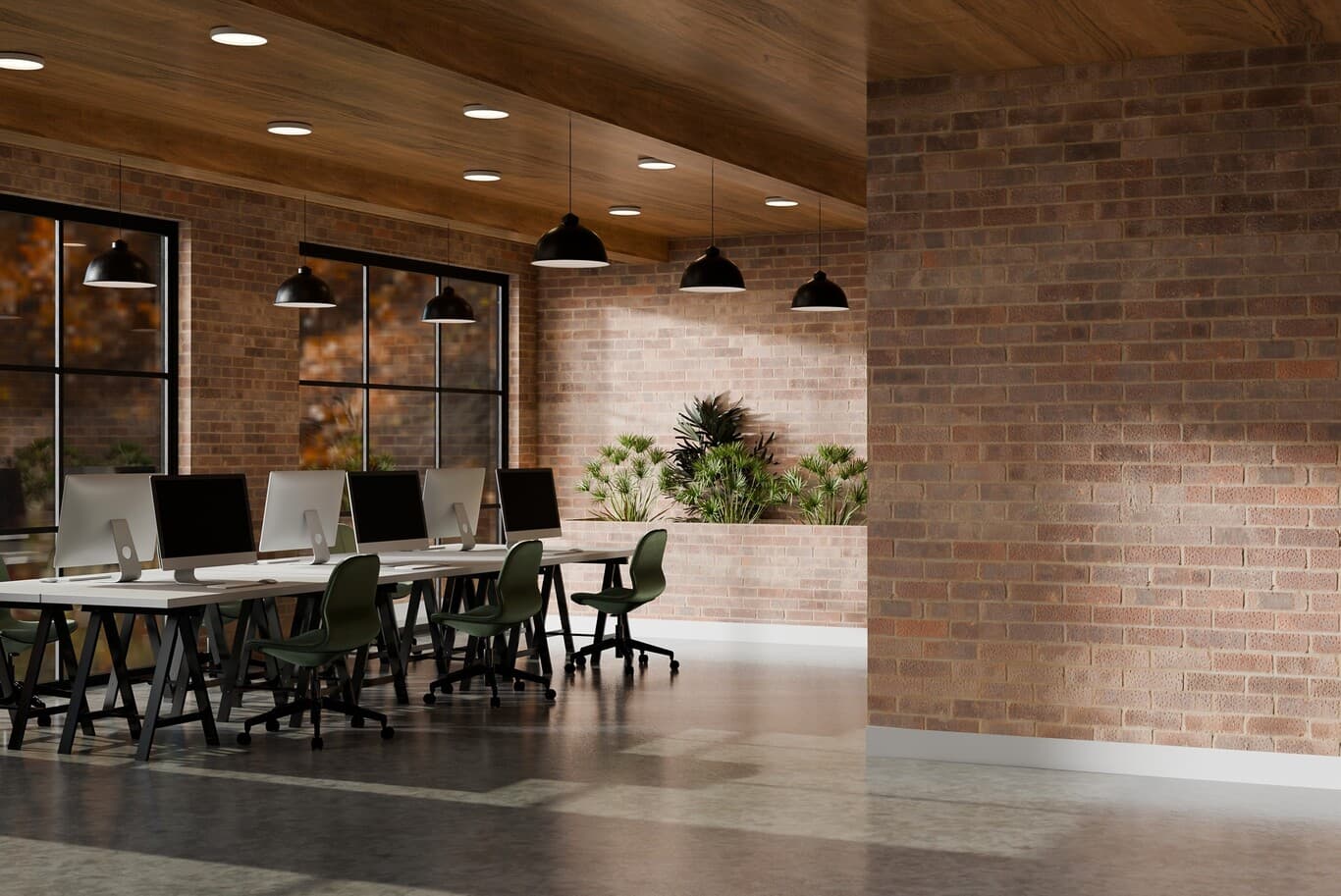
A standard or budget Cat B fit-out in Dubai costs between AED 180 and AED 300 per square foot, suited to back-office operations or startups. Mid-range Cat B — the most common bracket for corporate headquarters — runs between AED 350 and AED 550 per square foot, and typically delivers glass partitions, acoustic solutions, a branded reception area, and upgraded flooring in LVT or parquet. Premium and luxury Cat B fit-out costs AED 600 to AED 900 per square foot or above, required for executive offices, law firms, or luxury agencies where client-facing environments demand the highest specification.
For location-specific context: DIFC and Downtown run 20 to 25% above areas like JLT or Dubai Internet City at the same specification level. Landlord design codes are tighter in dense tower clusters, authority approval processes differ by district, and logistics access is more constrained — all of which feed into the per-square-foot cost that tenants actually pay. These benchmarks cover construction, MEP works, partitions, flooring, ceilings, and standard authority approvals, and typically exclude loose furniture and specialised IT equipment.
The full breakdown of how these cost ranges apply across different commercial space types is covered in the commercial fit-out cost guide for Dubai 2026, which provides benchmarks for offices, retail, F&B, and warehouses.
A Practical Example: 3,000 sq ft Office in Business Bay
To illustrate the cumulative cost of fit-out decisions, consider a company leasing a 3,000 sq ft shell-and-core unit in Business Bay.
Cat A works, carried out by the tenant, run AED 200 to 300 per sq ft — a total of AED 600,000 to 900,000. Cat B works at mid-range specification add AED 350 to 550 per sq ft — a further AED 1,050,000 to 1,650,000. The total fit-out investment reaches AED 1,650,000 to 2,550,000 before furniture and IT.
If the same company leases a fully Cat A-delivered unit with a six-month rent-free incentive, the Cat B spend alone represents a significant portion of the total occupancy cost — but the rent-free period effectively subsidises a large part of it. The true cost comparison requires modelling both scenarios across the full lease term.
The Approval Process for Cat B Fit-Out in Dubai
Every Cat B fit-out in Dubai requires regulatory approval before works commence. Proceeding without permits carries serious consequences: work-stoppage orders, fines, forced reinstatement, and delays to the business licence activation process. In 2026, Dubai Municipality authority approval has moved to a high-speed, digital-first model under the Dubai Building Code and the Al Sa'fat 2.0 framework, with all submissions processed through the BPS (Building Permit System) portal and subject to automated AI compliance scanning before human review.
Approving Authorities
The relevant authority depends on where the property is located.
Dubai Municipality (DM) governs mainland commercial properties, enforcing the Dubai Building Code and checking structural, health, and environmental aspects of fit-outs — including partitions, ceiling systems, ventilation, sanitation, and waste-handling arrangements.
DEWA handles electrical load approvals, meter allocations, and water connections. Fit-out contractors must be enrolled or accredited with DEWA to apply for utility energisation or additional load requests. Required submissions include electrical single-line diagrams, load schedules, plumbing points, and water connection plans.
Dubai Civil Defence (DCD) approves all fire safety systems — alarms, sprinklers, and evacuation systems.
Free Zone Authorities govern spaces within DIFC, TECOM, JAFZA, and similar zones. Internal approvals from the free zone are required before — or instead of — a DM submission, and the technical standards differ between jurisdictions. Confirming the approving authority before preparing drawings is the single most important early step in the approval process.
Trakhees covers designated ports and industrial development areas.
The Approval Sequence
The NOC chain must be completed in a specific order. The tenancy contract must first be registered in the Ejari system — an unregistered contract is rejected at BPS admin review before drawings are assessed. A formal No Objection Letter from the building owner or property management company must then be obtained: this must be on headed paper, signed, and specify the scope of permitted works. Generic landlord NOCs that say "fit-out permitted" without specifying scope are frequently rejected by DM reviewers.
Once the NOC chain is in order:
The DM-licensed consultant prepares authority-compliant architectural, MEP, and structural drawings and submits via the BPS online portal. DM reviews the submission for compliance with the Dubai Building Code — at this stage, Al Sa'fat sustainability requirements are checked. The consultant responds to any review comments and revises drawings for resubmission. Parallel approvals are obtained from DCD for fire safety and from DEWA for electrical load and water connections. The Fit-Out/Interior Work Permit is then issued, construction commences with authority inspections at defined stages, and the Building Completion Certificate (BCC) is obtained after the final inspection.
For minor fit-outs involving only partitions and finishes, two to eight weeks is a realistic approval timeline when documentation is complete. Complex fit-outs involving structural changes, significant MEP modifications, or changes of use should allow six to twelve weeks for the full approval cycle.
The contractor's complete guide to Dubai building permits and regulations covers the DM submission process in detail, including the document requirements for different project types.
Documents Required for Cat B Approval
A complete DM submission for a typical Cat B office fit-out requires the Ejari-registered tenancy contract; a scope-specific landlord NOC; the fit-out contractor's DM trade licence; a fit-out application form; architectural layout drawings covering partition plans, reflected ceiling plans, and furniture layouts; MEP coordination drawings for HVAC, electrical, plumbing, and drainage; structural drawings if any penetrations are proposed; a fire safety plan for DCD; an electrical single-line diagram and load schedule for DEWA; a Green Building Declaration and Al Sa'fat compliance statement; and a waste management and sanitation plan.
How the Starting Condition Affects Your Total Occupancy Cost
One of the most consequential decisions when selecting commercial premises in Dubai is evaluating the starting condition of the space against the total lease cost over the full term. A shell-and-core lease that appears cheap per square foot may carry fit-out costs that erode the apparent saving within months.
The calculation requires comparing the rent differential between shell-and-core, Cat A, and Cat B spaces across the full lease term; the capital cost of carrying out Cat A and Cat B works to the required specification; any landlord fit-out contribution or rent-free incentive that offsets the capital cost; and the time-cost of works — the period during which the space is unoccupied but rent is running.
A company moving into a shell-and-core unit and needing to carry out both stages faces a total investment that is often 35 to 60% higher than the equivalent Cat B-delivered space over a five-year lease. The Cat B-delivered space costs more per year in rent, but the total cost of occupancy including fit-out capital and time is frequently lower.
In landlords' favour in the current market: office values in Downtown Dubai hit AED 5,130 per sq ft in H2 2025, a 29% increase on the previous year according to Knight Frank. Only 153,000 sqm of new office supply is projected for delivery in 2026 across the entire city. In that constrained supply environment, tenants in prime locations have limited leverage. The ability to move quickly from a Cat A-delivered space — rather than managing a full Cat A and Cat B programme — becomes a genuine competitive advantage.
The tips for successful commercial fit-out projects lay out how to structure the early planning process to avoid the most common cost and timeline overruns regardless of what condition the space is in at handover.
Cat A vs Cat B for Different Occupier Types
The right entry point varies significantly depending on the nature of the occupier, the maturity of the business, and the intended use of the space.
Technology and Financial Services Companies
These occupiers typically require sophisticated IT infrastructure, server rooms with dedicated precision air conditioning, advanced AV and conferencing systems, and flexible collaboration zones. Starting from a Cat A-delivered space and proceeding to a full Cat B programme allows MEP systems to be engineered specifically around server room load requirements and specialised power needs. Carrying out Cat B works on a space where Cat A MEP was already installed to a standard specification may require DEWA load amendment applications to support the additional electrical demand — an item that adds both cost and approval time.
Professional Services Firms
Law firms, accounting practices, and consultancies in Dubai prioritise client-facing environments that project credibility and discretion. They typically require acoustic partitioning, premium finishes in reception and meeting areas, and separate zones for client and staff areas. Acoustic performance is a measurable specification: standard demountable partition systems achieve around Rw 38dB, adequate for open-plan separation but insufficient for confidential client discussions. Double-glazed acoustic partitions rated at Rw 45dB or above are the appropriate specification for legal and financial services environments, and the cost premium — typically AED 150 to 200 per linear metre above standard partitions — is worth modelling explicitly.
Startups and Growing SMEs
Companies at early growth stages frequently occupy shell-and-core or Cat A spaces in secondary locations — JLT, Business Bay secondary stock, and Dubai Internet City — and carry out a budget-to-mid-range Cat B fit-out. The priority is maximising usable space and keeping capital costs low, with fit-out elements that can be modified as the business grows. In a Cat A-delivered space, landlords typically provide basic infrastructure that can reduce tenant fit-out costs by 30 to 40% compared to a shell-and-core start point.
Retail Operators
Retail fit-out follows a different framework from office fit-out but the Cat A / Cat B distinction still applies: the landlord delivers the shell — often with basic services in a mall context — and the tenant carries out the full Cat B commercial fit-out aligned to brand guidelines and the mall operator's design rules. The complexity and cost of retail Cat B fit-out typically exceeds comparable office Cat B work because of the higher-specification finishes, signage, and lighting design expected in retail environments. Premium F&B outlets in Dubai regularly exceed AED 1,000 per square foot for Cat B fit-out due to complex kitchen MEP requirements and high-end materials.
The question of how to budget for a commercial fit-out in Dubai from initial brief through to final account is covered in a dedicated guide — the process is materially different for office, retail, and hospitality occupiers.
Case Study: Corporate Headquarters, Business Bay — Cat A to Cat B Delivery
Project context: A regional professional services firm leasing 5,500 sq ft of Cat A-delivered office space on the 22nd floor of a Grade A tower in Business Bay. The landlord delivered the space with raised floors, suspended ceiling grid, HVAC distribution, basic lighting circuits, and fire alarm system in place. Rent-free period: four months.
Scope of Cat B works: Full internal fit-out covering reception, four enclosed meeting rooms with acoustic-rated glazed partitions, open-plan workstations for 48 staff, a client boardroom, two informal breakout areas, a director's suite, server room, and fully equipped kitchen.
Key design decisions and their cost implications:
The acoustic rating of the meeting rooms drove a significant specification decision early in the design process. Standard demountable partition systems with single-glazed panels achieved Rw 38dB — adequate for open-plan office separation but insufficient for confidential client discussions. The team specified double-glazed acoustic partitions with Rw 45dB, adding AED 180 per linear metre to the partition cost but delivering a measurable improvement in acoustic performance that the client required for regulatory compliance as a professional services firm.
The server room required dedicated precision air conditioning (PAC) units independent of the floor plate HVAC — an item not covered in the Cat A delivery. The additional electrical load required a DEWA load amendment application, which added three weeks to the approval timeline and was the critical path item during the pre-construction phase.
Costs: Construction and MEP came to AED 490 per sq ft at a mid-to-premium specification. Authority approvals — DM, DCD, and DEWA load amendment — totalled AED 28,000. Design and project management fees were applied at 12% of construction value. The total Cat B investment reached approximately AED 3.1 million, excluding loose furniture and AV systems.
Outcome: The project reached practical completion within the four-month rent-free period, achieving a zero-additional-cost occupancy transition from the lease start date. The acoustic performance of the meeting rooms was independently tested at Rw 47dB — above specification. The server room PAC installation was sized with 25% spare capacity for the firm's anticipated headcount growth over the lease term.
Case Study: Shell and Core Acquisition, DIFC — Full Cat A and Cat B Delivery
Project context: A wealth management firm acquiring a 2,800 sq ft commercial unit in DIFC on an off-plan basis. The developer handed over the unit as a bare shell — concrete floors, exposed soffit, no internal MEP services beyond the main power and water incoming connections at the riser. DIFC operates under its own regulatory framework governed by the DIFC Authority and subject to DIFC Building Regulations, separate from DM jurisdiction.
Cat A programme: Raised access flooring was specified with a 150mm void for full underfloor cable management, reflecting the firm's requirement for a clean, flexible data infrastructure. The ceiling treatment was a deliberate design choice — the exposed concrete soffit was retained in trading and open areas for an aesthetic consistent with the firm's brand, with a suspended ceiling with integrated linear lighting used only in enclosed offices and meeting rooms. The HVAC system was a four-pipe fan coil unit system with BMS-connected zone control, sized for the server room's thermal load as well as the standard occupancy load. The electrical distribution, fire detection and suppression, and plumbing wet connections completed the Cat A scope.
Cat B programme: Four private offices were built with full-height glazed partitions. The client meeting room received premium joinery, a stone feature wall, and integrated AV. Reception featured custom millwork and a branded back panel. The open trading area was fitted with sit-stand desks for 22 staff. The IT room was built with N+1 redundant cooling.
Cost outcomes: Cat A works totalled AED 420 per sq ft. Cat B works added AED 820 per sq ft. The combined investment of AED 1,240 per sq ft delivered a complete, premium fit-out for a total of AED 3.47 million, excluding loose furniture. When MEP systems must be designed and installed from zero in a shell-and-core scenario, the cost runs 40 to 60% more than the equivalent Cat A fit-out programme — because the contractor is building the space's entire infrastructure, not extending an existing one.
Key learning: Taking on a shell-and-core unit gave the client complete specification control over every MEP system in the space. The raised floor void depth was sized for the trading room's actual cable volume. The HVAC zoning was designed around the IT room's heat load rather than a standard commercial grid. These decisions would have been constrained — or required costly modifications — in a Cat A-delivered space where the MEP infrastructure was already installed to a standard specification.
Common Errors That Inflate Cat B Fit-Out Costs
Years of delivering commercial fit-outs across Dubai reveal a consistent set of decisions — many made before the fit-out contractor is even appointed — that drive costs above initial estimates.
Signing a lease before assessing the starting condition of the space. A space advertised as "Cat A" may have been fitted out to different Cat A standards by different developers. The ceiling height, HVAC system type (two-pipe or four-pipe), power capacity, and floor flatness all affect the cost of the Cat B works that follow. A pre-lease survey by a specialist fit-out consultant costs a fraction of discovering these issues after the lease is signed.
Underestimating approval timelines. The rent-free period is finite. When the fit-out contractor is appointed late and the approval process extends beyond expectations — particularly for DEWA load amendments or DCD fire system changes — the construction programme compresses into a shorter window. Compressed programmes require more trade labour working simultaneously, which drives up cost and increases coordination risk.
Specifying structural modifications to a Cat A ceiling or floor. Cutting through a raised access floor system, modifying the fire suppression layout, or penetrating the suspended ceiling to introduce architectural lighting features all require structural coordination and additional approvals. Working with the Cat A infrastructure wherever possible keeps both cost and programme risk lower.
Separating furniture procurement from the fit-out contract. Many tenants procure furniture independently of the main fit-out contract, assuming it saves cost. In practice, the lack of coordination between the furniture supplier and the fit-out contractor creates on-site sequencing problems, damages finished flooring during delivery, and often results in furniture that integrates poorly with the built elements. A coordinated supply approach — with the fit-out contractor managing the interface — adds modest cost but delivers a significantly cleaner outcome.
The Role of Your Fit-Out Contractor in the Approval Process
In Dubai, only contractors and consultants licensed by Dubai Municipality can prepare and submit drawings for DM approval. Air conditioning, wiring, and plumbing systems must follow DM-approved engineering practices, with proper load calculations and ventilation plans submitted as part of the package. The appointment of an experienced, DM-licensed contractor with a track record of approved submissions in the relevant building type is therefore both a quality decision and a regulatory one. A contractor unfamiliar with the DM submission process, or one without prior approved projects in a specific free zone, will face longer review cycles and a higher probability of comment-and-resubmission rounds.
When evaluating contractors, request evidence of the DM or relevant free zone authority licence; a reference list of projects completed in the same building type and district; examples of approved drawing sets from comparable projects; and the contractor's method for handling DEWA load amendment applications when the proposed Cat B layout requires additional electrical capacity.
Capital Associated Building Contracting's interior fit-out service covers the full approval process from initial NOC through to Building Completion Certificate, with in-house DM-licensed consultants managing DM, DCD, and DEWA submissions directly across Dubai, Abu Dhabi, and Sharjah.
Sustainability and Green Building Requirements in 2026
Every fit-out permit application in Dubai now requires a Green Building Declaration. Al Sa'fat 2.0 Silver is the mandatory baseline sustainability rating for all fit-out permit submissions in Dubai, covering 20% energy savings relative to a baseline model, water-efficient fixtures, and the use of low-VOC materials throughout.
For Cat B fit-outs, practical Al Sa'fat compliance means specifying LED lighting with occupancy sensors and daylight-linked dimming controls; selecting low-VOC paints, adhesives, and sealants — particularly relevant for enclosed offices and meeting rooms where occupant exposure is highest; using water-efficient fixtures in kitchenettes and washrooms; and ensuring the HVAC design delivers the ventilation rates required by the Dubai Building Code for the proposed occupancy density.
These are conditions of permit approval, not optional add-ons. Designs that do not address Al Sa'fat requirements at the drawing stage face rejection at BPS review and add weeks to the approval timeline. The most efficient approach is to brief sustainability requirements into the design from day one rather than retrofitting compliance into a completed set of drawings.
Frequently Asked Questions
What is the difference between Cat A and Cat B fit-out in Dubai? Category A fit-out delivers a neutral, generic floor plate with essential building services distributed throughout — raised floors where specified, suspended ceilings, basic HVAC, lighting circuits, and fire detection. It produces a leasable but functionally empty space. Category B fit-out is the tenant's customisation layer: internal partitions, meeting rooms, branded reception, finished flooring, kitchen, IT infrastructure, and all the elements that make the space operationally ready for its specific occupier.
Who pays for Cat A fit-out in Dubai? In most commercial leasing arrangements, the developer or landlord carries out and funds the Cat A works as part of the property delivery. In some premium Grade A towers, landlords offer fully Cat A-delivered spaces as a leasing incentive. Where a tenant acquires a shell-and-core unit directly — on an off-plan purchase or in a secondary market transaction — the tenant funds and manages both Cat A and Cat B works.
Do I need a permit for Cat B fit-out in Dubai? A fit-out permit from the relevant authority is mandatory for all Cat B works that involve structural changes, new or modified MEP systems, partitioning, or changes to fire detection and suppression systems. Proceeding without a permit risks work-stoppage orders, fines, and complications with trade licence activation. Only DM-licensed contractors and consultants can submit for approval on mainland Dubai properties.
How long does Cat B fit-out take in Dubai? A standard corporate Cat B fit-out for a space of 3,000 to 5,000 sq ft typically takes 8 to 12 weeks from contract award to practical completion — assuming authority approvals are in hand before construction starts. The approval process itself requires an additional 4 to 12 weeks depending on project complexity, the authority involved, and the completeness of the documentation at submission.
What is the typical Cat B fit-out cost per square foot in Dubai in 2026? Mid-range corporate Cat B fit-out costs between AED 350 and AED 550 per square foot in most Dubai commercial districts. Budget fit-outs for back-office or startup environments run AED 180 to AED 300 per sq ft. Premium and executive environments in DIFC, Downtown, or with high-specification finishes run AED 600 to AED 1,200 per sq ft or above.
Can I start Cat B works before the permit is issued? Works that require a fit-out permit must receive permit approval before commencement. Proceeding before approval exposes the tenant to fines, forced demolition of completed works, and delays to the business licence activation process. Minor cosmetic works — painting, installing loose furniture — may proceed without a DM permit, but any structural, MEP, or partitioning works require prior approval.
What is Al Sa'fat and does it apply to my Cat B fit-out? Al Sa'fat is Dubai Municipality's green building rating system. The Al Sa'fat 2.0 Silver standard applies to all new construction and fit-out permit applications on the Dubai mainland in 2026, requiring minimum energy efficiency measures, water-efficient fixtures, and low-VOC material specifications. The Green Building Declaration must accompany every BPS permit submission.
What happens if I fit out a Dubai office without authority approval? Works carried out without a DM permit face work-stoppage notices, financial penalties, and potential requirements to demolish and reinstate completed works to the original condition. The tenant is also exposed to complications when activating or renewing their trade licence, which is linked to the premises' approved fit-out status.
Capital Associated Building Contracting LLC is a licensed building contracting firm and fit-out contractor in Dubai, delivering Cat B commercial fit-out, villa interior fit-out, and specialist hospitality and retail fit-out projects across Dubai, Abu Dhabi, and Sharjah. All fit-out work is managed with in-house DM-licensed consultants and full authority approval services.
Ready to plan your commercial fit-out in Dubai? Speak to our fit-out team for a detailed cost assessment and authority approval roadmap for your space.